

Issue #408: Claire Danes and Matthew Rhys Elevate Streaming Drama

The Music League was constrained to songs that played during opening or ending credits of a television show for this week.
The composition was exactly what I expected. Selections from Twin Peaks (1990), The Sopranos (1999), and Mad Men (2007). Among the winningest submissions, the unmistakable opening theme of What We Do in the Shadows (2019) and a great song I can’t remember at all being in I Think You Should Leave (2019). I submitted “Ride on Shooting Star” from FLCL (2000), but I was the only person to submit a Japanese language song. That kind of surprised me given the robust body of anime openings and closings.
AJ submitted “Wanna Know” by Obie Trice which I guess was in Entourage (2004). I think it was underrated in our group, although I’m part of the problem because I did not vote for it. Among every song on the list, it’s been the only one that is stuck in my head. It’s a song of a time, and Trice understands this putting it on an album with a title that explicitly identifies it as his second. It also reminds me of this:
I’ve been trying to promote the newsletter a little more, you know. Nobody can question that I do this for the sake of doing it. But as I’ve said many times: money, eyeballs, opportunity, they all offer a concrete reward for my effort. There’s an instagram account and even a tiktok you can find @paradoxnewsletter on both platforms. I even made a “reel”:

 Tiktok failed to load.
Enable 3rd party cookies or use another browser
A video like this is a nice little supplement to the letter itself. I have something in mind for The Beast in Me (2025) to promote this issue. But making this stuff is really time consuming. I’m ashamed to admit making the video above took me about two hours. Hopefully the next one takes like 30 minutes.
Criss-Crossed in The Beast in Me
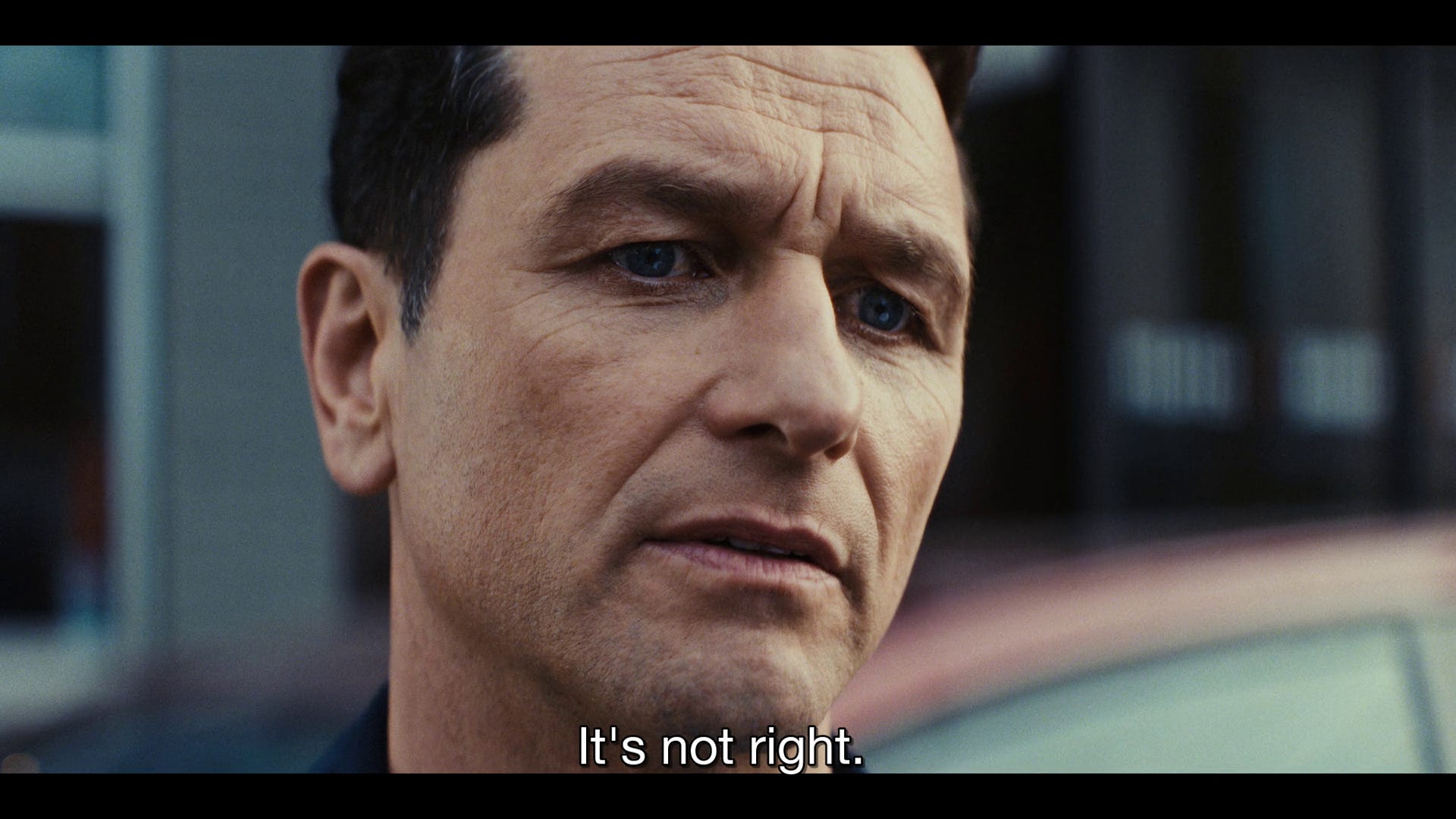
If there is an opportunity to relate something to Hitchcock, I will seize it. Imagine my delight in realizing the latest critically acclaimed Netflix thriller, The Beast in Me (2025), is undeniably indebted to Strangers on a Train (1951). One need not go far to find criticism that recognizes the function of Bruno (Robert Walker) as other to Guy (Farley Granger) in the sense of manifesting Guy’s unconscious desire. They are, in this respect, interlinked in their radical alterity. Highsmith describes this tension, “There’s also a person exactly the opposite of you, like the unseen part of you, somewhere in the world, and he waits in ambush.”
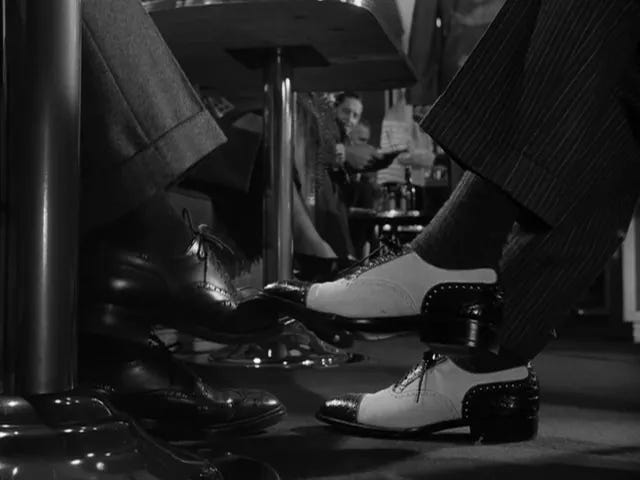
J. Yellowlees Douglas states this as a matter of well-established fact in his 1988 survey of German directors, “courtesy of Bruno’s carrying out Guy’s own unconscious desire to kill his wife” (183). Douglas is more focused on an analysis of Wim Wenders’ The American Friend (1977), which Douglas describes as “extend[ing] several of the motifs of Hitchcock’s Strangers on a Train” (181) also exploring the significance of the shared authorship of their source materials: two novels by Patricia Highsmith.
Gershon Reiter gives this trope a book-length treatment in his 2014 monograph, The Shadow Self in Film, including chapters on Strangers on a Train, Shadow of a Doubt (1943), Cape Fear (both 1962 and 1991), and Fight Club (1999). Now, a little over a decade later, such a book might contain among its chapters one on The Beast in Me and the relationship between Aggie Wiggs (Claire Danes) and Nile Jarvis (Matthew Rhys). The two become “criss-crossed” in an inadvertent Faustian bargain much like Bruno and Guy, with Jarvis committing a murder on Wiggs’s behalf.
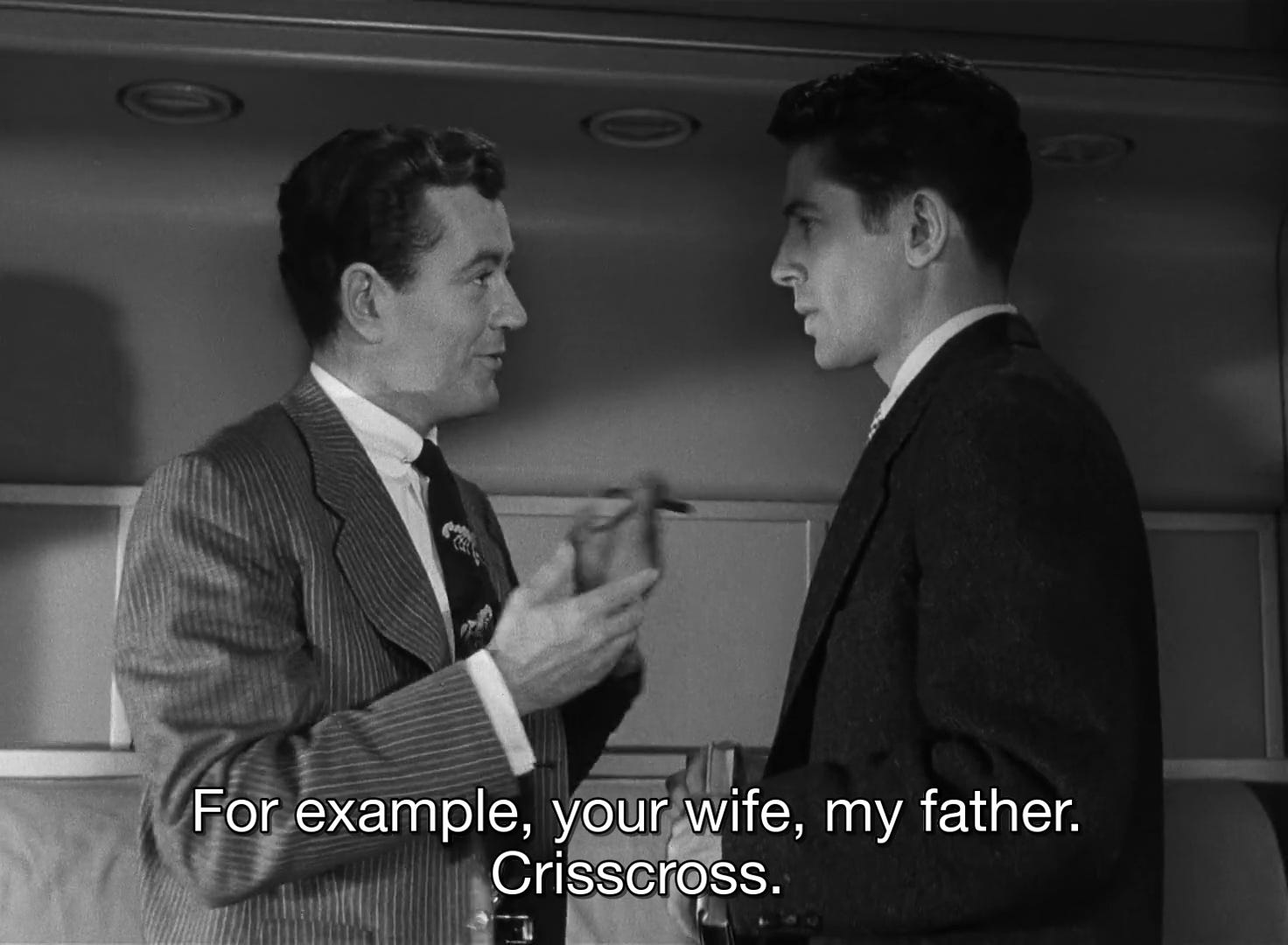
After a contentious first and second meeting, Wiggs reveals some of her inner turmoil to Jarvis over lunch. Teddy Fenig (Bubba Weiler) killed Wiggs’s son in a car accident. Fenig drove drunk, but Wiggs receives the blame for “driving erratically.” The duo encounter Fenig at a distance after their lunch, Jarvis sizing him up like a predator. Just like Guy’s outburst, “I’d like to break her neck,” Wiggs tells Jarvis, “All I wanted was for him to suffer like I did.”


Wiggs and Jarvis might, in fact, share a connection that is more stubborn than that of Guy and Bruno. Rather than just being that malignant shadow or negative image, there is something overlapping in the identities of Wiggs and Jarvis, different though they might appear.


Jarvis reads Wiggs’s memoir against the grain. Though it was a work that appeared to be critical of the Wiggs patriarch, Jarvis says, “you clearly worshipped the man.”
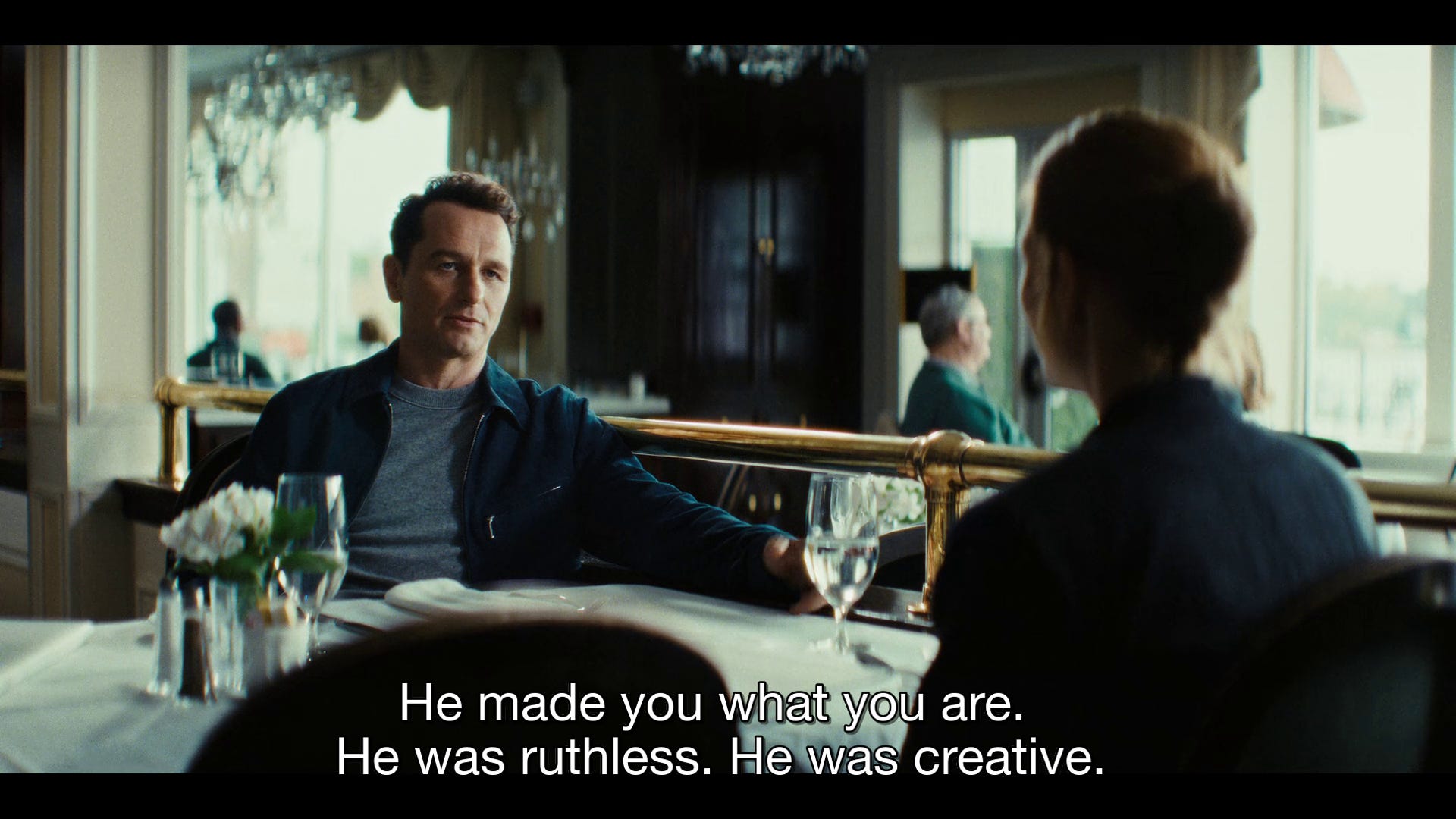
The father is what cuts across Jarvis and Wiggs, and what helps Jarvis see himself in her. The potentially murderous financier calls out Wiggs’s “bloodlust” twice in the conversation, culminating in the ambiguous ending: Fenig dead under mysterious circumstances and Wiggs asking both Jarvis and herself: “what did you do?”
Jarvis’s emergence into the neighborhood has a touch of Gatsby, but is more similar to Wiggs’s own issues with sewage. The overflowing, upward movement of wastewater is the logistical problem that represents Wiggs’s repression. Director Antonio Campos films these moments straight on with some artistry unmistakable in the centered focused of a drain working opposite its intended function.
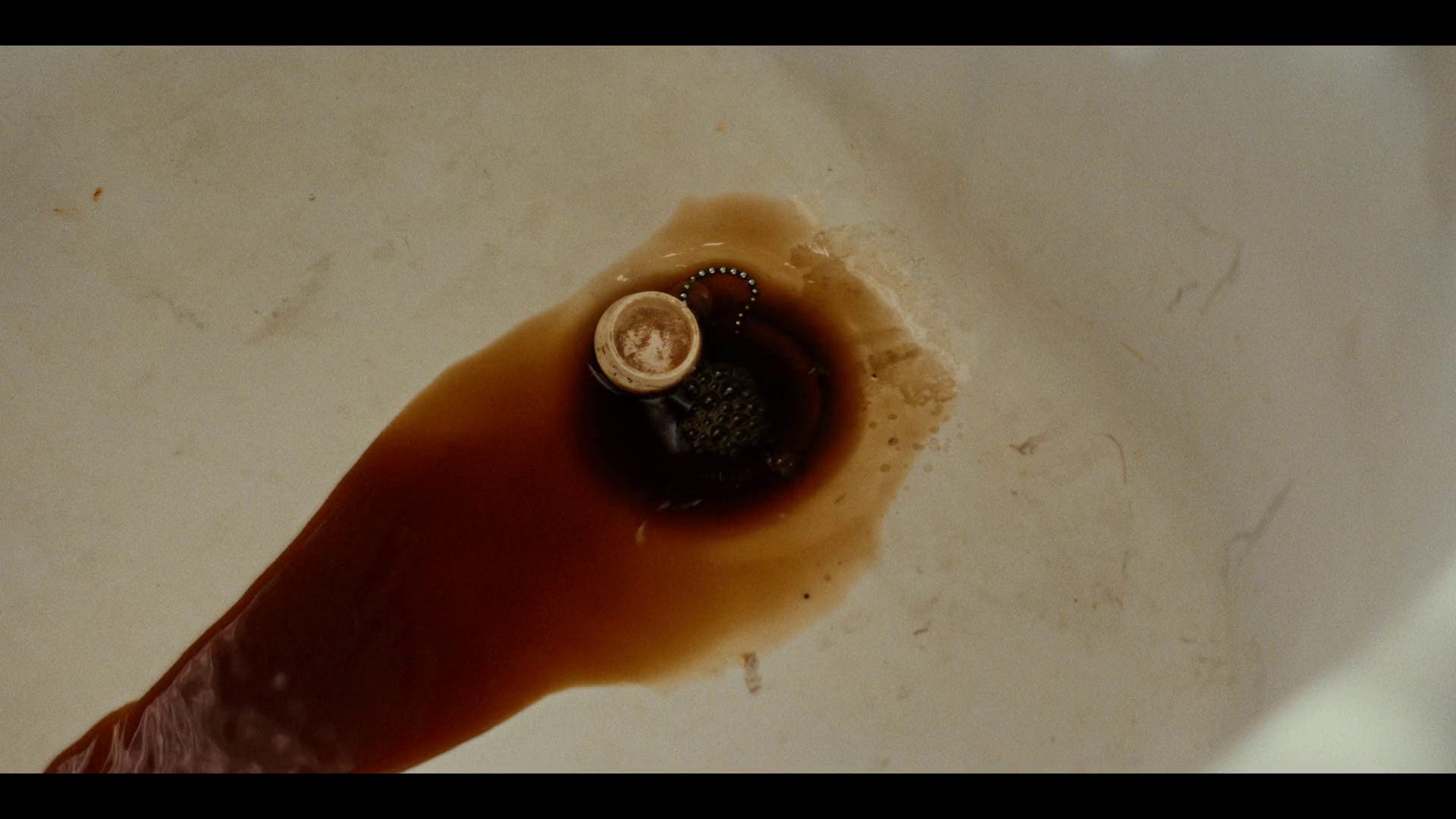
Wiggs may repress her affection for her father, her murderous instincts, her ambition, or her sadism. Jarvis accuses her of having all four, while the audience should be less sure that Jarvis’s read is anything but self-disclosure. The most salient emotional issue for Wiggs, one she is well aware of, is the traumatic loss of her son. Campos is again a virtuoso here. The opening scene of the show is the son’s death, with a perfectly framed close up of Wiggs’s face, flashing blue and red lights, and an image coming into focus of a decimated Lego aircraft, maybe a space shuttle, on the ground.

Everywhere around her, people have moved on. Wiggs’s ex-wife, Shelley Morris (Natalie Morales), expects Wiggs to somehow be released from her anger and frustration. Campos and showrunner Howard Gordon make clear that Wiggs is trapped in the moment of her son’s death. Danes’s performance is compelling. She brings to life a woman who cannot get past a horrific moment and cannot relate to others, even her own wife, because none can appreciate the scale of the moment’s impact on her psyche. Wiggs being frozen in time, unable to progress, unable to escape the emotions that come with being confronted with such a horrific experience, is a representation of trauma that I find true to life and captivating. Jarvis connects with Wiggs on the level of trauma, too, although it is unclear if his has been visited upon him or something he brought upon himself. During their lunch, he looks wistfully off in the distance playing the part of the falsely accused husband-murderer, the favored hyphenate of streaming drama and true crime. He says to Wiggs, “people think they know. They don’t.”
The mystery of The Beast in Me will likely be subordinate to the drama of Wiggs and Jarvis, but Danes and Rhys are the perfect actors for these roles. Rhys in particularly is having, perhaps, a Jason Bateman or Bryan Cranston moment. Jarvis is more sinister and unlikable compared to his stints as Perry Mason in the titular remake or Philip Jennings in The Americans (2013). I thought the show was good enough that I wanted to finish writing this before watching more. For fans of The Sinner (2017) and other contemporary psychological drama with an undercurrent of mystery, The Beast in Me is a hit.
Weekly Reading List
For my money, this is the best selection in a Criterion Closet video ever. Makes sense Bigelow is still doing unparalleled work if this is what she’s watching in her leisure time. Her love of Detour (1945), I learned, is well documented. She used clips from it in Strange Days (1995). Real recognize real.
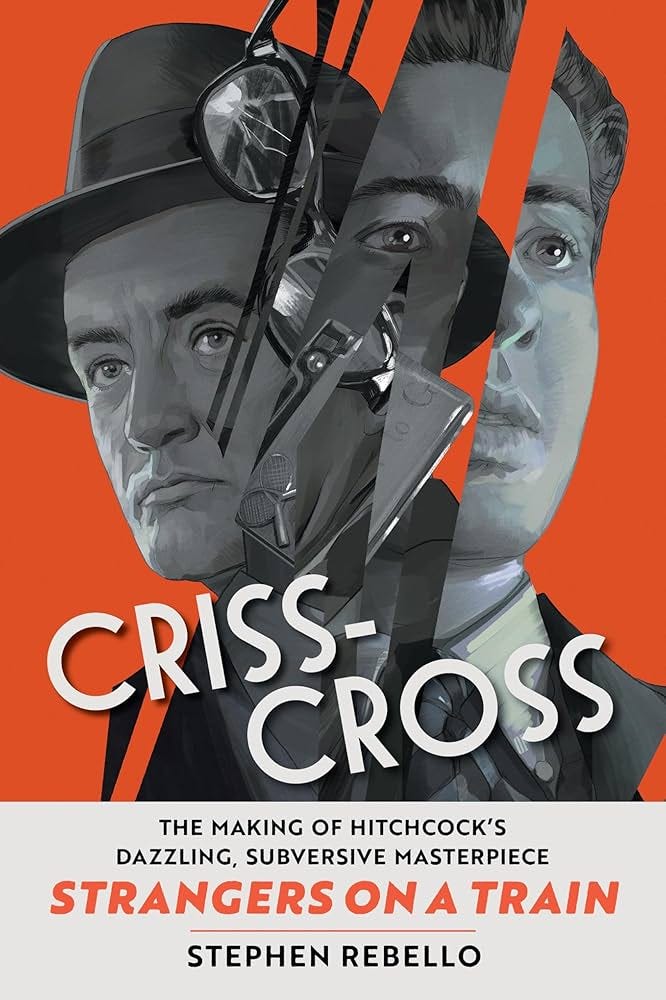
Hitchcock’s most acclaimed biographer tackles Strangers on a Train (1951). I came across this book while working on my The Beast in Me (2025) essay and was delighted. I haven’t read Rebello’s other book, but Strangers on a Train deserves the detailed narrative documentary treatment.
Rebello puts things in perspective. It is hard for me to imagine Hitchcock as anything but the godlike presence in cinema history. The story of the making of this film, however, is a story of a director whose legacy is in the balance and whose career is uncertain. Riveting stuff.
This came out a little over a week ago and sounds like Pharrell and Justin Timberlake. It is awesome. Really feels like a time passed. I didn’t mention in the intro, but next week’s Music League is new music. The criteria is submitting something that was released in the last seven days. WORLDS APART* was too old to make the cut, but I would’ve submitted it if I could have. I don’t want to give away what I actually have on the playlist before voting, but I’ll certainly be writing about it next week. More good music is always around the corner.
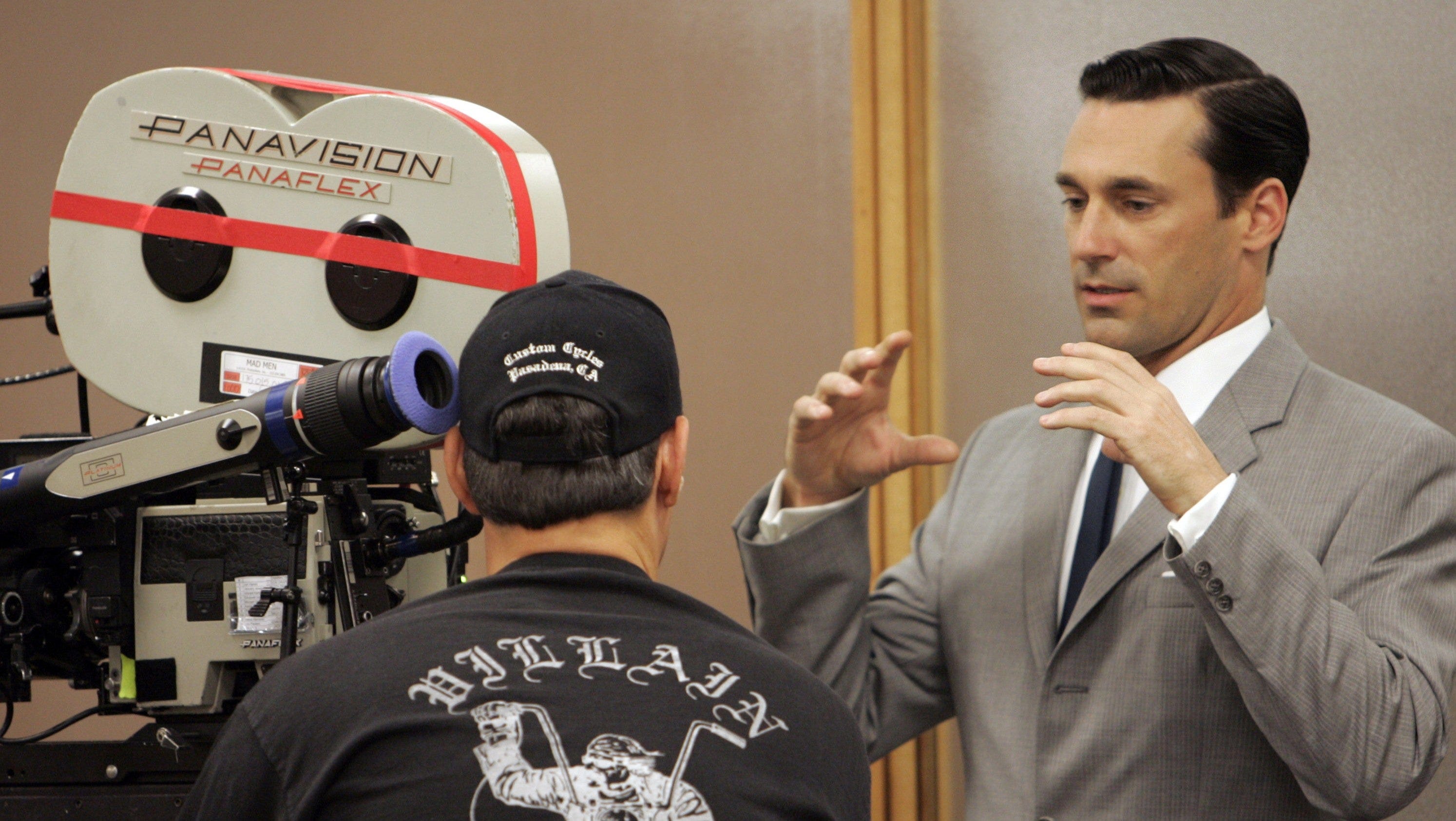
https://www.avclub.com/mad-men-4k-hbo-max — How much do people read the content of the hyperlink to skip the article? That works here. Mad Men (2007) is on HBO Max in 4K. This is the first time the show has been available in 4K resolution. The first four seasons were recorded on film, meaning there’s the possibility of a ridiculously high resolution image scan. Who wouldn’t want some Mad Men essays in the letter based on my rewatching the new 4K version?
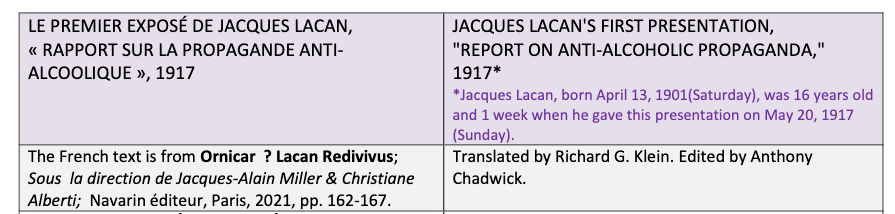
https://freud2lacan.b-cdn.net/Lacan-at-16-report-TONY.pdf — At age 16, Jacques Lacan participated in an anti-alcohol campaign as part of the Conferences of Saint Vincent de Paul. This is a translation of a presentation he delivered about the work, who it served, and what it might achieve. It is a remarkable transcription. Lacan expresses a staunch objection to the consumption of alcohol:
Fortunately Joan of Arc generally does not drink, to the point that some naively believe everyone around them does the same. But temerance is much more commendable among working women or laborers.
I’m also struck by the phrases on some of the pamphlets he distributed, “‘Tous les alcohols sont des poisons’ (All alcohols are poisons), or ‘Eau de vie. Eau de mort’ (Water of life. Water of death).” Are any French straight edge band members reading? It doesn’t get better than this:
It is therefore necessary that all honest and enlightened French people contribute, each in their own sphere, to the crucial work undertaken by the Anti-Alcohol League, while we wait for the public authorities to provide us with legislation against this scourge which threatens to destroy our country forever.
Event Calendar: Museum Happenings
I am always looking to expand the content of the event calendar. If you are paying attention, it is getting a little thin. I decided to check out upcoming events at Boston’s MFA. One of my favorite annual events, Art in Tune, is coming up at the beginning of the year. This will be the third year I’ll be attending. From their description:
Don’t miss this evening of live musical performances throughout the galleries, using instruments from the Museum’s collection.
You really should not miss it.
Until next time.