
Issue #421: Social Justice Convictions Fall Short When Tourette's Is Involved
The scolding, condescending, holier-than-thou attitude that plagues contemporary social justice writing is infuriating to me. Worse, still, I fear I am vulnerable to adopting that tone in my own writing. When my writing sounds like that, it is a failing on my part to be creative enough to figure out how to express my point without coming across like I am talking down to my readers.
I worked really hard to try to avoid that today, and I’m not sure I succeeded. But this week’s letter is an important one, about inclusivity, ableism, and, yes, the BAFTAs.
It’s a long one, too. So let’s cut to the chase.
“It all means diddly squat”: John Davidson, Tourette Syndrome, and the BAFTAs


John Davidson has been in the public eye since he was 16 years old. John’s Not Mad (1989) premiered on the BBC as part of the Q.E.D. (1982) series of documentaries, directed during this period by Valerie Kaye. Davidson would go on to be the subject of more documentaries: The Boy Can’t Help It (2002), Tourette de France (2007), Tourettes: I Swear I Can’t Help It (2009), Tourettes & Me (2014), and Tourette’s: Teenage Tics (2016). The Kaye-directed ‘89 documentary was a watershed moment for the understanding of Tourette syndrome in the United Kingdom. The frequent appearances on BBC One and Channel 4 meant British audiences had a chance to follow Davidson intermittently through his life as long as they had a TV antenna. The subjects of these documentaries also expanded to other children with Tourette’s, like Greg Storey, Rory Brown, and Paul Stevenson.
But John Davidson is special. Among Tourette’s advocates, he stands alone. He has been awarded the Most Excellent Order of the British Empire (MBE) in 2019. Aside from his custodial career at the Langlee Community Centre where he has worked his entire life, he volunteers with support groups including Tourette Scotland and Tourettes Action. He leads workshops and education efforts for police and educators and support groups for families living with Tourette’s. His striking life story is now the subject of a biopic, I Swear (2025), directed by Kirk Jones and starring Robert Aramayo as David. I Swear won big at this year’s BAFTAs, taking home the awards for Best Casting for Lauren Evans and Best Actor in a Leading Role for Aramayo. As one might expect, Davidson was in attendance at the BAFTA awards where the film about his life was honored. There, something expected happened: he ticced.
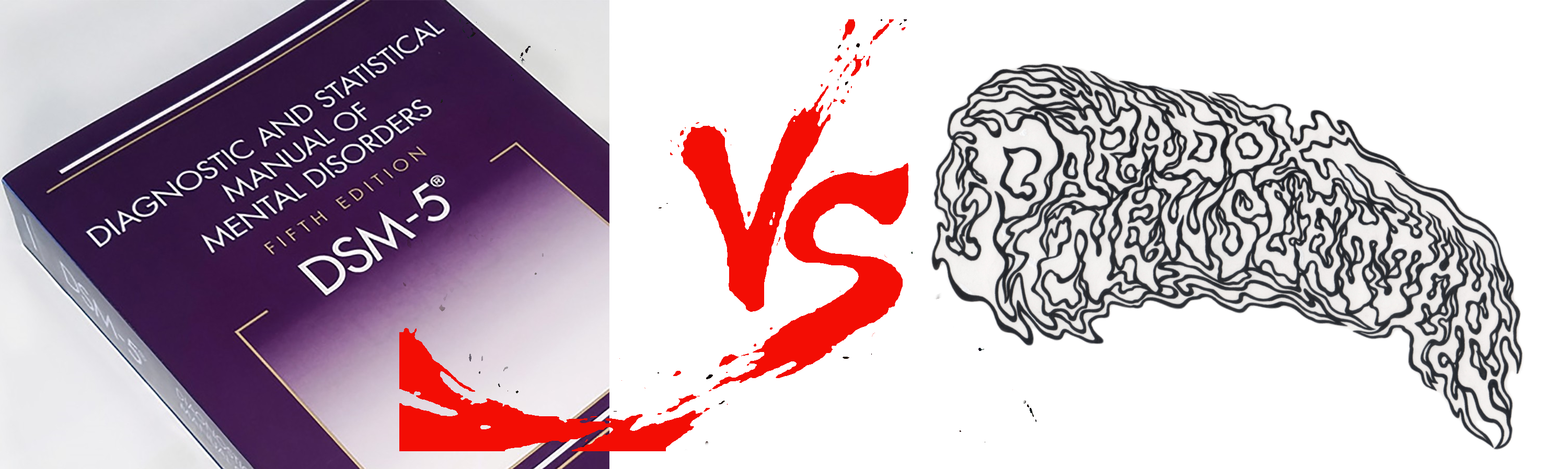
Tourette syndrome is classified as a “motor or vocal tic disorder” in the DSM-5 and “neurodevelopmental disorder” in the ICD-11. The ICD-11 presents an estimated 0.5% prevalence rate of Tourette’s in school-aged children. Within that affected population, 10-15% present with the symptom of coprolalia. This relatively uncommon symptom is what is most commonly associated with Tourette syndrome. The ICD-11 calls it “inappropriate swearing,” (155) the DSM-5 is more detailed, calling it, “uttering socially unacceptable words, including obscenities, or ethnic, racial, or religious slurs … Importantly, coprolalia is an abrupt, sharp bark or grunt utterance and lacks the prosody of similar inappropriate speech observed in human interactions” (82). Coprolalia is among John Davidson’s symptoms.
Davidson seems to have an outsized impact on the relatively accepting attitude of British people toward Tourette’s. One might theorize that in the U.S., the primary architect of the American notion of Tourette’s is Trey Parker. In the 2007 episode of South Park (1997), “Le Petit Tourette,” Eric Cartman (Trey Parker) pretends to have Tourette’s to excuse his obscene language. This joke has been rehashed time and time again, from schoolyards to, apparently, Saturday Night Live writers’ rooms. There are other U.S. representations of Tourette’s, though. I learned most about TS reading Jonathan Lethem’s Motherless Brooklyn (1999), in which protagonist Lionel Essrog has Tourette’s. Lethem’s novel gave me a broader view of what the inner-life of someone with Tourette’s might look like. He writes in the opening:
Context is everything. Dress me up and see. I’m a carnival barker, an auctioneer, a downtown performance artist, a speaker in tongues, a senator drunk on filibuster. I’ve got Tourette’s. My mouth won’t quit, though mostly I whisper or subvocalize like I’m reading aloud, my Adam’s apple bobbing, jaw muscle beating like a miniature heart under my cheek, the noise suppressed, the words escaping silently, mere ghost of themselves, husks empty of breath and tone. (If I were a Dick Tracy villain, I’d have to be Mumbles.) In this diminished form the words rush out of the cornucopia of my brain to course over the surface of the world, tickling reality like fingers on piano keys. Caressing, nudging. They’re an invisible army on a peacekeeping mission, a peaceable horde. They mean no harm. They placate, interpret, massage. Everywhere they’re smoothing down imperfections, putting hairs in place, putting ducks in a row, replacing divots. Counting and polishing the silver. Patting old ladies gently on the behind, eliciting a giggle. Only-here’s the rub-when they find too much perfection, when the surface is already buffed smooth, the ducks already orderly, the old ladies complacent, then my little army rebels, breaks into the stores. Reality needs a prick here and there, the carpet needs a flaw. My words begin plucking at threads nervously, seeking purchase, a weak point, a vulnerable ear. That’s when it comes, the urge to shout in the church, the nursery, the crowded movie house. It’s an itch at first. Inconsequential. But that itch is soon a torrent behind a straining dam. Noah’s flood. That itch is my whole life. Here it comes now. Cover your ears. Build an ark.
Lionel’s conflict with Tourette’s is not just an attempt to keep his voice silent, but to silence his own mind. He describes listening to Prince:
I don’t know whether The Artist Formerly Known as Prince is Tourettic or obsessive-compulsive in his human life, but I know for certain he is deeply in the life of his work … It so pulsed with Tourettic energies that I could surrender to its tormented, squeaky beat and let my syndrome live outside my brain for once, live in the air instead.
An uncalibrated psychoanalytic view, but it is clear the tics of Tourette’s come from some other other agency, not of the subject nor their unconscious. The prevalence of “Bailey” as a tic for Lionel speaks to that:
Bailey was a name embedded in my Tourette’s brain, though I couldn’t say why. I’d never known a Bailey. Maybe Bailey was everyman, like George Bailey in It’s a Wonderful Life. My imaginary listener, he had to bear the brunt of a majority of my solitary swearing-some part of me required a target, apparently. If a Touretter curses in the woods and there’s nobody to hear it does he make a sound? Bailey seemed to be my solution to that conundrum.
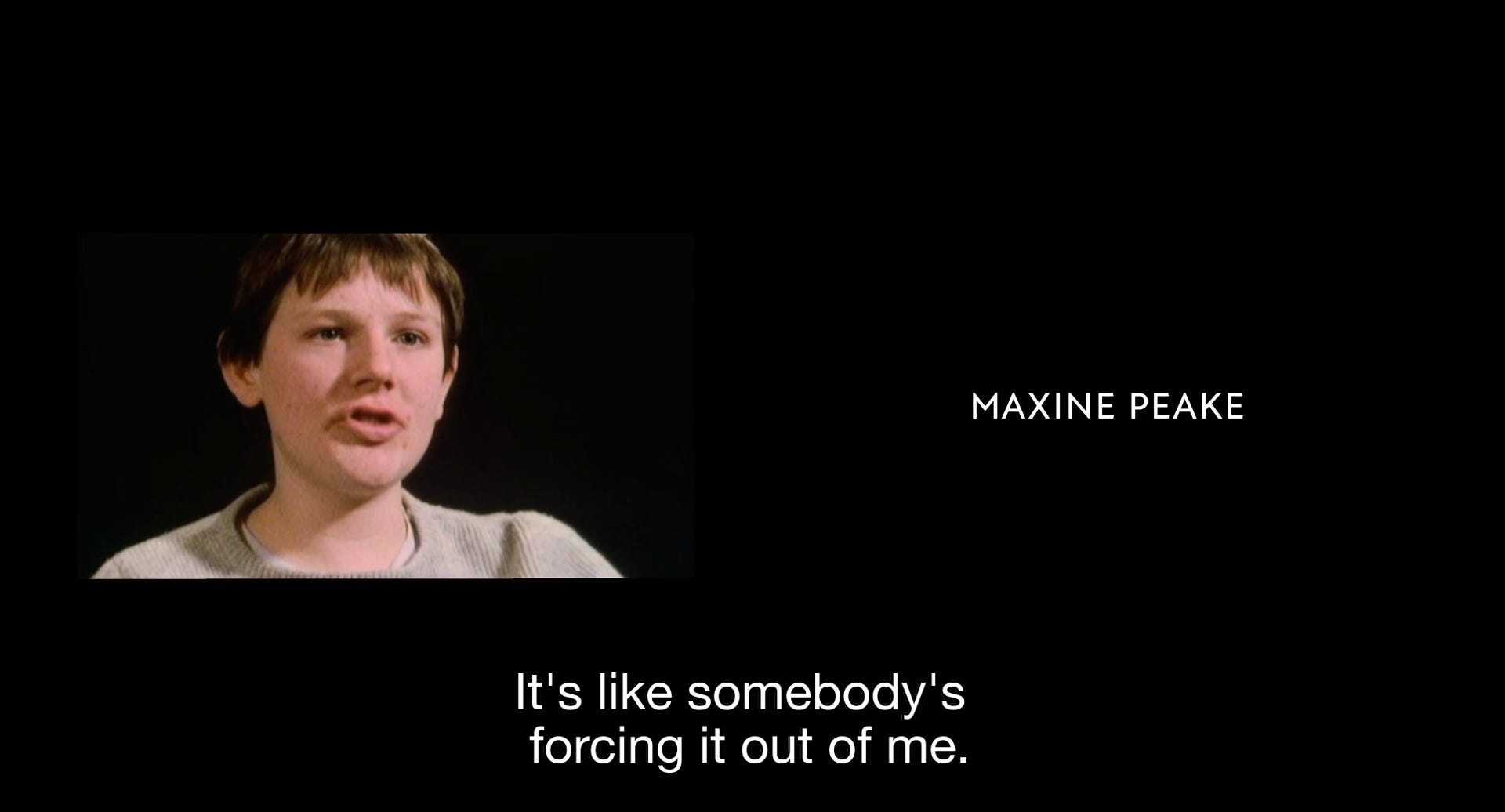
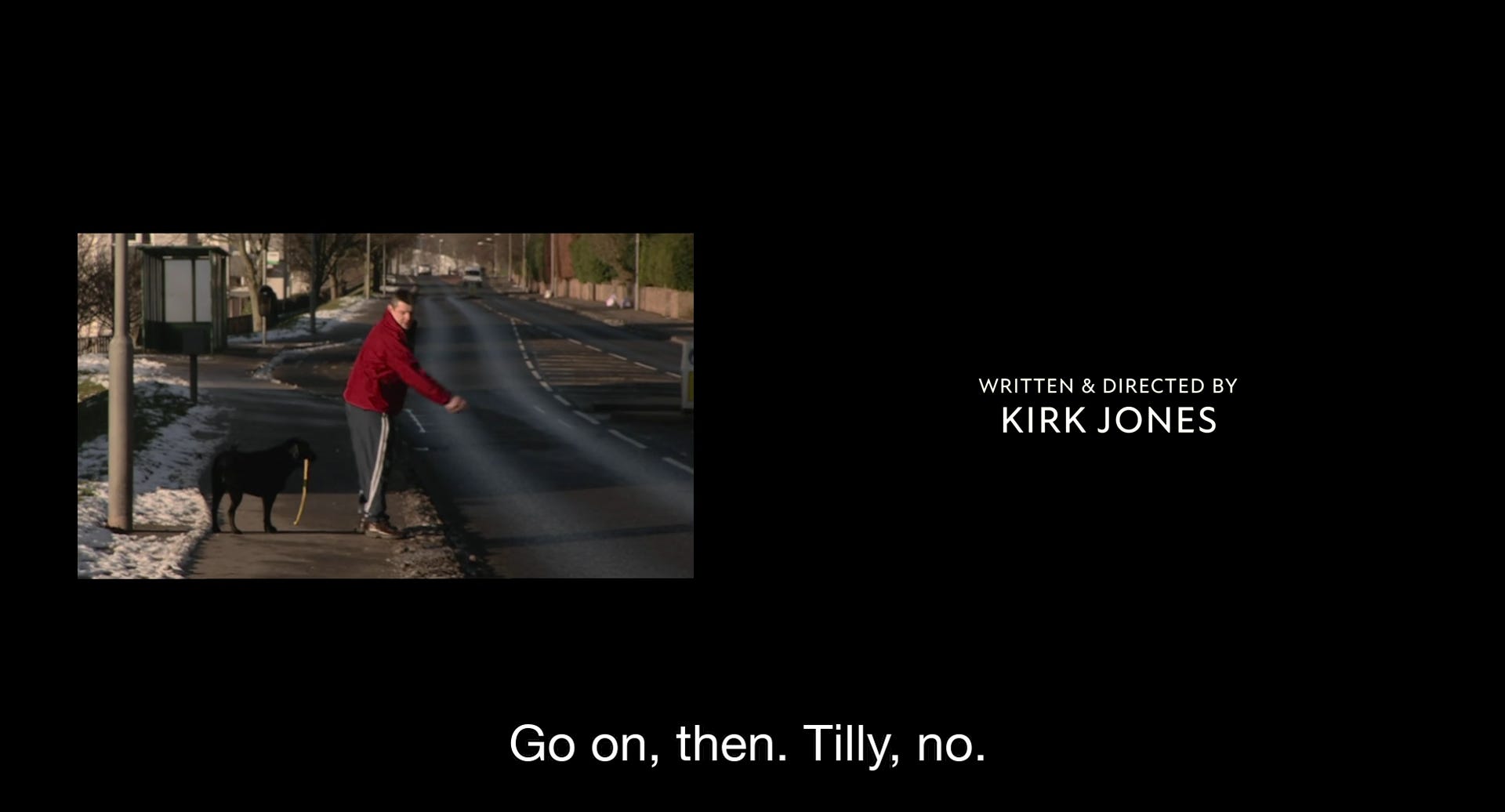
This is critical to understanding Tourette’s and tics. When it comes to speech, legible speech, the person with Tourette’s is not the agent of that speech. The disorder is what speaks. In the closing credits of I Swear, there’s archival footage of the real Davidson, “It’s like somebody’s forcing it out of me.”
Life is not easy for people with Tourette syndrome. In “Beyond the Tics: Experiences of Stigma and Psychosocial Impact in Tourette Syndrome” (2026) by Jaclyn M. Martindale, Leah Chapman, Andrew Jack Carson, Kandice Reilly, Melina Malli, Eric A. Storch, John Salsman, and Stephanie Daniel, the researchers look at a wide range of factors that contribute to adverse “self-beliefs and behaviors” related to Tourette’s.
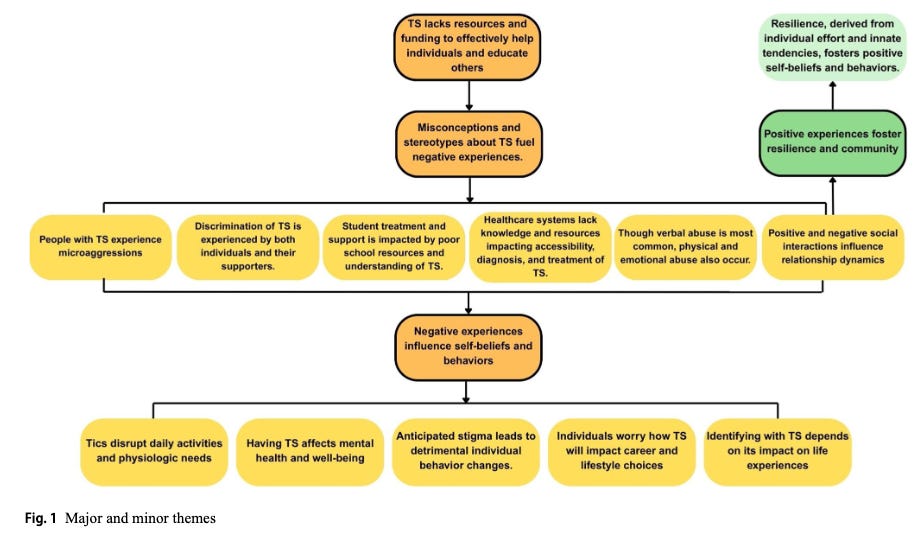
They interviewed thirty-five participants ranging from patients to family to caregivers and advocates. There are a wide range of lengthy quotations from study participants in the paper, but I found these to be some of the most striking. Those with Tourette’s face social isolation and, indeed, are often their own most exacting jailers:
Asked to leave and probably should leave. Uncomfortable comments. Police have, have come to my home, sent by another parent from a playground, and that’s the language I’ve had parents come up to confront me in a scary manner, ready to have a fight with me. Just very confrontational. It’s always something that you’re wondering about or thinking about. You never know anywhere you go, how somebody is going to respond or react. We don’t go to a lot of places because we already know—have we been asked to leave that place? We’ll know that we’re going to be asked to leave. (Martindale et al. 5)
Martindale et al. also write about the specific challenges those with Tourette’s face in education, noting that “the right to receive equal access to free and appropriate education in the least restrictive environment” (8) only arrived with TS’s inclusion in the Individuals with Disabilities Education Act in 2006. Even with these protections, students with Tourette’s may find themselves unable to assert their rights:
They wanted to reserve the rights to punish her for any reason, including her tics and so they refused to put any-thing in the IEP saying that her tics are a disability, so she does not receive punishment for her tics. That’s been the biggest challenge. [...] They don’t see it [as a disability]. They see it as behavior. By cursing or making these threatening things or whatever, she’s violating the student code of conduct and they as the administration, have the right to punish for those things. [...] We flat out said, “So you want to reserve the right to punish her for her disability?” They said, “Well, if she tics something offensive, yeah”. (Martindale et al. 5)
This problem is compounded by the offensive nature of some tics. Coprolalia as a symptom causes someone to say the worst possible thing one might imagine in a given situation. In I Swear, Davidson confesses to crimes he didn’t commit, he insults the Queen of England to her face, he calls others names, and he momentarily taunts a woman he believes to be dying of cancer about her mortality. He exhorts his beloved dog to run into traffic.
Even supposedly inclusive environments are, at times, ill-suited to resolve the complex competing interests that can arise in response to certain tics:
The biggest thing was the way that [the online school] wouldn’t let [him] even participate. We’re like, “We’re spending all this money on this school and he’s supposed to do his school on his own, essentially.” We’re like,”This is not gonna work. The whole point is for him to have interaction with other kids.” It’s not designed to be an asynchronous program. That’s not what we’re paying for. We had multiple meetings, and then we even—apparently, there was another kid that was an African-American, their family was offended by [his] tics. They said, “Well, they’re a protected class.” I said, “You do know that [he] is also a protected class and it seems like one protected class is trumping another.” (Martindale et al. 5)
Similarly, slurs that are most offensive and harmful can occasion rejection even from close friends and family:
You can have tics. It’s okay. Until this C word comes out or, heaven forbid, racial slurs. Then it’s, well, we under-stand all the other ones, but not that one. Even family. You give them the paperwork, you try to explain, show them places they can go to look it up, send video links, and still can’t come to Christmas, still can’t come to Thanksgiving. That’s very hard. (Martindale et al. 6)
Looking at the cases in “Beyond the Tics” and Davidson’s story in I Swear, the social conditions in which one lives will dictate their tics. The most profoundly offensive and inappropriate words, phrases, and ideas erupt through a tic precisely because of how extremely society condemns their utterance. There is one word above all else that can cause deep hurt and social condemnation, the so-called “N-word,” the historically anti-Black racial slur. Unfortunately, it is what Davidson said as Michael B. Jordan and Delroy Lindo presented an award at the BAFTAs.
There is no question: something terrible happened to Jordan and Lindo who had a slur shouted at them at a prestigious award show. Something terrible happened to everyone in the audience, especially Black people, who saw Jordan and Lindo be addressed that way. Something terrible happened to people who saw it on TV, who looked at the video after the fact, who had to reconcile with something totally unthinkable happening. Something terrible happened to John Davidson, who had an embarrassing and harmful — to him and others — flare of an illness he cannot control. And something terrible is happening to everyone with Tourette’s, right now, where their intention, symptoms, freedom of movement, and very humanity is being debated by a legion of people who have never thought about Tourette Syndrome for one second before the day they decided to weigh in on this particular incident. The ‘debate’ surrounding this illness has entailed bad faith claims about Tourette’s, disgraceful pitting of two vulnerable populations against one another in favor of clicks and media attention, and unapologetic ignorance about what Tourette syndrome entails. And, of course, this supposed antagonism has totally erased the fact of Black Americans with Tourette’s. It has, unequivocally made living with Tourette’s more dangerous today.
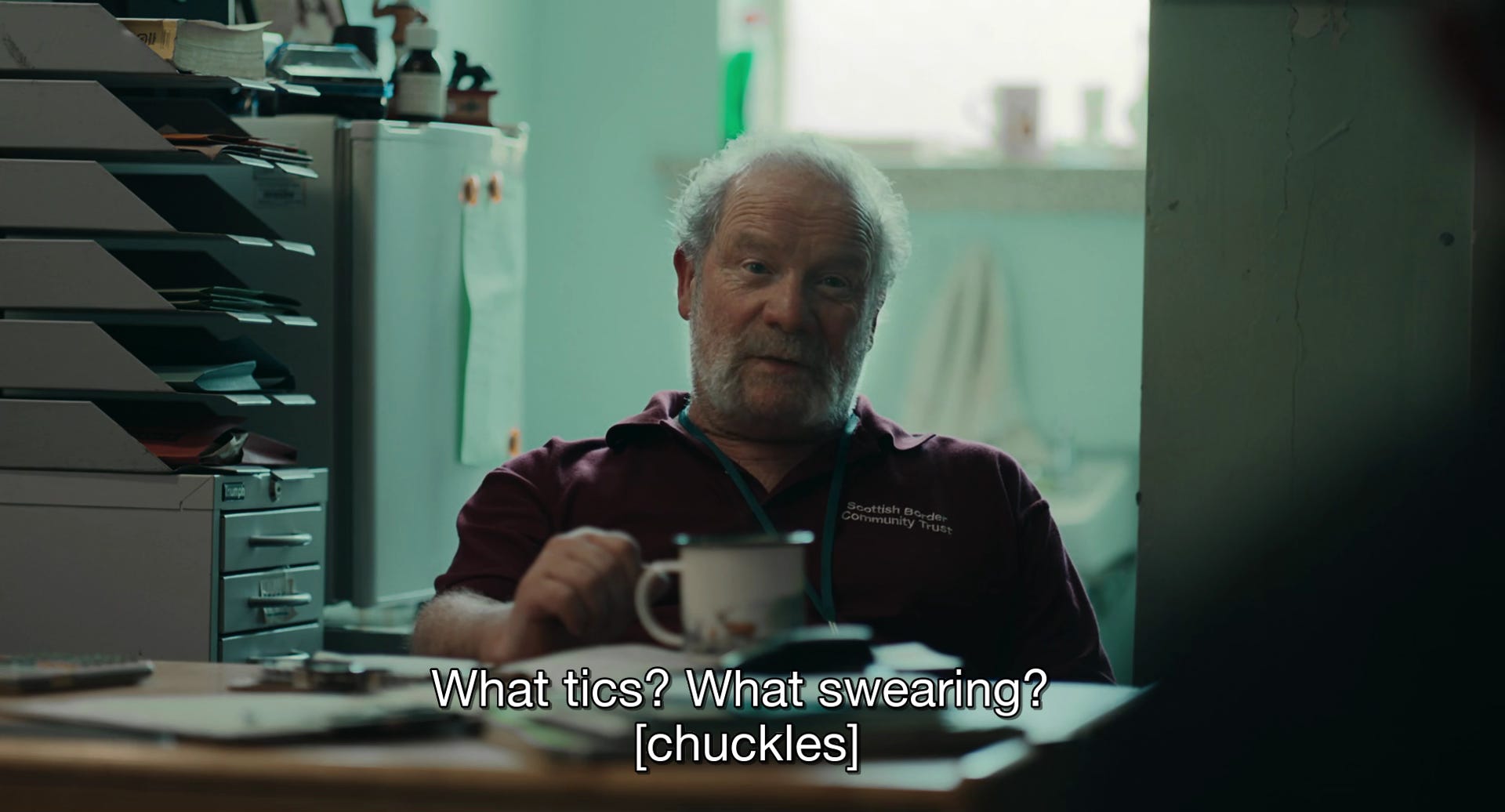
I don’t want to lose sight of the fact that is evident from many first-hand accounts and creative depictions. People with Tourette syndrome who have coprolalia as a symptom are in imminent physical danger because of this symptom. They are in danger of self-abuse, self-imposed isolation, and suicide. They can be attacked and beaten because of something they cannot control and did not ask for: a symptom of a neurological disorder.
The ‘discourse’ about Jordan, Lindo, and Davidson has made all of that worse. People with coprolalia are more in danger, more socially isolated, less understood. And we have seen legions of people who believe it is right to segregate, muzzle, or kill them. Among those legions are the ostensibly progressive-minded advocates for some form of inclusivity or social justice. However, nobody is wrong to feel upset if a person with Tourette’s tics at them. This word, the “N-word,” is probably the worst thing someone can say to someone, but that severity typically only emerges if the person the word is being said to is Black. The long history, especially in the U.S. context, of chattel slavery, Jim Crow, other forms of systemic racism, have contributed to the significance of this particular racial slur. It is the harbinger of these things, it is a word that precedes violence, that justified enslavement and segregation. It accompanies racist violence and murder. The “N-word” means particularly. It is a horrible word. People with Tourette’s syndrome did not invent it, white supremacy did. And white supremacy, even if it is totally overturned and evaporated, will not disappear from history. The taboo associated with this word and how severely it signifies is exactly why it becomes a tic for those with coprolalia. They say the worst possible thing, and this is it.
This is not a question of fairness. Nothing is fair here. Yet again, Black people will have to do and endure exceptionally because of something entirely out of their control. It is not fair that Black Americans, Black British people, anyone who understands the “N-word” would have to encounter it addressed to them in every day life. Because that word exists, this disorder which plagues those who have it, this disorder which speaks through them but is not them will distort their voice, command their vocal cords, and say this terrible thing. For a fair, equal, inclusive, and just society, everyone would have to recognize that the words from someone with coprolalia do not have meaning. They are a symptom, and they are spoken by the symptom, not the person. They hurt, yes. But there is a wide range of harmful and self-harming language someone with coprolalia may use. And because I want to live in a world where people with coprolalia can do anything I can do, and go anywhere I could go, I will accept it. I will accept the disruption, the hurt, whatever comes with it.
For a Black person to do that, it might be harder. It might be harder because there is this particular word that has this profound, accumulated significance. Because of white supremacy, because of this word that seems to have been borne from Pandora’s box, Black people across the English speaking world have to bear a particular burden of hearing this word, having it addressed to them, and having the wherewithal and presence of mind and benevolence to understand that the person who said it didn’t want to, they were forced to by a disorder. And that they regret it even if they may not be able to apologize for it. They regret it even if they shouldn’t apologize for it. All of this sucks. It is inconceivable that a just society could include the use of this slur addressed to Black people. But it is the facts of a world where all these terrible things happened and this disorder exists. A person with Tourette syndrome, with coprolalia, cannot and should not be made to feel accountable for words that come out of their mouth as part of their symptom. They should not have their freedom restricted because of this disorder. And, certainly, non-disabled people and institutional power structures should not impose restrictions on people with coprolalia. They are already imposing plenty of restrictions on themselves.


This brings me to one of I Swear’s critical points. Contemporary discourses of social justice have prioritized a focus on the individual through self-interest, rebranded as “self-care.” The logic is expressed in a few metaphors. In a structural analogy to an airplane in which cabin pressure has been lost, “always put your own oxygen mask on first before assisting others.” Or, in a less illustrative metaphor, “fill your own cup before filing others,” or more optimistically, “filling your own cup will allow it to overflow into others’ cups too.” John’s life, however, is enriched and saved only by those who do not have “full cups” or “secured oxygen masks.” Dottie Achenbach (Maxine Peake) believes she is dying of cancer with a scant six months to live when she takes John in. Tommy Trotter (Peter Mullan) decides to take John on as an employee despite his own serious medical problems. An inclusive world will not be wrought from everyone jockeying to fill their own cups. There will be no trickle-down social justice. Every struggle must be fought on its own terms, and solidarity means sacrifice always.
Achenbach and Trotter embrace Davidson while they themselves are vulnerable and carrying heavy weights. Nonetheless, they are impassioned defenders of Davidson. Trotter says during a court proceeding against Davidson:
Now, I understand that some people are saying that he’s pretending. Can I ask, why would you pretend to have a condition that results in you being hit with a crowbar? That resulted in you being humiliated and ridiculed at school by being refused to sit your higher exams that could improve your life? That stops you having a relationship? Who, who would pretend to have such a condition? Now, I know John’s a proud young man, and he wouldn’t like me using the word “disability,” but can I just ask, if a blind man walks into a bar, and crashes into another guy, would it end up in court?
His analogy to blindness is important for understanding the degree to which Tourette’s changes someone’s existence. And his testimony could be addressed directly to those who have concocted absurd theories about Davidson’s illness and his supposedly secret views it reveals.
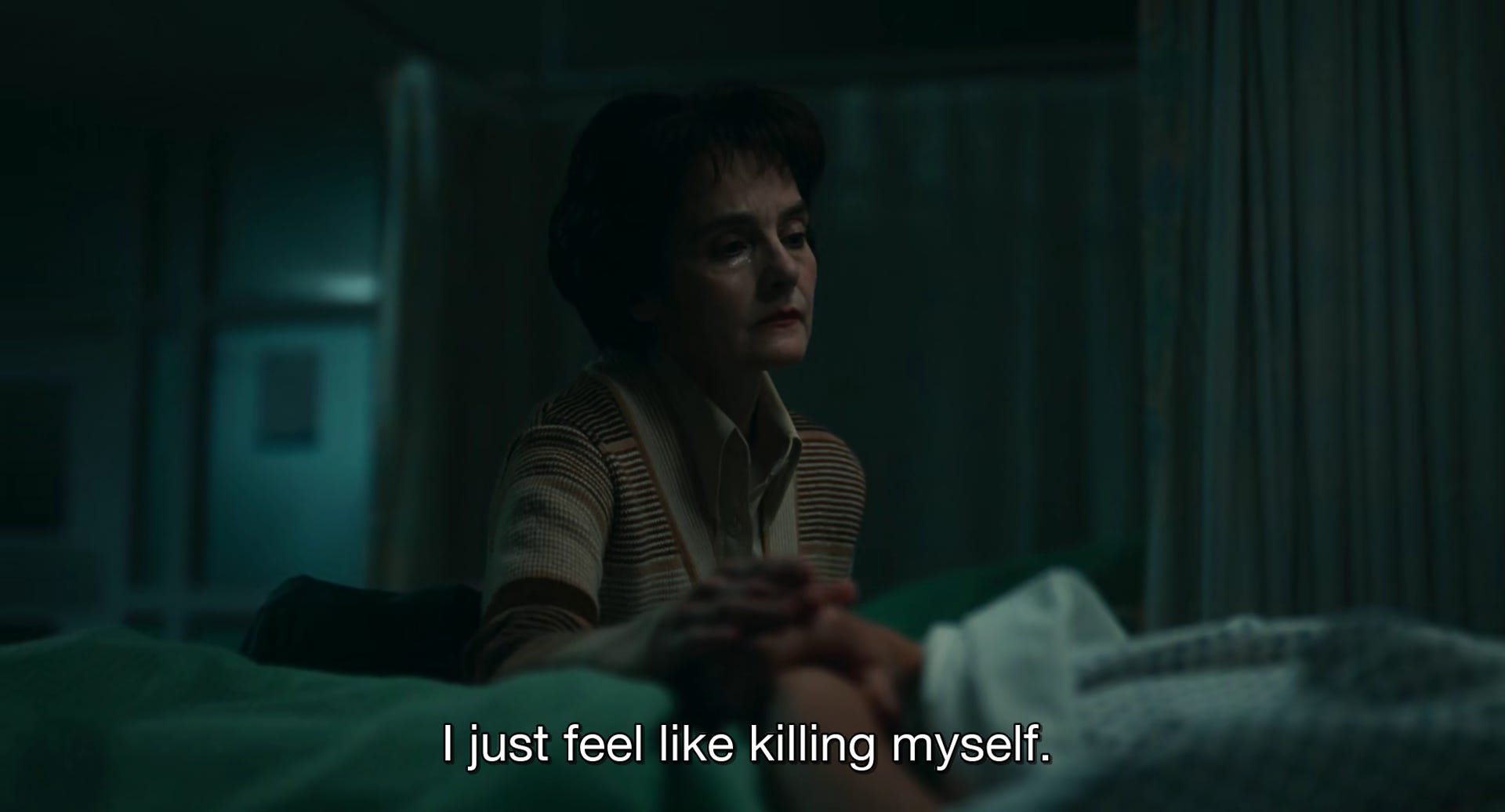
The film depicts several scenarios where Davidson contemplates or attempts suicide. He can’t attend the funeral of his staunch defender, Trotter, because of his disorder. Constantly Davidson must confront the gulf between the life he should be able to live and the life society makes available to him given his condition. Talking to another young woman with Tourette’s as he is taking on his mentorship role, he recounts some of his lowest moments, “I just wonder what I did to deserve to be like this.”
An early lesson for Davidson is the meaning of tics. He must learn, as must those around him, that they do not have meaning. In another memorable monologue, Achenbach reassures him:
I need to speak to you about your language. We have one rule in this house. And that’s if you do anything you can’t help, you never, ever have to apologize for it. If you’re out in the street with people who don’t understand you, then fine, you know, apologize, whatever, but in this house, where we know you can’t help it, you know, where we know you don’t mean it, well, it all means diddly squat.
And Davidson, consistent with the findings of research of Tourette’s scholars, suggests this understanding can diminish the frequency and intensity of the tics themselves, “Don’t engage in a conversation with the tics, just ignore them. The person insulting you is guilty of nothing. They need support and understanding.”
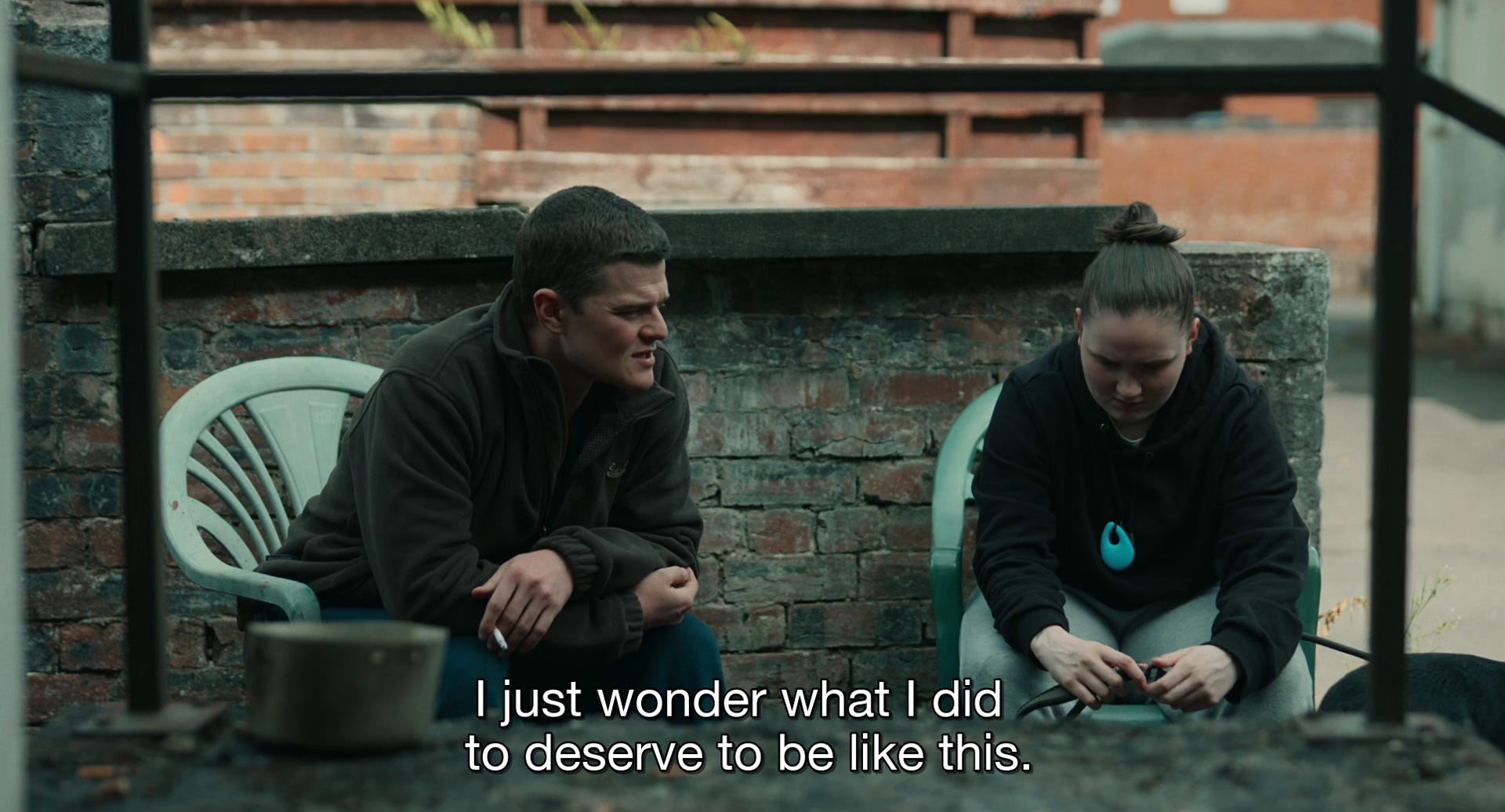
I have seen a strain of reaction to Davidson’s public tic that has repulsed me beyond belief. A film critic, in a now-deleted tweet, calls for an “unambiguous” condemnation of “hateful slurs” in response to the tic broadcast. Given that it is precisely the lack of ambiguity in the condemnation that produces the tic in the first place, this is a profoundly ignorant and inappropriate time to call for such a condemnation. This mistake of the meaning comes from the short-sightedness of those for whom this incident is their first encounter ever with Tourette’s, and their first occasion to think about it. They are galvanized by what they have seen on television or reproduced on social media, but fail to recognize people live with Tourette’s everywhere and encounter all kinds of people whom they might tic in response to. Accordingly, they do not consider the fact that “what must be done,” in the spirit of social justice, is figure out how to make “normal” life work for everyone with any kind of disability. Tourette’s presents a challenge in service of social justice for everyone because “accommodating” it (using legal vernacular here) requires more from those who are made marginal in other ways.
There have, however, been more thoughtful responses from those who are not disability scholars, such as Sinners (2025) actress Jayme Lawson. She replies to a Hollywood Reporter interviewer:
I’ll first say a big shout out to Mike and Delroy, like let’s continue to honor them for how they handled that in real time, the grace and the dignity that they exercised, and the whole home team, everybody that was out there, like really carried themselves well. I think the events this weekend exposed a couple things. Institutionally, we still don’t understand what inclusion means. Just because you invite someone into a space, but you don’t provide the necessary resources to keep them and everyone else in that room safe by them being there, that’s not inclusivity. That’s exploitation. That man’s disability got exploited that night, and it led to multiple offenses. That’s the BAFTA’s fault. And then the BBC, to air what they aired is careless. And not like some haphazard accident, no, like a real lack of care was exercised for those two Black men. And we know the BBC knows how to take care of what they care about, right, because they censored a bunch of other... they went so far as to make sure certain things weren’t topics of conversation. They censored Akinola’s speech, the director of My Father’s Shadow, which is an amazing film, by the way.
Davidson’s broadcasted ticcing and the ensuing conversation is an acute failure on the part of the BBC. They placed a microphone in front of him and, despite assurances otherwise, failed to edit his tic out of the broadcast. This ideological fracas, embarrassing as it should be for any reasonable society and progressively minded individual, has been, as Lawson says, exploited by publications like The Hollywood Reporter and Variety as they continue to belabor the issue without any concern for the cost those with Tourette’s will pay.
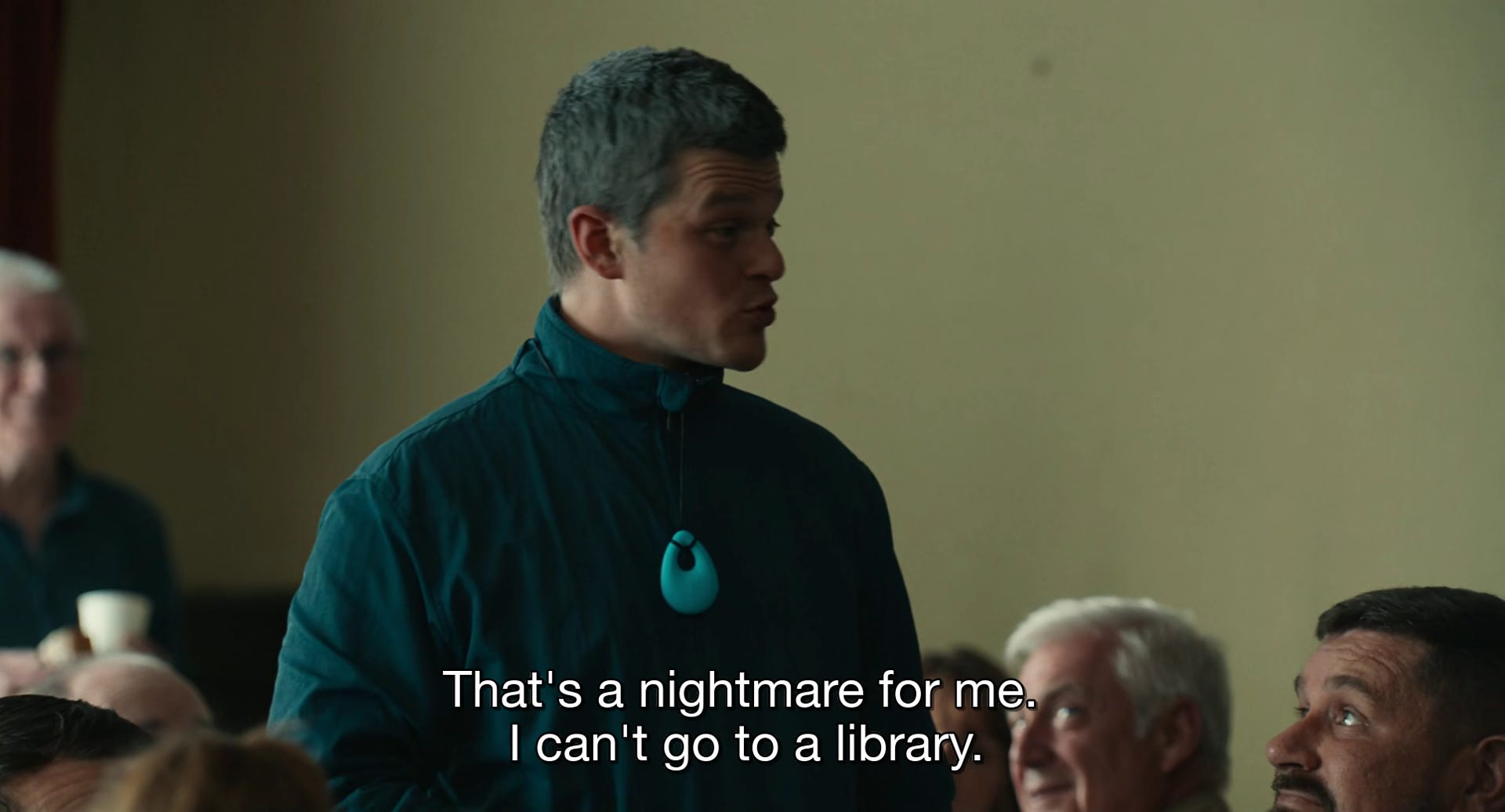
When it comes to how many have Tourette’s, the ICD-11 provides that remarkably low number: 0.5%. Other estimates are similarly small. Abdullah Yasir Yilmaz and Joseph Jankovic report a prevalence of “1% in children and adolescents and approximately 0.01% in adults” in “Epidemiology of Tourette Syndrome” (2025). Andreas Hartmann et al. quote a figure of 0.3% to 0.7% prevalence in school-aged children and 0.2% in adults in “Is Tourette syndrome a rare condition?” (2021), with the caveat that they believe the condition is under-diagnosed. Most people will have no occasion to encounter someone with this disability. Even fewer will be in a position to make decisions about how they can move through the world. But it is easy enough, in part of a social media frenzy, to inflame stigma and cause proximate harm without ever looking someone with Tourette’s in the face.
I won’t take part. The costs are too high and the risks too great for a long-suffering and terribly misunderstood group. How someone handles hearing a tic will always be personal. There are many compromises, I am sure, communities can find that meet the needs of those whose rights come into conflict. They will always depend on the who, what, and where. I won’t be too prescriptive, either, outside of suggesting this: it is an act of staggering moral cowardice to spout ableist vitriol in the guise of social justice. If nothing else, this incident proves far too few appreciate their privilege of staying silent.
Weekly Reading List
I recommend reading Martindale’s “Beyond the Tics,” available open access from Child Psychiatry & Human Development: https://link.springer.com/article/10.1007/s10578-026-01965-0
And Motherless Brooklyn if you like detective novels: https://www.strandbooks.com/motherless-brooklyn-9780375724831.html
Event Calendar: Brattle Film Foundation’s 25th Anniversary
There’s some brilliant programming at the Brattle this week in honor of their Film Foundation’s 25th Anniversary. Devil in a Blue Dress (1995) double-billed with Crime Wave (1953) is unbelievable.
Until next time.