

Would You Like to See Straight Ahead in New York City?
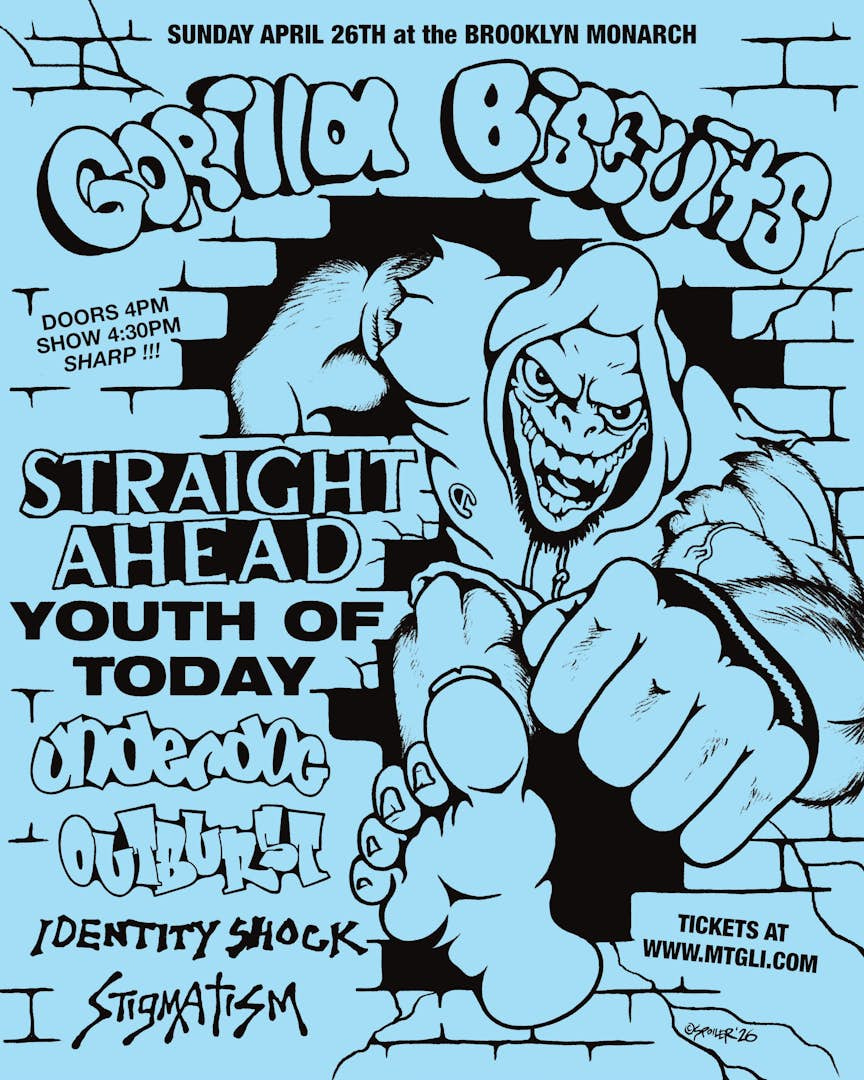
Straight Ahead is playing the Brooklyn Monarch with Gorilla Biscuits, Youth of Today, Underdog, Outburst, Identity Shock, and Stigmatism on Sunday, April 26th. In a first of its kind subscriber incentive, I will be raffling two tickets to this sold out gig. For all the scene soldiers who missed their shot copping or curious hardcore neophytes, you can see Straight Ahead and not pay the cost of admission. It’s a good deal.
How do you throw your hat in the ring? Purchase a paid subscription to Paradox Newsletter.
If you are a paid subscriber as of the afternoon 4/18, you’re in the raffle. I’ll run the raffle at 3pm on 4/18 using this website and stream on twitch.tv for posterity. No funny business here. Just subscribe for a chance to win the tickets. You can unsubscribe for May, entry into this raffle does not assume you will remain a paid subscriber outside of the month of April.
This might be obvious, but all you’re getting are the tickets. You have to get yourself to the gig.
Being a subscriber is also its own reward, because you get access to the archive. You get access to the newsletter Discord server. You get the warm and fuzzy feeling of supporting independent writing. There is also forthcoming paid sub-only stuff of a heretofore untouched medium for Paradox. You’ll be ahead of the game as everyone scrambles to join the ranks of the newsletter scene soldiers.
A generous reader who wants to remain anonymous donated these tickets, so thanks to them.
Contemporary Political Art in the Marvel Cinematic Universe
“Art is always political” is a common liberal-progressive truism. It has not emerged in a vacuum, but rather in opposition to a sentiment like this from Project Hail Mary (2021) author Andy Weir:
I dislike social commentary. Like… [sic] I really hate it. When I’m reading a book, I just want to be entertained, not preached at by the author. Plus, it ruins the wonder of the story if I know the author has a political or social axe to grind. I no longer speculate about all possible outcomes of the story because I know for a fact that the universe of that book will conspire to ensure that the author’s political agenda is validated. I hate that … I put no politics or social commentary into my stories at all. Anyone who thinks they see something like that is reading it in on their own. I have no point to make, and I’m not trying to affect the reader’s opinion on anything. My sole job is to entertain, and I stick to that.
Weir’s view is profoundly naive both to the function of artistic interpretation and the relation of art and politics. “Art is always political” because art is not made in a vacuum. It emerges from a political milieu, a social context, that imbues it with meaning that may be intended or unintended. The question of intention, what Weir does or doesn’t “put” in his stories, is likewise irrelevant to how one might receive it.
“Art is always political” as a response to Weir’s view, however, falls a bit short. There is a misalignment of meaning, too, in the two contrasting assertions. The political features of art emerge in spite of itself and distinct from the self-aware, avowed aesthetic undertaking of “political storytelling.” There are many authors like Weir who endeavor to entertain, but they can never fully inoculate their art against the political situation that is the condition for artistic production.
Unlike Weir, many authors have felt an acute responsibility of social consciousness within their art that goes far beyond the incidental political dimension “art is always political” asserts. The great Trinidadian writer Earl Lovelace writes in “The Arts, The Critics and a New Society” (1968):
The basic principles of artistic criticism are well known to critics. Basically, we ask: What is the artist trying to say? How well has he said it? And, is it worth saying?
However, today, in our condition, we need to look carefully at how we ask these questions. We need to note the context in which we ask them. In fact, we ought to ask: To whom is the artist speaking? Is he speaking to us at all? We need to consider whether the artist is representing us, whether he is speaking to us, and to what extent is he (if he makes the claim), mirroring our hopes, aspirations and attitudes realistically. Or whether he is representing an individual experience that is intimately his own, that does not keep pace with our thinking and our condition. In short, we need, today, to determine the artist’s relevance to us.
This question of relevance is of critical importance today because it is only when the artist and the arts are relevant that they fulfil [sic] their functions in the society. Most of the intellectuals and artists for a long time now have not really made any strenuous efforts to relate to the community in which they operate or of which they speak. (14, Donnell 23-24)
Though I have issues with Lovelace’s articulation of the “well known” principles of artistic criticism, what is critical here is what he suggests happens beyond “basic” critique. Lovelace looks at art’s relevance as fulfilling a social function, namely, “relat[ing] to the community in which they operate or of which they speak.” This idea is critical for Caribbean literature of the period, with Lovelace considering European expatriates from the Caribbean who are, at the time, its exemplars.
Sylvia Wynter follows Lovelace’s thinking with a more direct critique of Louis James’s The Island in Between (1968), writing in “We Must Learn to Sit Down Together and Talk About a Little Culture” (1968):
He sketches the history of the Caribbean from an Archimedean point outside the historical process. Yet it is a process in which he is as involved as is the West Indian. This pretended objectivity and detachment is the common stance of what I call, for convenience, the ‘acquiescent critic.’ In attempting to write from outside the process, in pretending detachment, the ‘acquiescent critic,’ accepts the status quo.
James, as an English teacher teaching in a West Indian university, passing judgement on West Indian writing, is mediated to his bones by the colonial experience, by the colonial myth in which he is involved (26-27, Donnell 25)
Wynter’s elaboration of Lovelace points back to the idea of the inherent political quality of art. Her issues with James is his detachment and attempt to present himself as disinterested in the milieu and authorial context he describes. He is, in Wynter’s view, unable to recognize the ideological framework that structures his very critique.
There is an ideological framework, too, that governs the possibility of Weir claiming his art is apolitical. That is the ideology of consumerism, escapism, and the idea that art is capable of providing a purely self-effacing enjoyment that carries with it none of the vicissitudes of the material world. Indeed, Weir seems to feel the responsibility of producing art as commodity with the purpose of inert entertainment as exigently as Lovelace feels the responsibility to represent. Unfortunately for Weir, one cannot escape the aesthetic reality of having represented something.
Stuart Hall develops the thinking of Lovelace and Wynter (and Roland Barthes) in his “Introduction to Media Studies at the Centre” (1980), referring to the educational program of the Centre for Contemporary Cultural Studies:
[W]e broke with the passive and undifferentiated conceptions of the “audience” as it has largely appeared in traditional research—influenced, as these had been, by the surveying needs of broadcasting organizations and advertising agencies. We began to replace these too-simple notions with a more active conception of the “audience,” of “reading” and of the relation between how media messages were encoded, the “moment” of the encoded text and the variation of audience “decodings.” (Writings on Media 170)
Hall goes on:
[T]he question of the media and ideologies returned to the agenda a concern with the role which the media play in the circulation and securing of dominant ideological definitions and representations. This more classical set of concerns contrasted sharply with the “mass-culture” models which underpinned much early American research and the resounding absence in that whole body of work of the question of ideology. (Writings on Media 170)
All of this is to say that the meaning of a work of art is never determined at the moment of its creation, but rather at the moment of its reception. Additionally, both the political situation that produced the work and the political situation in which it is received alters the work’s meaning.
While there is certainly avowedly political art in contrast to the work that is ‘incidentally political,’ neither satirical nor ‘socially conscious,’ there is also work that is clearly offering precise social commentary despite an author’s protestations to the contrary. Take, for instance, this year’s new season of Daredevil: Born Again (2025). Showrunner Dario Scardapane has distanced himself from the idea of contemporary social commentary doing press for the season. The ongoing plot involves the Anti-Vigilante Task Force, reporting directly to Wilson “Kingpin” Fisk (Vincent D’Onofrio), operating in a manner similar to Trump’s Immigration and Customs Enforcement.
In a conversation with IGN, Scardapane appeals to the the production timeline and source material to defang the allegory:
This is picking up Charles Soule’s Mayor Fisk storyline that was written about 10 years ago, in 2016 … The first and second season is ‘rise of a tyrant.’ Whether that’s applying to now? I’m not in that space. I’m in ‘What if Wilson Fisk, criminal, rose to power as mayor?’ Yes, sometimes we’re feeling prescient, but all of this stuff was written long before these events.
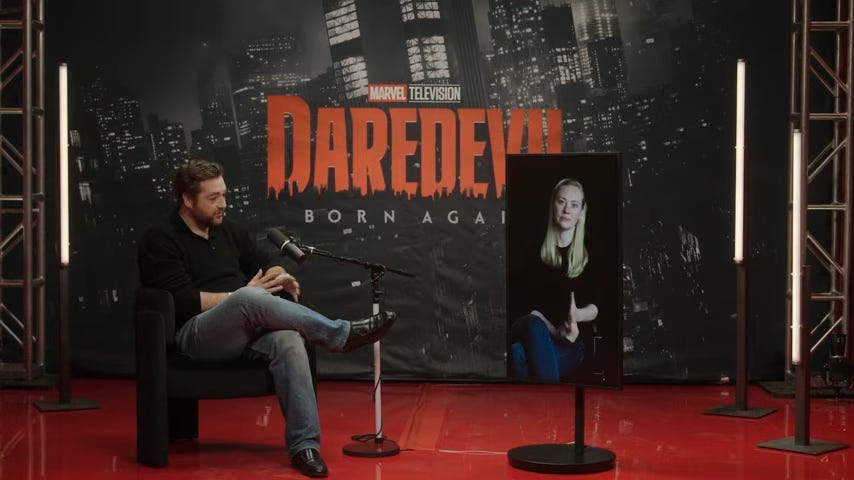
Bracketing the AVTF-ICE parallel, there are other symbolic parallels in Born Again’s second season. The Born Again Official Podcast’s companion to “Shoot the Moon” has Deborah Ann Woll, who plays Karen Page, discussing the character motivations with Michael Gandolfini, who plays Daniel Blake. Woll says:
If you were to get sucked into a community, a group, a movement that suddenly down the line you’re realizing, oh wait, this isn’t what I thought it was? Or this is now starting to ask me to step beyond my moral boundaries, like what do you do in that situation? How do you either step out or do you dive in deeper?
One can recognize the obvious parallel with the Trump supporter in Woll’s analysis, even as Scardapane denies them. Crucially, though, Woll keeps her social critique abstract and hypothetical. This is a feature of a show produced by Disney. Scardapane and Woll are media trained and careful not to alienate fans. Paraphrasing Michael Jordan, republicans watch Daredevil too.
There are other, more urbane allusions Scardapane is comfortable owning. In an Entertainment Weekly interview, he talks about scenes that allude to “the Turkish invasion of Cyprus” and Ryan Coogler’s Fruitvale Station (2013). But much as Scardapane attempts to point audiences away from the most obvious contemporary parallels, they are evident.
Born Again and the supposedly unintended similarities to Trump immigration and policing policy and accidental exploration of Trump supporter psychology are a case study in how art is political with or without intention. As Hall says, a work’s meaning is derived both from its “’moment’ of [encoding]” and “the variation of audience ‘decodings.’” Decoding Daredevil today means to recognize its condemnation of private, unaccountable police forces and unmoored political supporters. Likewise, this method of interpretation is why Weir’s assertion of being apolitical is worth less than nothing.
Weekly Reading List
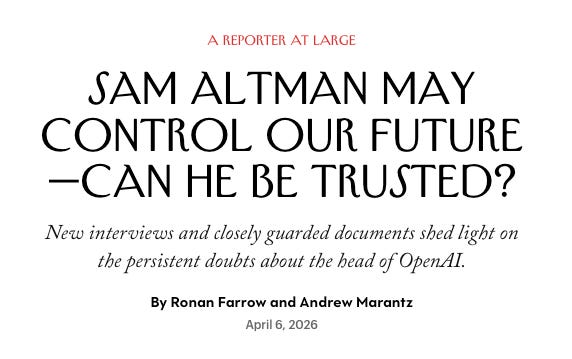
https://www.newyorker.com/magazine/2026/04/13/sam-altman-may-control-our-future-can-he-be-trusted — Ronan Farrow and Andrew Marantz come up big on the AI beat.
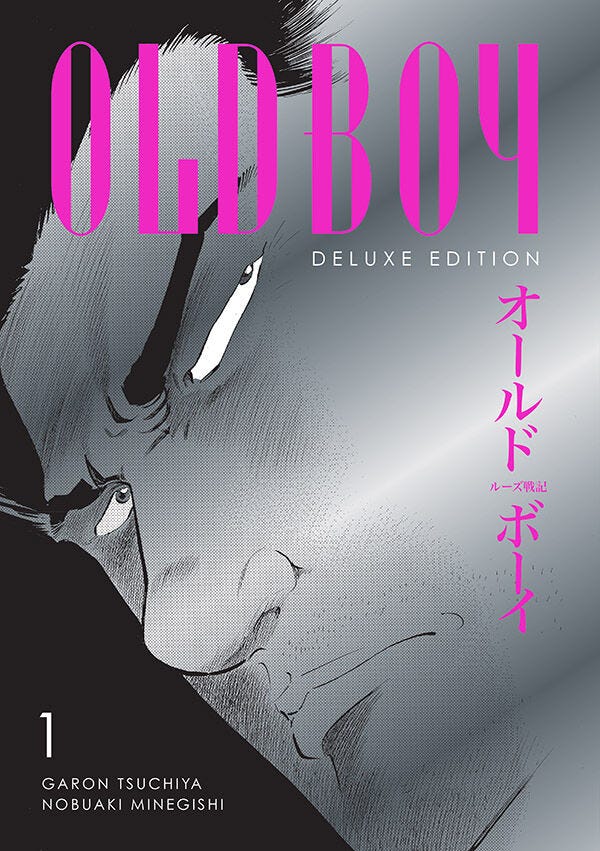
https://www.darkhorse.com/books/3016-662/oldboy-deluxe-edition-book-one-hc/ — The original Oldboy (1996) is out in deluxe edition. It’s a great time to read a stone cold classic.
I love Eric Collins.
Event Calendar: IFFBoston and Shadow of a Doubt
This week I added the tentative (but also fast approaching) dates of interest for the upcoming IFFBoston. Also added some of Coolidge’s Big Screen Classics, including a screening of Shadow of a Doubt (1943) where I will be seated.
Until next time.