

Issue #443: Seijun Suzuki and Incomprehensible Filmmaking
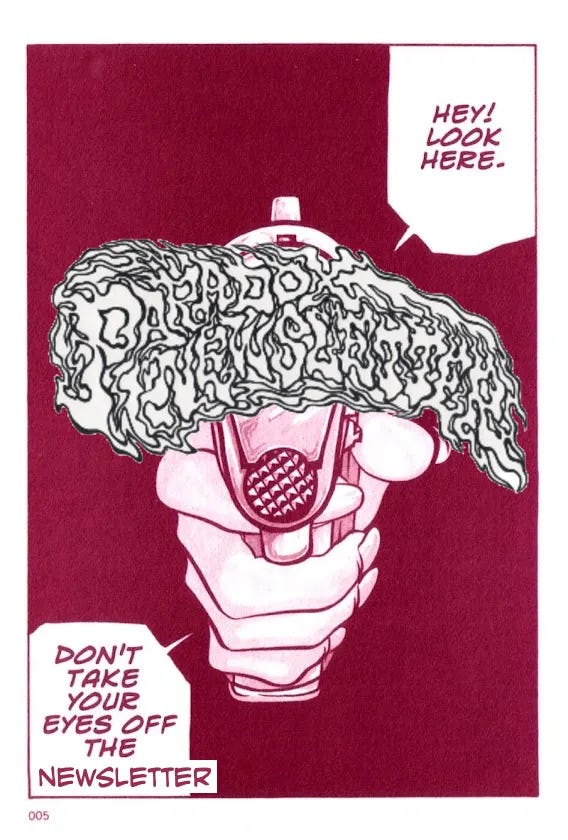
Eventually my two issue series on The Odyssey (2026) had to come to an end. Now, as is the newsletter’s beat (big budget films) I must turn my attention to the next big thing: Spider-Man: Brand New Day (2026).
Kidding. I wrote about Seijun Suzuki this week. You think he could break box office records with the right promotion?
Other brief news items:
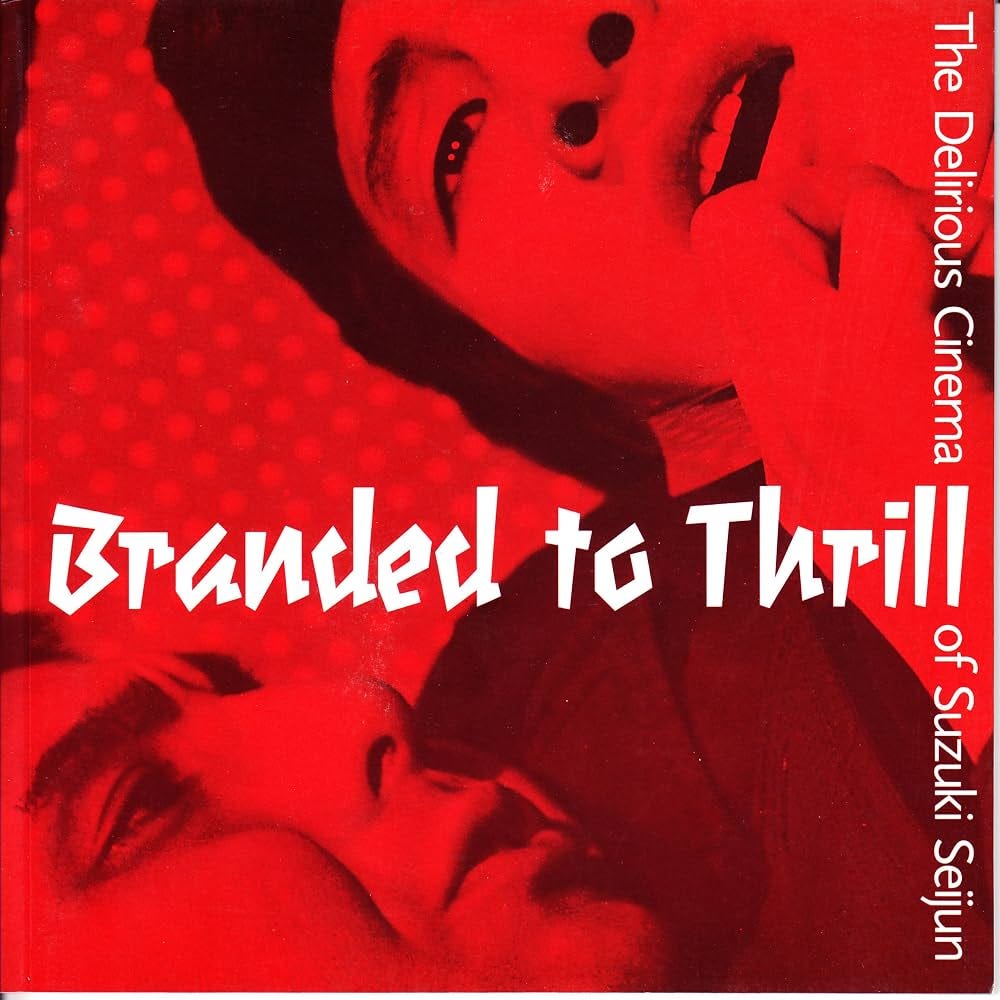
I would like to know if anyone’s local library system has a copy of this brief book on Suzuki, Branded to Thrill (1995) by Simon Field and Tony Rayns.
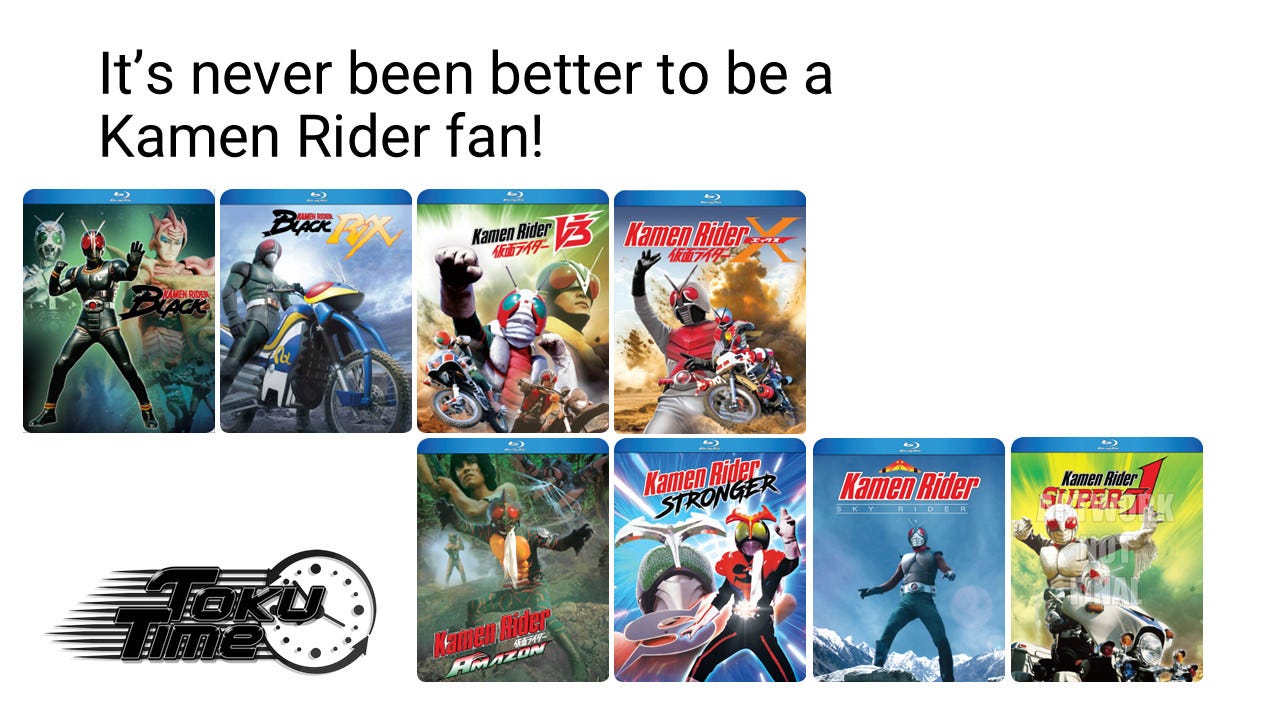
Discotek Media has a lot of Kamen Rider right now, including the recent announcement of Kamen Rider Super 1 (1980).
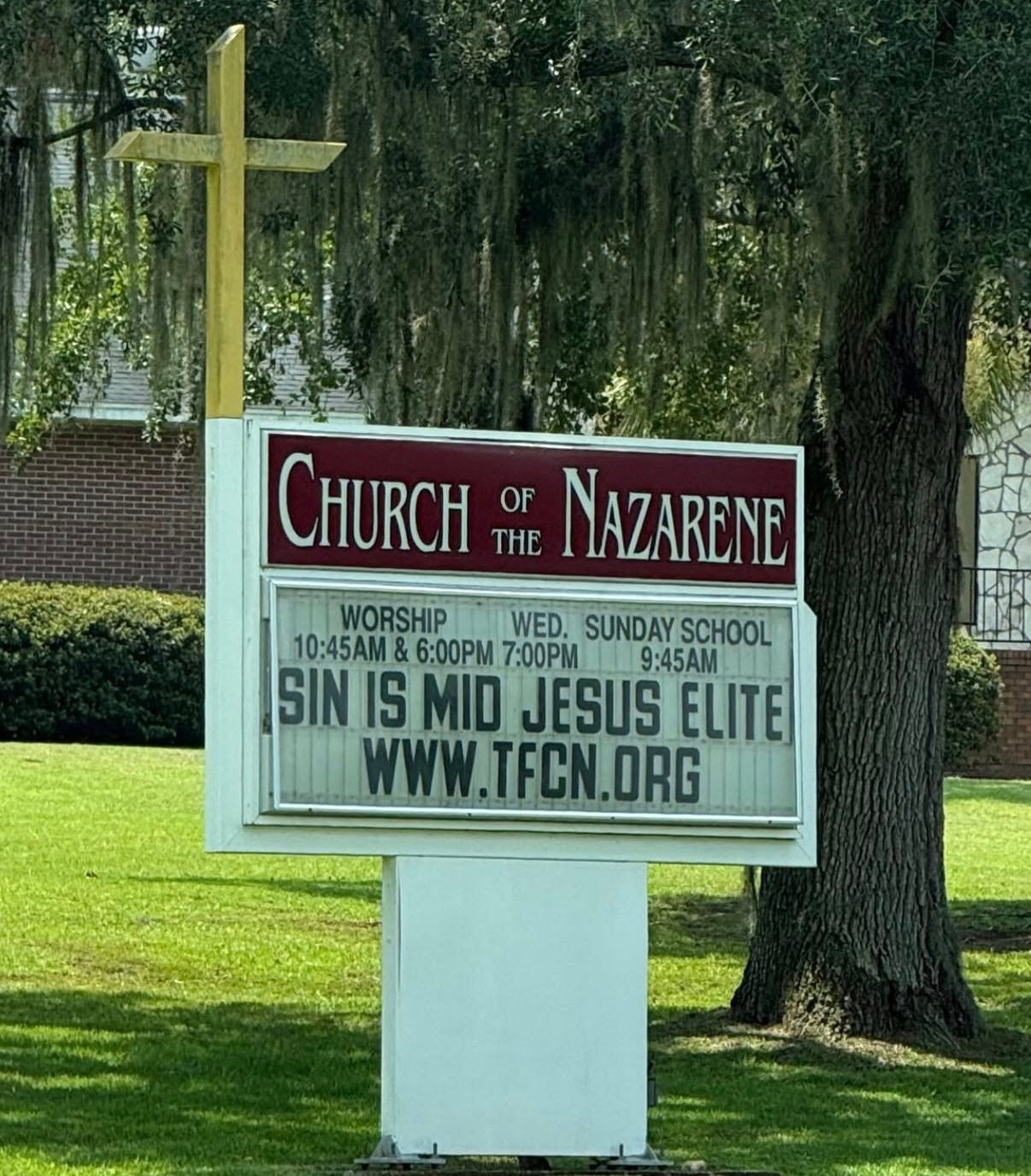
A church in Tallahassee has this sign up.
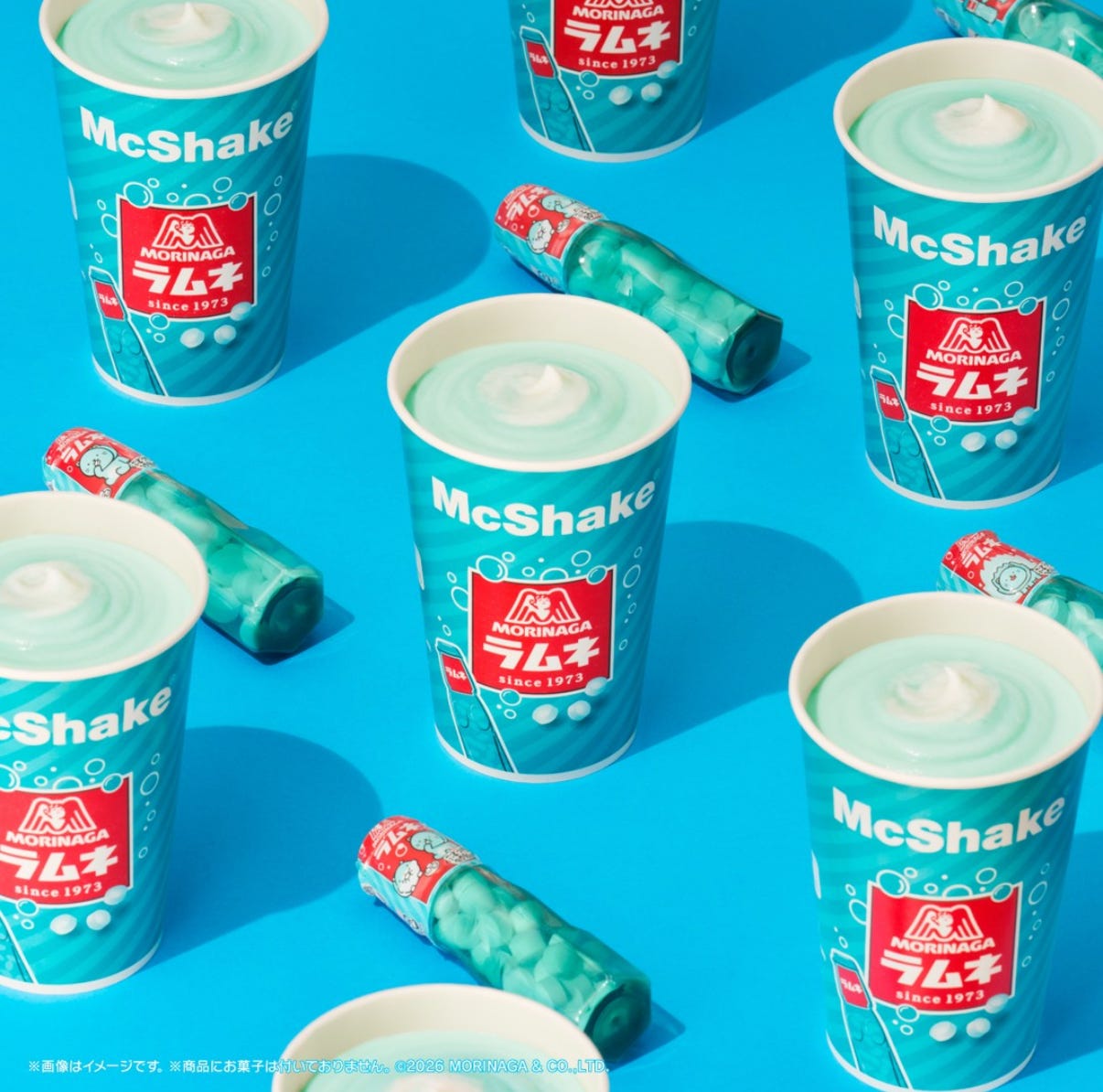
McDonald’s Japan is selling a ramune flavored shake by way of the Morinaga ramune candy.
The missing Rai Rai Rai (2023) chapters got backfilled on Viz. Not the Viz manga I chose to put in the weekly reading list, but it’s good.
Devotees of Style: Seijun Suzuki, Suda51, and Atsushi Kaneko
What is it that makes Killer7 (2005) so distinctive? It goes far beyond the normal aesthetic and design flourishes of Goichi Suda, otherwise known as Suda51. The plot of the game involves a group of eight assassins all residing within the body of the elderly Harman Smith (Dwight Schultz). With “Multifoliate Personae Phenomenon,” he can physically transform into one of seven different personalities — each a fellow assassin whom Harman himself killed.1 It also involves monstrous Heaven Smile terrorist organization, global conspiracy, and geopolitical conflict between the United States and Japan.
The plot is absurd and surreal, matched by the visuals and supporting cast with idiosyncratic names and behaviors. Killer7 is a bizarre amalgamation of David Lynch, Kinji Fukasaku, and Alan J. Pakula. But there are very few works that capture what this unquestionably unique sensibility becomes when executed by Suda51.
A more all-encompassing influence of Killer7 and Suda’s subsequent work No More Heroes (2007), is director Seijun Suzuki. Branded to Kill (1967), especially, seems to the film to which Suda51 is most indebted. If Killer7 is the apotheosis of the Suda51 style, the counterpart for Suzuki is Branded to Kill.
There are obvious similarities between the two, including the surreal visuals, the juxtaposition between absurdist comedy and profoundly dark elements, and the overall plot.
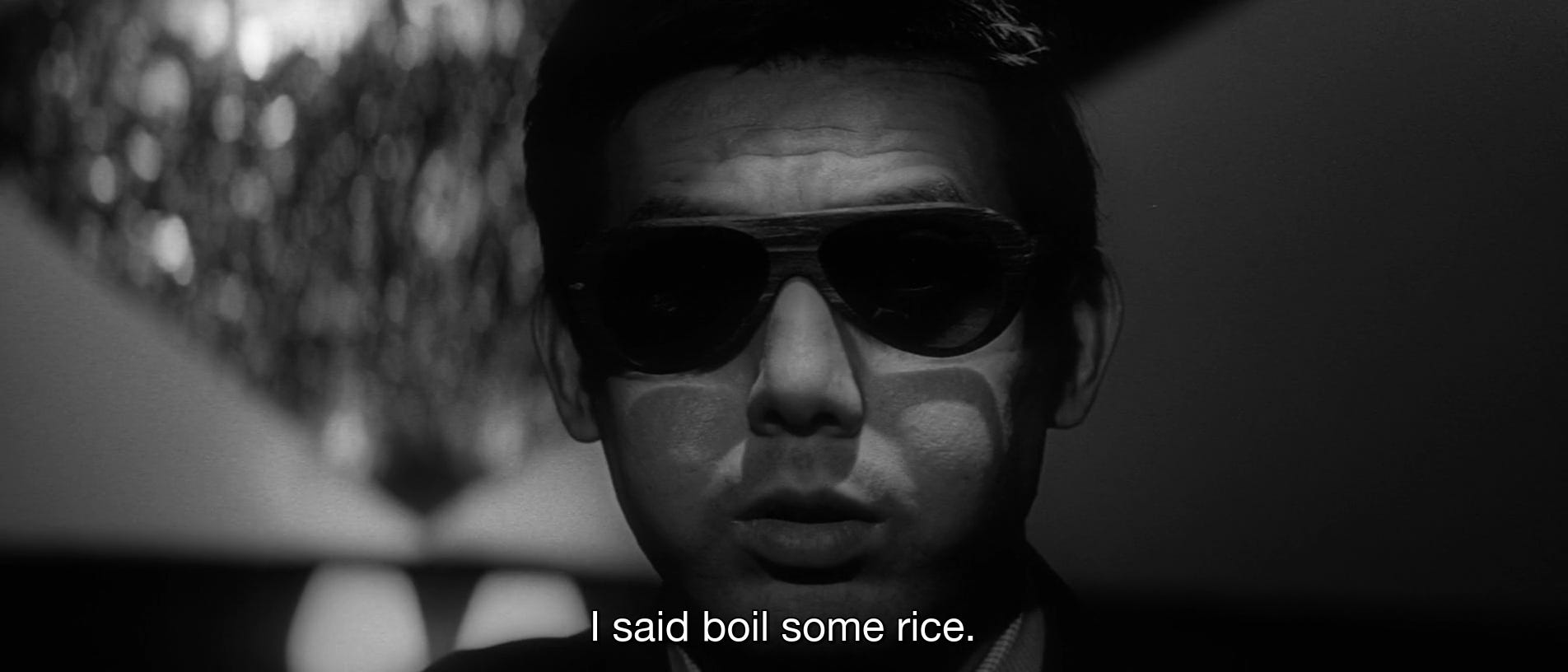
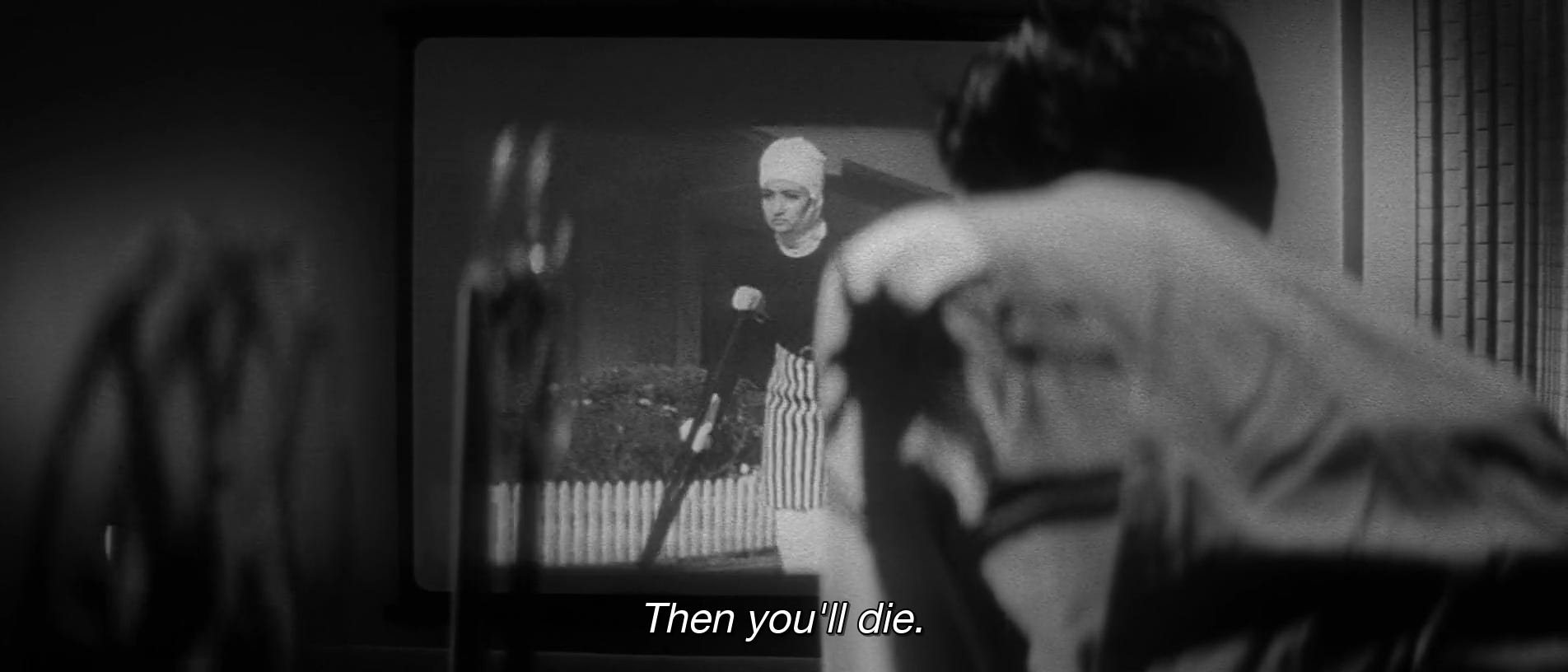
Similarities between the rhythm of the plot and even patterns of character speech are more subtle. Suda51 seems to borrow the repetitive phrasing for his supporting cast from corresponding characters in Branded to Kill, like Gihei Kasuga’s (Hiroshi Minami) lamentations of formerly being a pro assassin.
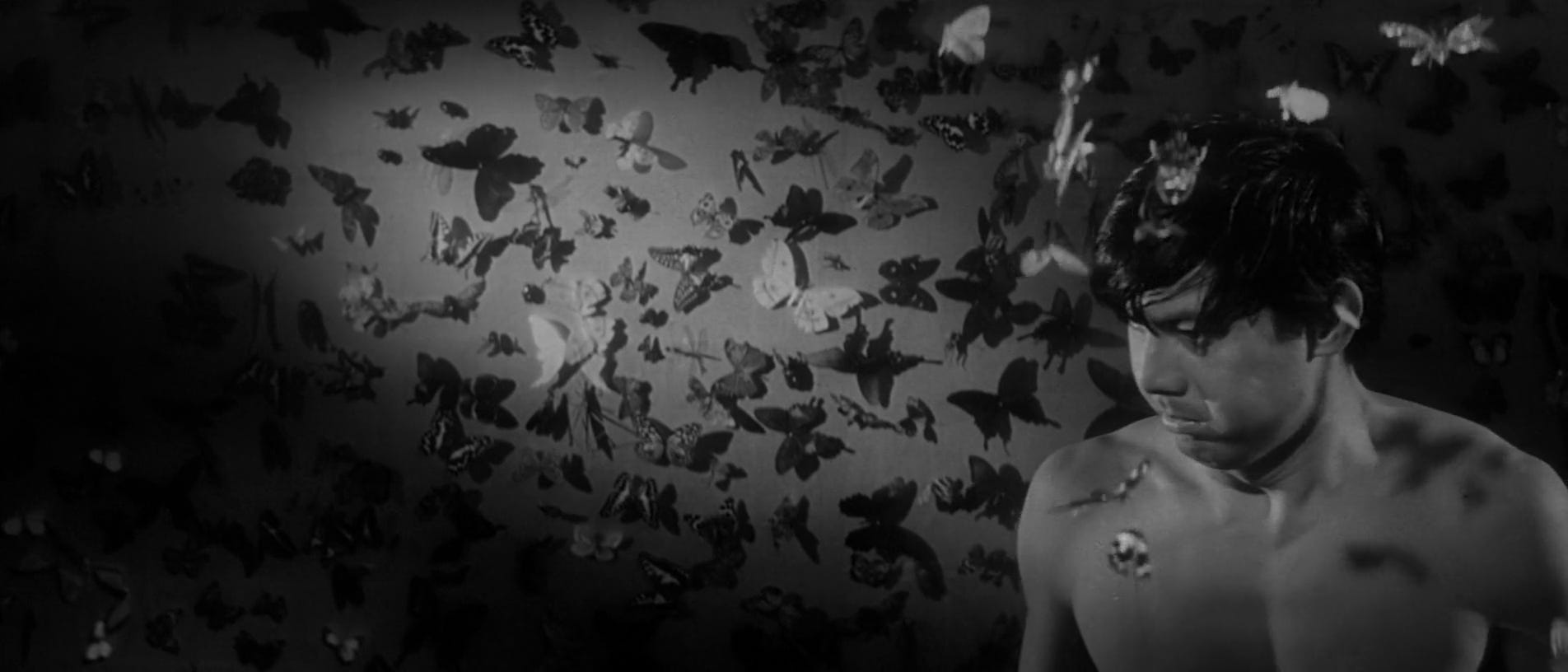
Killer7 and Branded to Kill share the dubious honor of critical and commercial disappointment. Nikkatsu studio head Kyūsaku Hori fired Suzuki in 1968, following the release of Branded, seemingly with great personal animus. Hori repeatedly called Suzuki’s films “incomprehensible” and suggested “Suzuki should open a noodle shop or something instead” (Miyao 194). Daisuke Miyao claims in “Dark Visions of Japanese Film Noir” (2007) that Branded to Kill is, in part, “a social critique of rapid urbanization”; “Tokyo’s dirty, vulgar, and filthy things became hidden beneath an apparently clean surface” (197). The film moors protagonist Goro Hanada (Joe Shishido) in a disorienting world of uncertainty and repression. Whatever Hanada himself exposes by, for instance, his libidinal obsession with cooking rice, is incompatible with the world of the film that seeks to sand away these rough edges.
The disordered position Hanada occupies, and the fact that Branded itself is dismissed as “incomprehensible,” put them on the side of the negative surplus that anatomized by Lee Edelman in No Future (2004):
The drive — more exactly, the death drive — holds a privileged place in this book. As the constancy of a pressure both alien and internal to the logic of the Symbolic, as the inarticulable surplus that dismantles the subject from within, the death drive names what the queer, in the order of the social, is called forth to figure: the negativity opposed to every form of social viability. (9)
He goes on:
The drive holds the place of what meaning misses in much the same way that the signifier preserves at the heart of the signifying order the empty and arbitrary letter, the meaningless substrate of signification that meaning intends to conceal. (10)
If Branded and Killer7 are dismissed as incomprehensible works, it is precisely because they attempt to excavate that intractable something which is concealed by the organization of meaning. Their disparagement or dismissal is a structural necessity in the logic of the Symbolic order which excludes by its very function (102). Edelman writes, contra Judith Butler’s Antigone’s Claim (2000):
Butler’s reading thus buries Antigone once more — or buries in her the sinthomosexual who refuses intelligibility’s mandate and the correlative economy that regulates what is “legitimate and recognizable.” Just as the law in North by Northwest is compelled to get rid of Leonard, so Butler’s reading expels the Antigone who turns no face to the future but takes heart to the meaning of her name, “construed as ‘anti-generational’” (22). (105)
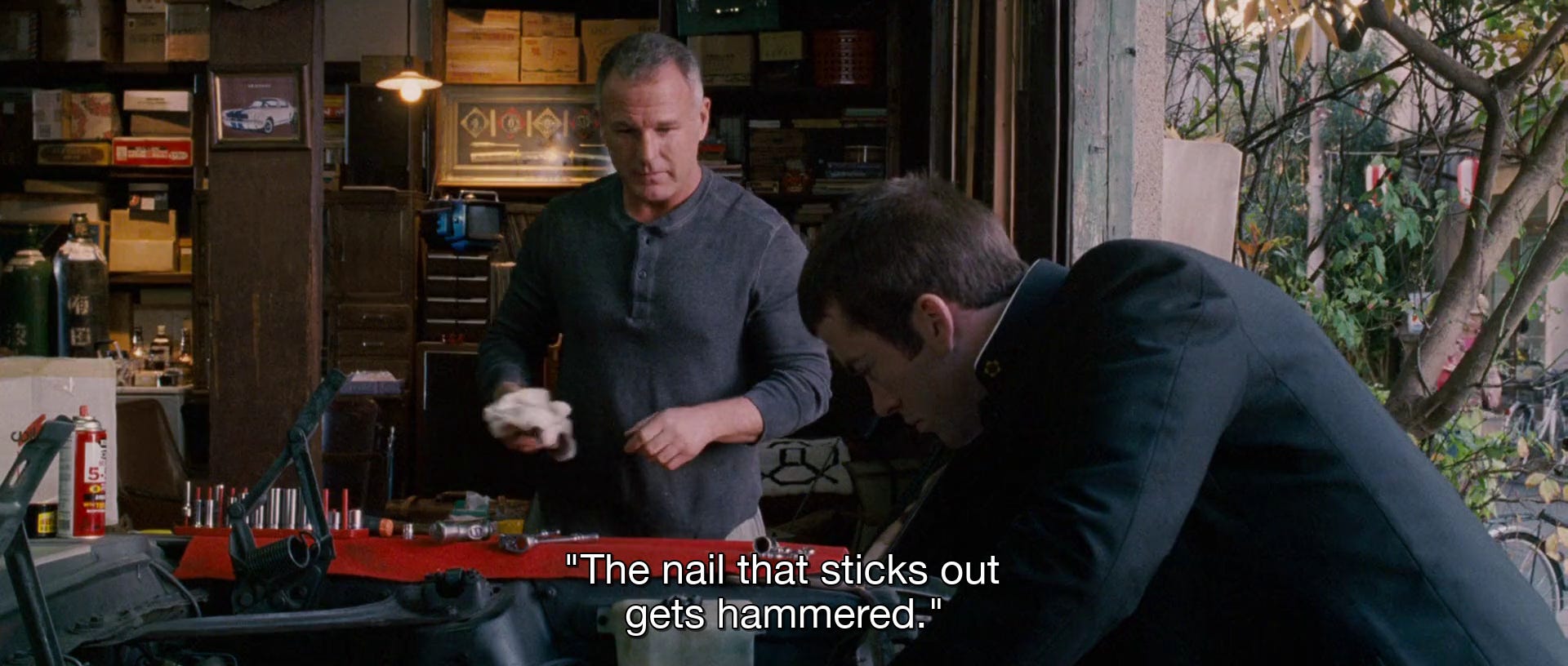
Extending this analogy further, one can look to the Japanese idiom: deru kui wa utareru or “the nail that sticks out gets hammered hammered.”
Manga artist Atsushi Kaneko uses his own variation on the phrase in Deathco (2014), “the overgrown plant is cut down.”
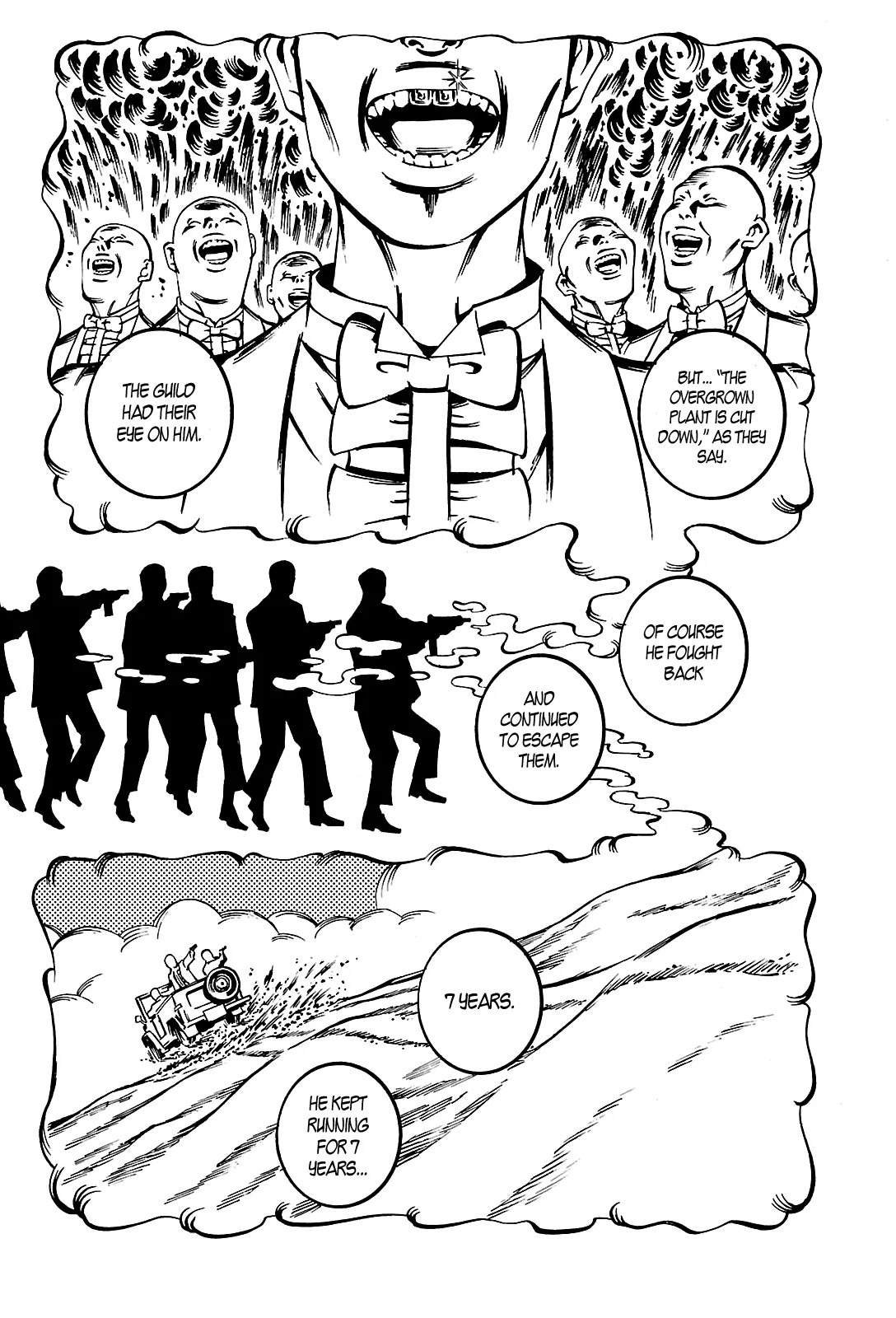
This manga by Kaneko is another definitively similar work following Killer7 and Branded to Kill. Despite the aesthetic and plot similarities, Kaneko gives no credit to Suda51. In a Q&A session hosted by Frederico Anzalone, an audience member asked Kaneko about a possible chain of influence to which Kaneko replied, “Sorry, I don’t play video games. I don’t know him at all.” By contrast, Kaneko venerates Suzuki’s role in influencing Deathco, “I was really inspired by Suzuki’s Branded to Kill, it’s a really weird movie that I liked a lot, and it inspired me for this manga.”
When all is said and done, the style for which Suda51 is celebrated has its roots in Suzuki’s work. Branded to Kill and Tokyo Drifter, among Suzuki’s other “incomprehensible” films, mark him as exceptional among his peers. So much so that Suzuki sued Nikkatsu Studio in the wake of his 1968 firing, supported with widespread protests including luminary filmmakers and university film societies. Suzuki’s work is still standing and his peculiar worldview inhabits radical art across mediums.
Weekly Reading List
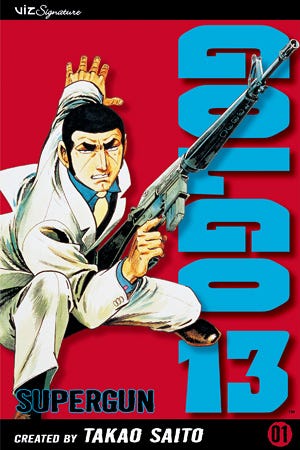
https://www.viz.com/golgo-13 — It is time for you to go on the internet and read Golgo 13 (1968).
Has there ever been a musicological account of the “Snow Halation” phenomenon?
Event Calendar: Kiyoshi Kurosawa is Back
Added some local screenings for The Samurai and the Prisoner (2026) as well as a few other exciting nationwide engagements.
Until next time.
This plot summary is not strictly correct, but it is what is conveyed early in the game.