

Issue #444: Junkyard Cinema
This weekend, I dressed like an NBA prospect on draft night.

What was the occasion? My great friends Jack and Emily got married. Huge congratulations to them. Sometimes good things happen.
Incision Scars and Unexpected Encounters in Tubi Original Match

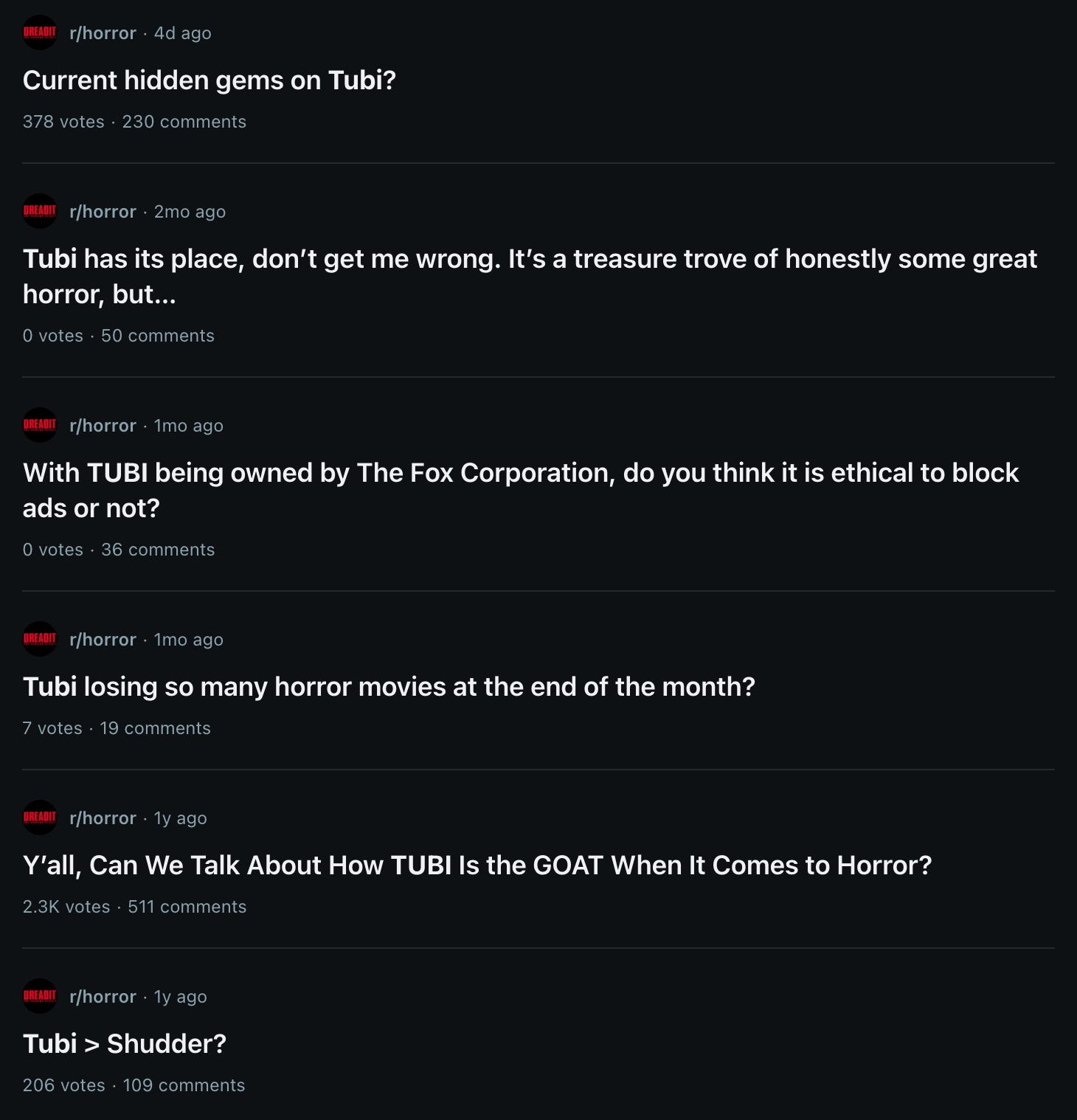
There is a well-established repository of under-the-radar horror films for in the know enthusiasts. No, I’m not talking about Shudder or Screambox. The place that houses the most obscure, most shocking non-theatrical horror films is none other than Tubi.
This isn’t the first coverage of Tubi in Paradox. Back in 2022, I interviewed The Final Rose director Tim Cruz and wrote about his Tubi Original film.


The Final Rose remains, as far as I can tell, among the best original films ever licensed under the Tubi Original banner. But there are plenty more where this came from, ranging from horrendous to reasonably good.
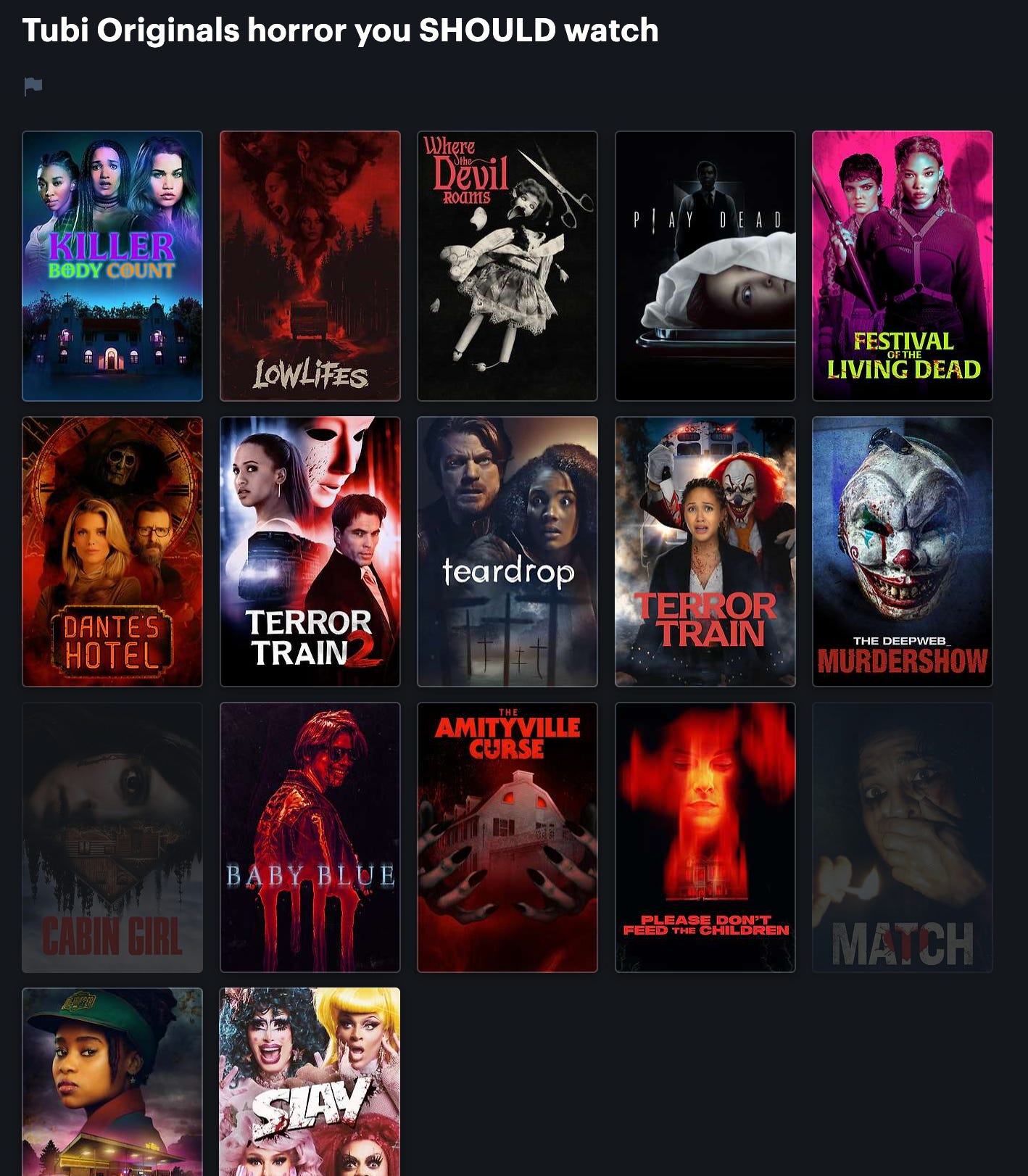
This past weekend, I watched Danishka Esterhazy’s Match (2025), a film unique enough to deserve some high-minded theorizing. Match has all the hallmarks of ‘microfilmmaking.’ Being housed on Tubi, it is ignominious’s punctuated with commercials. My friend Ronnie suggested one early scene was “filmed like a pharmaceutical ad,” an astute observation. The idea of “trash cinema,” the kind of salacious exploitation film that is most likely to screen at midnight in repertory theaters across the world, is a well-established pop and academic film critical term. Match is something else entirely. It’s film crawling out of the junkyard.
The premise of Match is not particularly novel. Humberly González plays Paola, a dating app power user looking to swipe right on love. Instead, she ends up the victim of a predatory misrepresenting himself online to attract women to his large, disgusting home. Match has sustained a number of comparisons to Zach Cregger’s Barbarian (2022); a remarkably facile assessment of similarity. The two films have virtually nothing in common, although there seems to be the same kind of liberal-progressive social justice ideology permeating both to some degree. Just as Justin Long’s AJ uncomfortably embodies the essence of rape culture, Paola suffers through endless mispronounced names, racist remarks from potential suitors, and various indignities based on her race and ethnicity. Other characters are mocked for their weight and appearance, something which the film clearly positions as immoral.
But Match can hardly be called a moral film. In fact, the film is so full of obscene and horrifying incidents, I wouldn’t even summarize a vast majority of the plot in writing anywhere. It’s not a film for the faint of heart. I encountered it with no such preparation or knowledge of what Match would contain. The fact of the matter is, you can just navigate to this film on Tubi and click play without any warnings or additional steps given the film’s content. It is a repulsive, disgusting work of cinema so extreme that the point of interest of the film cannot be the individual instances it contains, but the broader filmic container that houses circumstances committed to narrative film only rarely.
Remarkable as the film is, Danishka Esterhazy, the director, becomes my first point of analysis to understand how this film might’ve come to be. The only other film of her’s I’ve seen is Slumber Party Massacre (2021), a serviceable and moralistic revenge fable of women menaced by a stalker. Match abandons the pretext of progressivism for repellent shock value, whereas Slumber Party Massacre maintains its ethical positioning to its conclusion. The difference, then, cannot be Esterhazy’s helming of both and instead could involve the distinct screenwriters. For Slumber Party Massacre, Suzanne Keilly handles sole writing duties. Keilly is best known for Warrior Nun (2020) and Ash vs. Evil Dead (2015). Match is written by Jon and Al Kaplan, two equally inexperienced film writers better known as composers for the Terrifier series. The film makes clear something is wrong with these guys.
Keilly’s contributions to Slumber Party Massacre ultimately make the end result something actually resembling a normal movie. The Kaplans are not able to do the same when it comes to Match, for better or for worse. It is ugly, meanspirited, and punitive to its characters likely in the way either the Kaplans or Esterhazy intended. The obscenity it presents comes at the cost of any subtlety whatsoever. To put this another way, and to avoid narrating things that I’m sure are painfully obvious to anyone who has seen the film, what Match represents in its text are usually ideas relegated to a film’s subtext and not depicted on screen.
While Production Code-era film does not have a monopoly on sublimation, substitution, and metaphor, there are any manner of clever evasions of the strict regulations in the four-ish decades Hollywood was subject to the Hays Code.


Contrasting a Product Code-era film like Gilda (1946) with the delimited signification of Match helps elucidate Jacques Lacan’s oft-quoted aphorism, ‘the unconscious is structured like a language’ (Seminar III 11). Arguing for his claim in more detail, he writes in “The Subversion of the Subject and the Dialectic of Desire”:
the unconscious is governed, correspond exactly to the functions this school of linguistics believes determine the most radical axes of the effects of language, namely metaphor and metonymy—in other words, the effects of the substitution and combination of signifiers in the synchronic and diachronic dimensions, respectively, in which they appear in discourse. (Écrits 676-677)
The crucial point is that the unconscious, following Freud, utilizes these mechanisms of metaphor and metonymy in its rendering of signifiers. He draws out metonymy’s meaning and function in more detail in “The Instance of the Letter in the Unconscious”:
It is among the figures of style, or tropes—from which the verb “to find” [trouver] comes to us—that this name is, in fact, found. This name is metonymy.
I shall refer only to the example of it given there: “thirty sails.” For the worry I felt, over the fact that the word “ship” [bateau] that was hiding therein seemed to split its presence there in two by having been able to borrow its fig urative sense from the very rehashing of this example, veiled [voilait] not so much those illustrious sails [voiles] as the definition they were supposed to illustrate.
The part taken for the whole—I said to myself, if the thing is supposed to be based on reality [réel]—leaves us with hardly any idea what we are to conclude about the size of the fleet these thirty sails are nevertheless supposed to gauge: for a ship to have but one sail is very rare indeed.
This shows that the connection between ship and sail is nowhere other than in the signifier, and that metonymy is based on the word-to-word nature of this connection.
I shall designate as metonymy the first aspect of the actual field the signifier constitutes, so that meaning may assume a place there. (Écrits 421)
He goes on, contrasting metaphor and metonymy:
But to return to metonymy now, what does man find in it, if it must be more than the power to skirt the obstacles of social censure? Doesn't this form, which gives oppressed truth its field, manifest a certain servitude that is inherent in its presentation? (Écrits 423)
In short, an underrated quotation from Lacan that has not yet reached the status of aphorism, “the letter kills while the spirit gives life” (Écrits 423).
Match’s flaw is the deadening effect of the letter. Because it represents things explicitly, shocking though it might be, it fails to access the horizons of imagination and symbolic meaning that “skirt the obstacles of social censure” that occurs when using substitution or subtext. Match has full frontal nudity while Gilda has only Mundson’s cane. It is absolutely indisputable which is richer and more expressive.
As much as Match’s explicitness marks it as unique, it condemns it to the shlock pile not simply because it is obscene, but because the attempt to present the unmediated image results in an image beneath consideration. Cinema of the junkyard may often shock and have particular points of intrigue. But to the extent these works adopt the blunt hammer of the obvious, they will fail to transcend the disfigurement that indelibly marks them — the cutting for the insertion of the advertisement.
Weekly Reading List
Good music. In Boston September 16th.
Big dog link up.
This movie looks spectacular.
Event Calendar: Secret Events
I smuggled an event in the above section. Did you catch that? The Samurai and the Prisoner (2026) has opened at select megaplexes nationwide, including my local AMC. I’ll be seeing it tomorrow.
Until next time.