

Issue #437: Returning to the Work of Naoki Urasawa
Naoki Urasawa is a frequent topic in this newsletter. My weekly series on Pluto (2023) from the end of that year is one of my favorite things I’ve ever written.

This week, though, it’s all about Billy Bat (2008). You can find an official English translation wherever you buy your paper or electronic books. And I implore you to buy it. “Peak fiction” is an inaccurate superlative at times. But not in this case.
When it comes to getting your music recommendations from Paradox Newsletter, one door closes and another opens. Paradox Newsletter Radio is back.
The playlist is updated and all new. I hadn’t changed it since the end of March. Here’s the archive. There are some sub-themes and groupings among the songs here. You, hopefully, notice an extended tribute to the late, great Tay Keith. He passed away a few days ago, too soon, at age 29. Tay Keith has a distinctive production style characterized by driving, syncopated hi-hat rhythms that he has bent, stretched, and refined. Some of his most famous and best productions include “Look Alive” and “Sicko Mode.” I put less appreciated examples of his beats on the playlist.
Keep an eye on it for periodic updates.
“Take this manuscript and run for your life”: Conspiracy and Negativity in Billy Bat
The official English publication of Naoki Urasawa’s Billy Bat (2008) has been a long time coming. Finally available from Kana Manga, Billy Bat stars Kevin Yamagata as a pastiche of Walt Disney. Kevin is an up-and-coming Japanese-American comic book artist who is working to complete a popular series, the titular Billy Bat. As he struggles to find a satisfying ending for the series, someone suggests the character is adapted from a Japanese manga while Kevin claims the character is original.
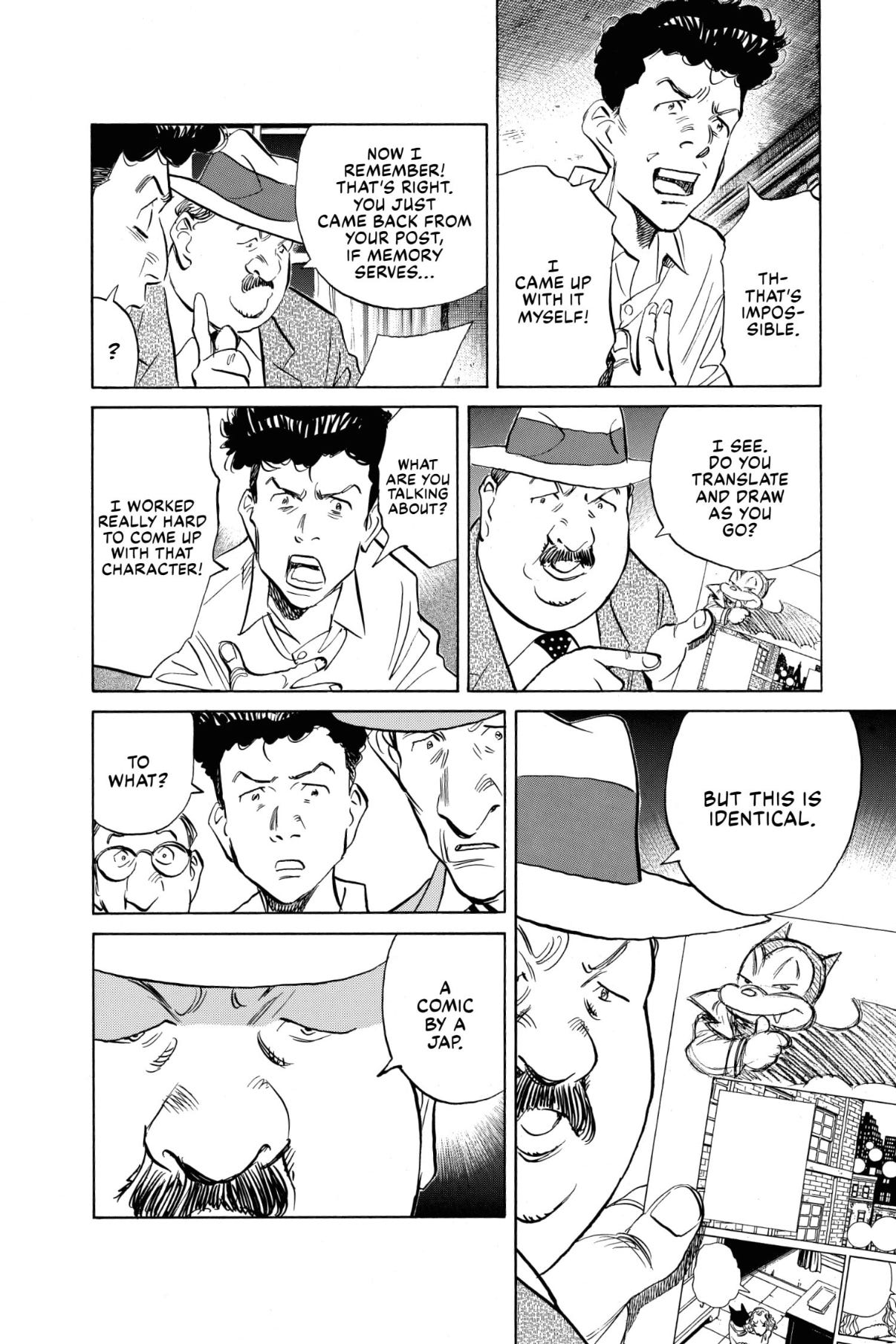
He goes to Japan to try to discover the original artist, quickly realizing a very similar character pre-dates Billy Bat in the manga series Batboy’s Big Adventure by Zofu Karama. Plagiarism, permission from Karama, and international copyright law are the least of Kevin’s worries, however, as the plot quickly spins out of control and comes to involve mysterious international organizations and ancient texts.
Urasawa is exceptionally acclaimed as a manga artist, but he tends to work in two distinctive modes. His work like Master Keaton (1988), Monster (1994), and Pluto (2003) is more episodic, taking some influence from classic non-serial comics as well as American investigative procedurals. 20th Century Boys, by contrast, involves a vast, conspiratorial plot with each subsequent plot development inextricably connected to what happened previously. Those connections, however, are sometimes oblique and opaque, befitting the disorienting quality of being embroiled in such a conspiracy. Billy Bat is in the tradition of 20th Century Boys, highly serialized and presenting the reader with events that may not make sense in the moment, but mean differently as the saga continues to unfold.
Billy Bat also uses the tropes self-reflexive, metafictional, postmodernism. The manga’s first chapter is entirely within the world of Kevin’s Billy Bat comic, complete with the beige pages of 1940s comic print — although the verisimilitude does not go so far as to orient the fictional American comic so one reads it left-to-right. As with most manga, it reads right-to-left.
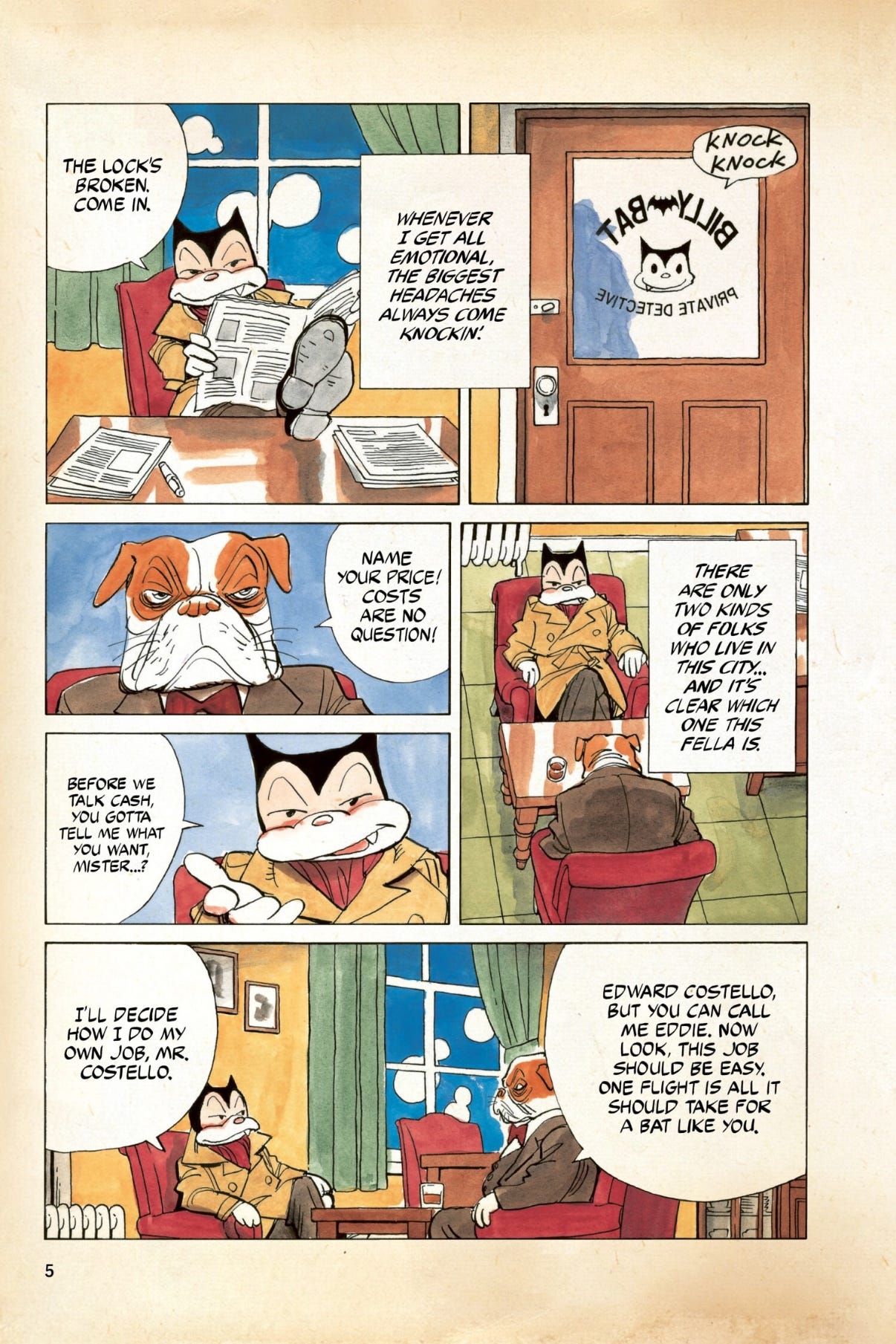
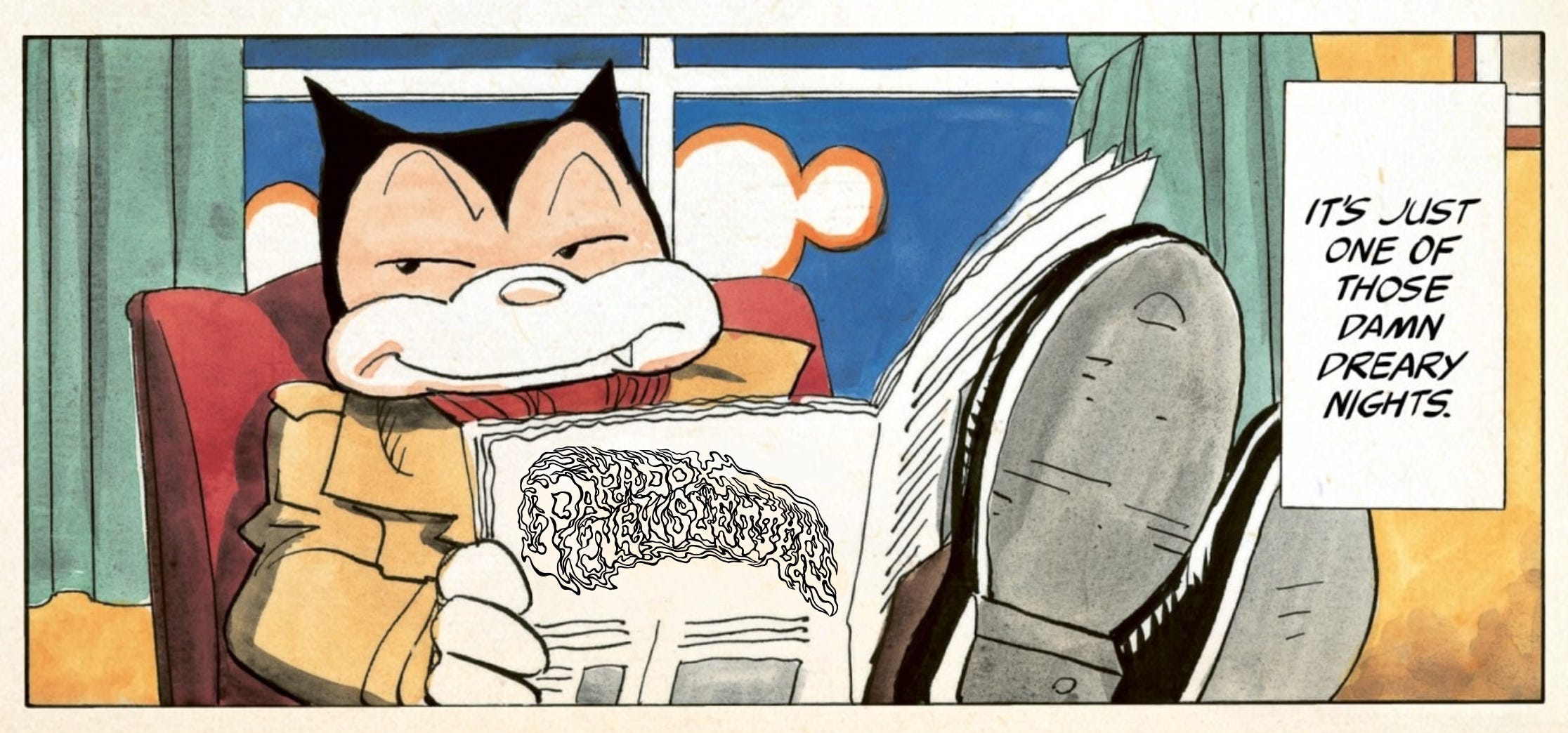
Kevin’s Billy Bat character has his own curiosities. He’s a bat, but refuses to fly.
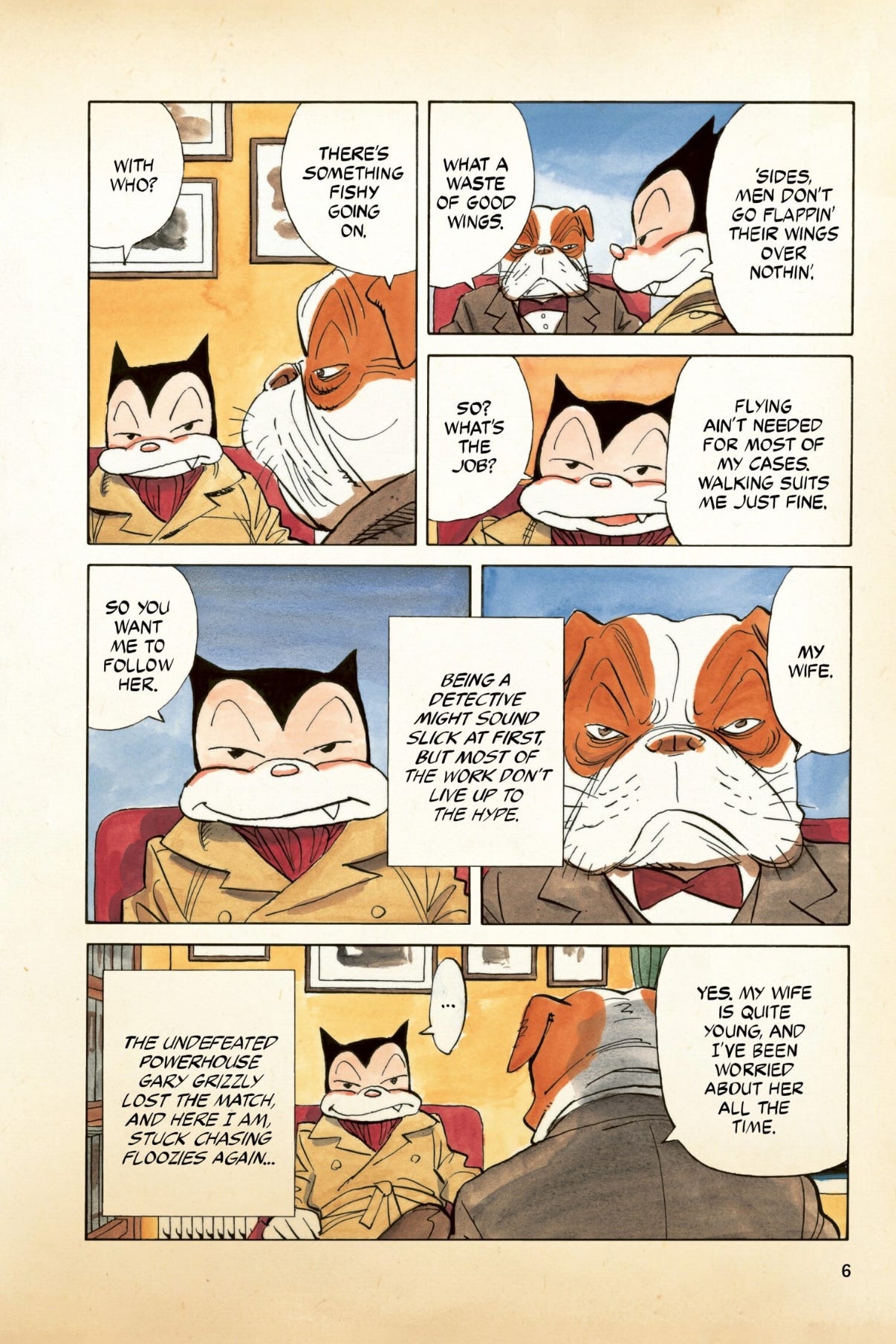
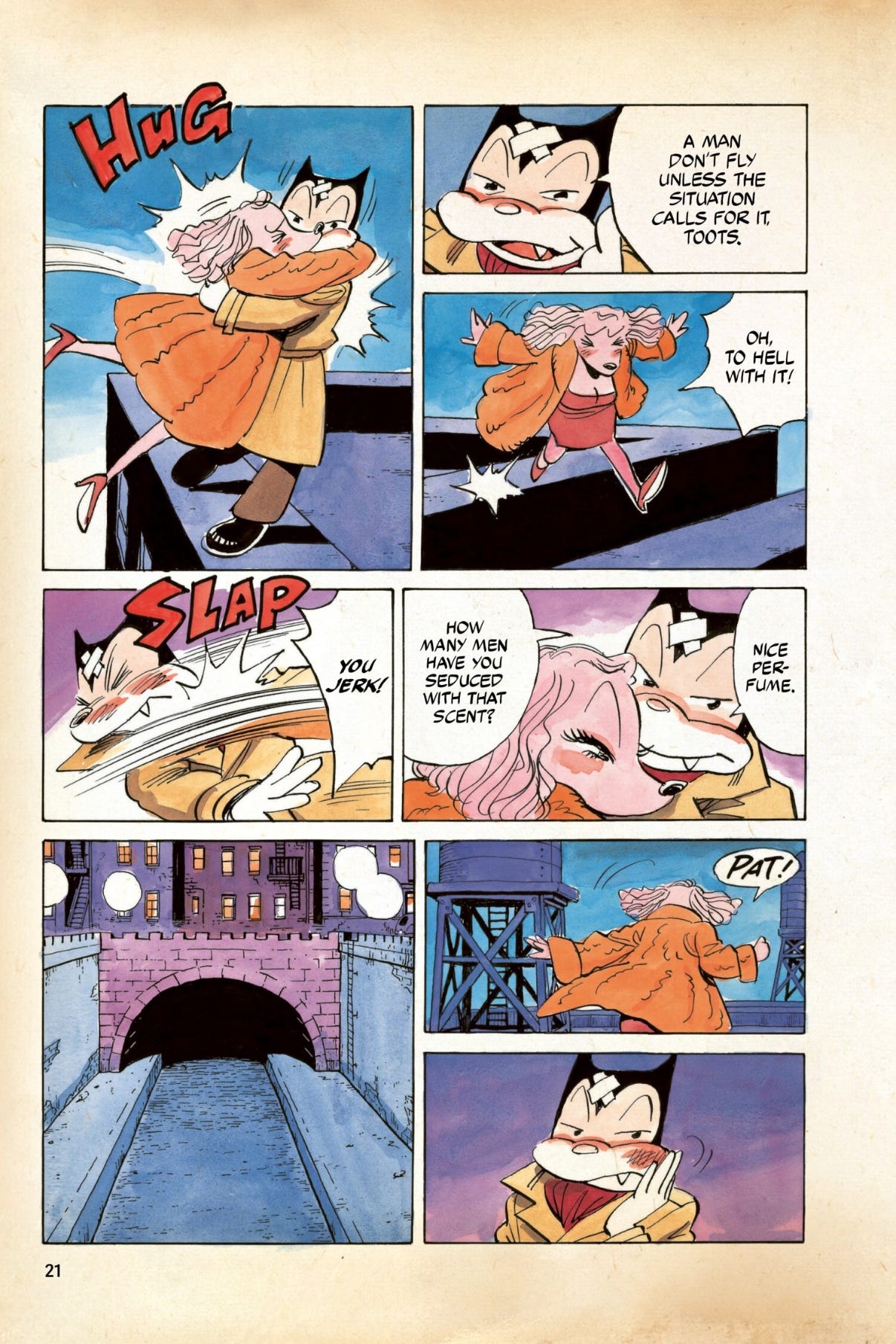
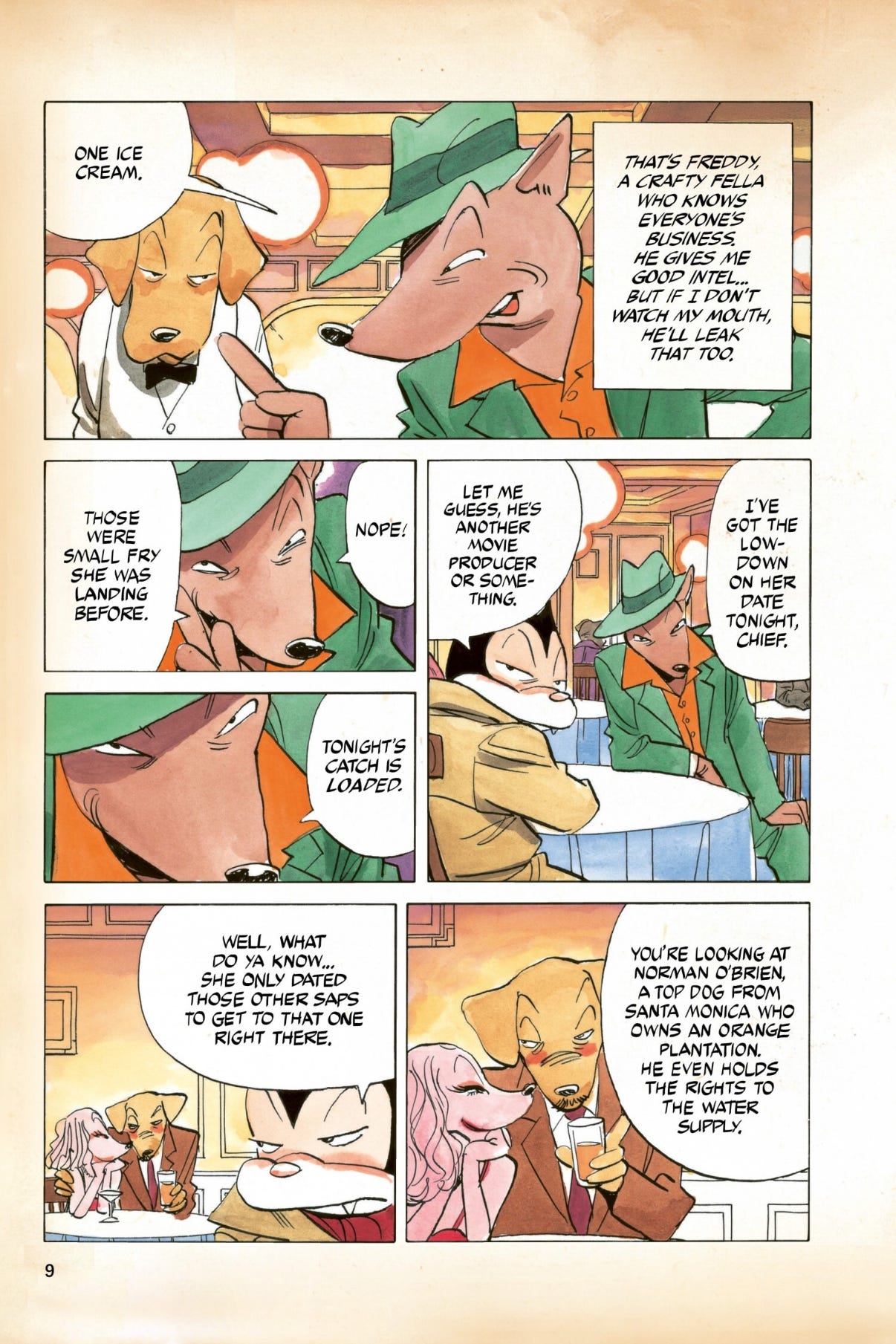
Urasawa writes Kevin’s manga with all the exaggerated noir-detective troping one could imagine. Billy Bat goes on about “hating anchovies and the cops” and dichotomy between:
The folks who’ve got all the luck and the ones who don’t. The folks swimmin’ in cash and the ones who ain’t. The folks who win big and the ones who always lose.
The comic-within-a-manga even includes a pastiche of Chinatown (1974) with a brief appearance by a mogul in the style of John Huston’s Noah Cross.
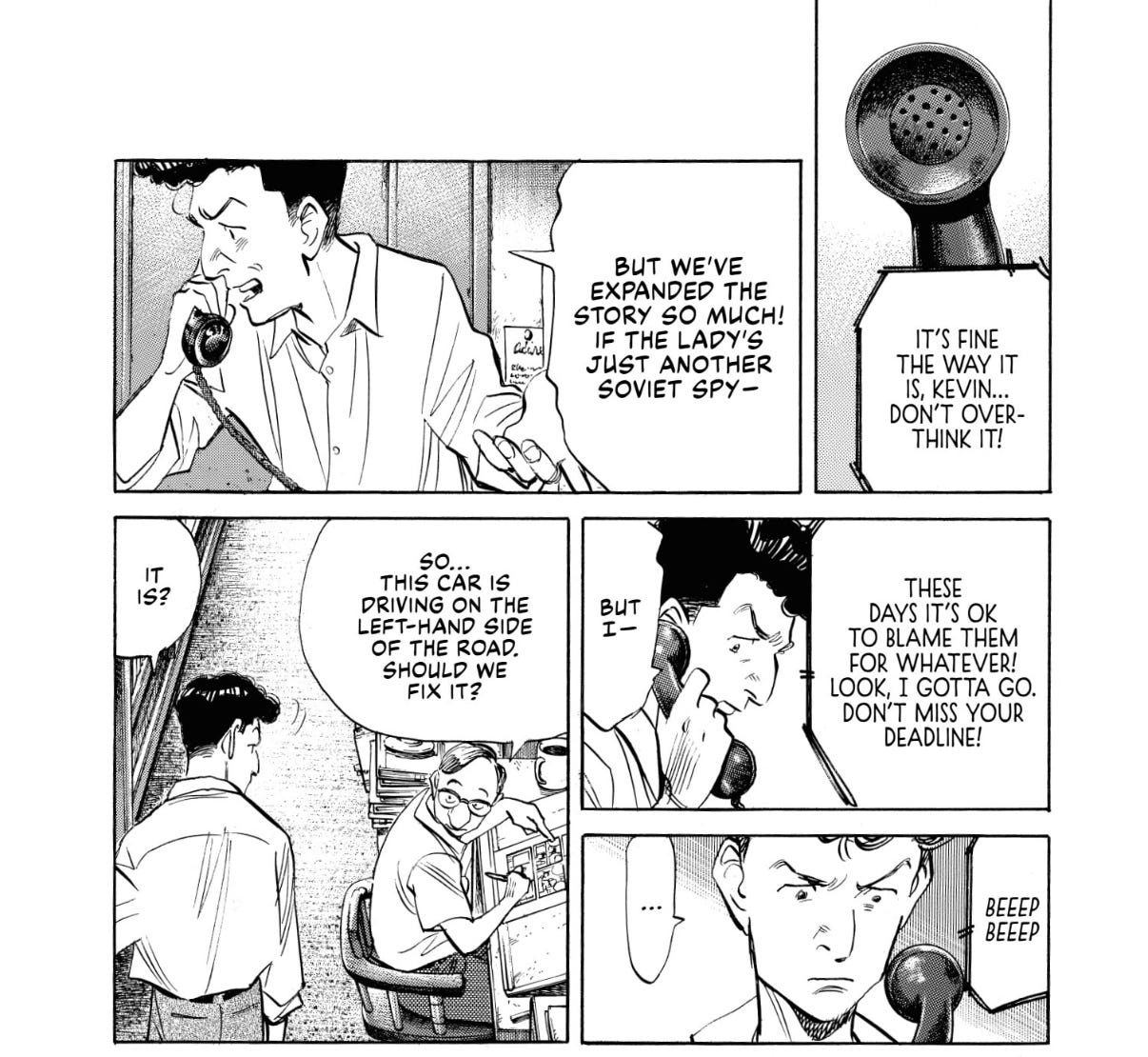
This story of Billy Bat’s comic is only a small footnote in the manga’s first volume. As the reader exits the comic’s narrative and enters its framing device, Kevin illustrating it, Urasawa shows how the world of the comic-within-a-manga and the manga itself overlap. Both worlds are paranoid, both Kevin’s editor and his landlord sharing the anxiety object of ‘Soviet Spies.’ This paranoid structure gives way to the real conspiracy that motivates the plot, the conspiracy of the bat.
When Kevin eventually meets Zofu Karama, he seeks permission to continue Billy Bat. Karama, on the other hand, suggests copying is an inherent dimension of visual art and illustration:
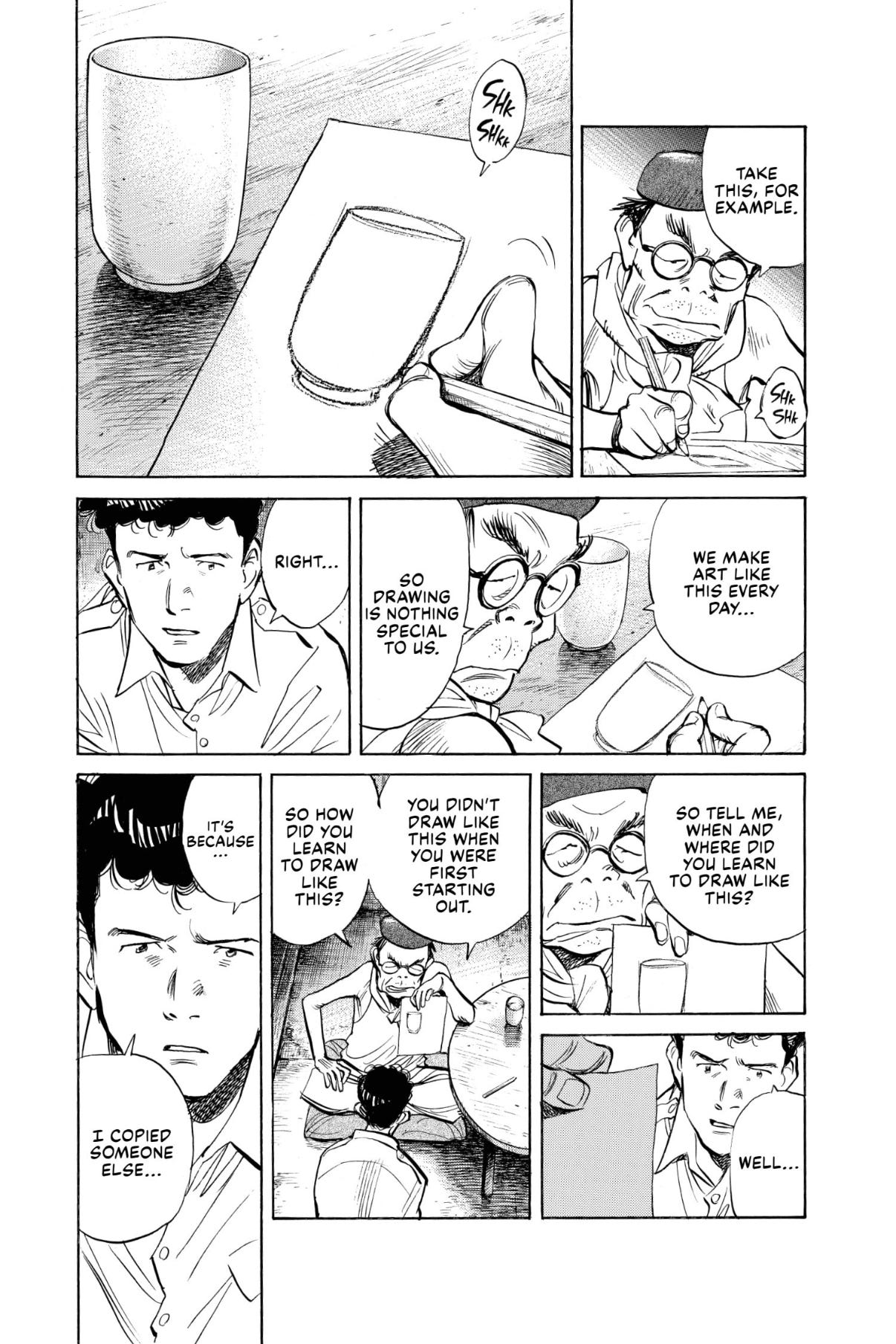
And yet, Karama’s theory of art involves a prime mover:
So, who did the first person to ever draw copy in order to draw like this? Believe it or not, that drawing was etched on the wall of a cave. And wouldn’t you know that the drawing on that wall was that very same bat.
Billy Bat, or Batboy, this mysterious cartoon bat, is the supposed origin of all illustration.
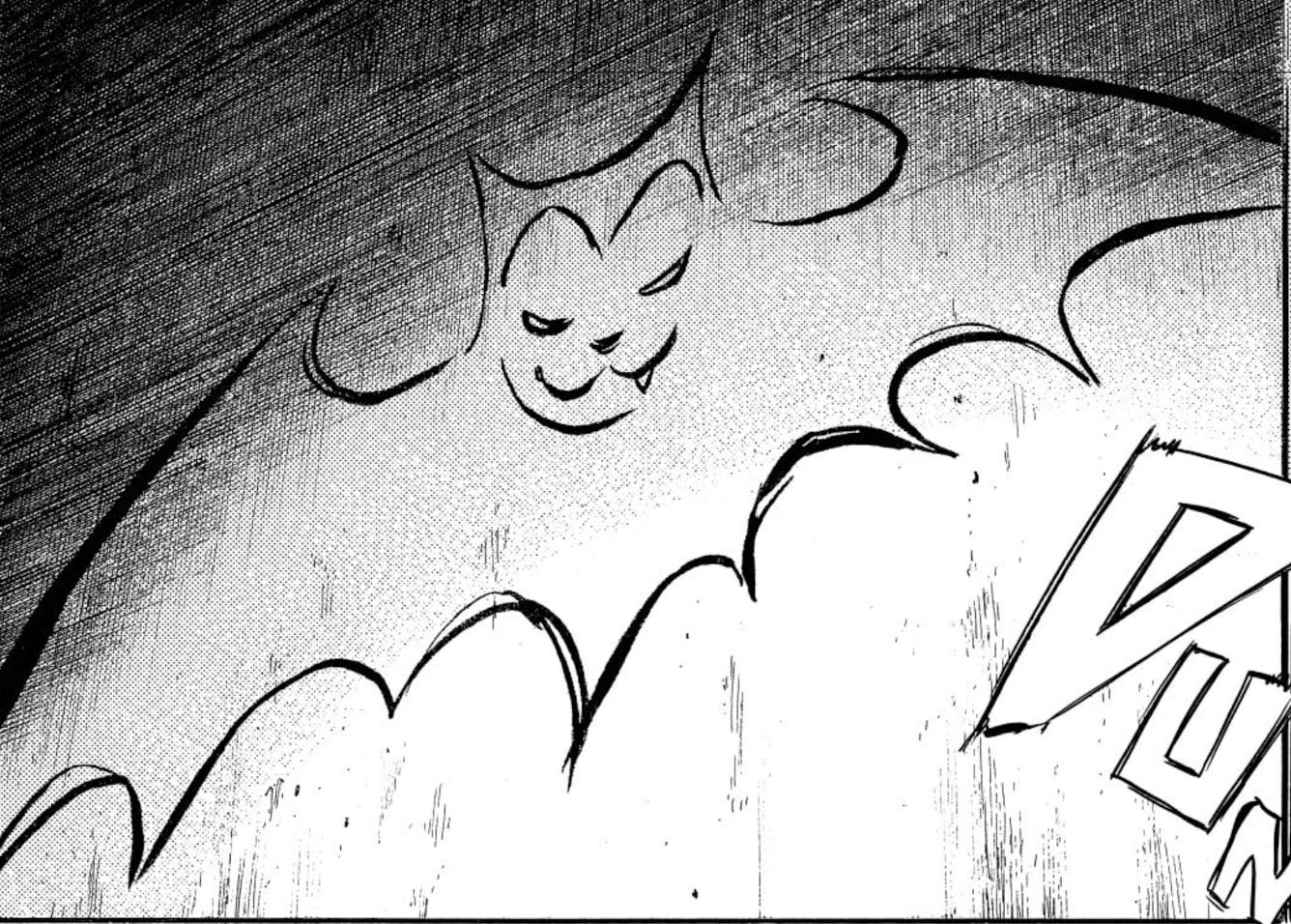
These are just the breadcrumbs that will come to make sense as Urasawa’s plot unfolds. Alongside this primal bat, the seemingly interchangeable Billy Bat and Batboy that can claim to be the ancestors of the first ever cave drawing, Kevin’s own identity is mistaken repeatedly. He returns to Japan as a civilian, but is pressured to wear military uniform regardless.
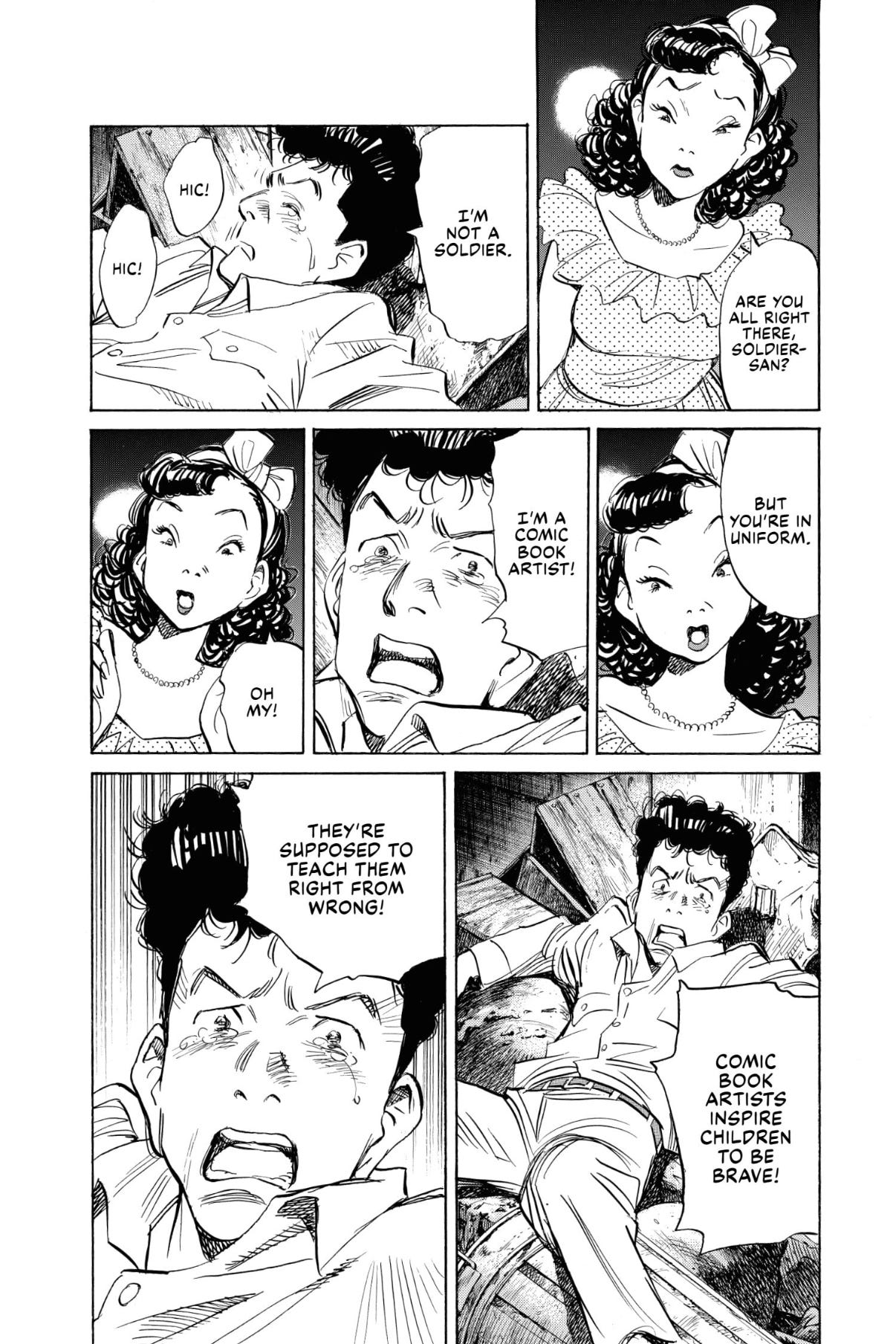
Following the coextensive analysis of Gilda (Rita Hayworth) and Jessica Rabbit (Kathleen Turner), how one is ‘drawn’ has a prophetic quality.

Kevin aspires to what he believes a comic book artist should be, someone who “inspire[s] children to be brave” and “teach[es] them right from wrong.” Instead, Kevin himself cannot follow the supposed right path as he seemingly murders his friend after being blackmailed. And who was it Kevin copied to learn to murder? A bat, drawn evil.
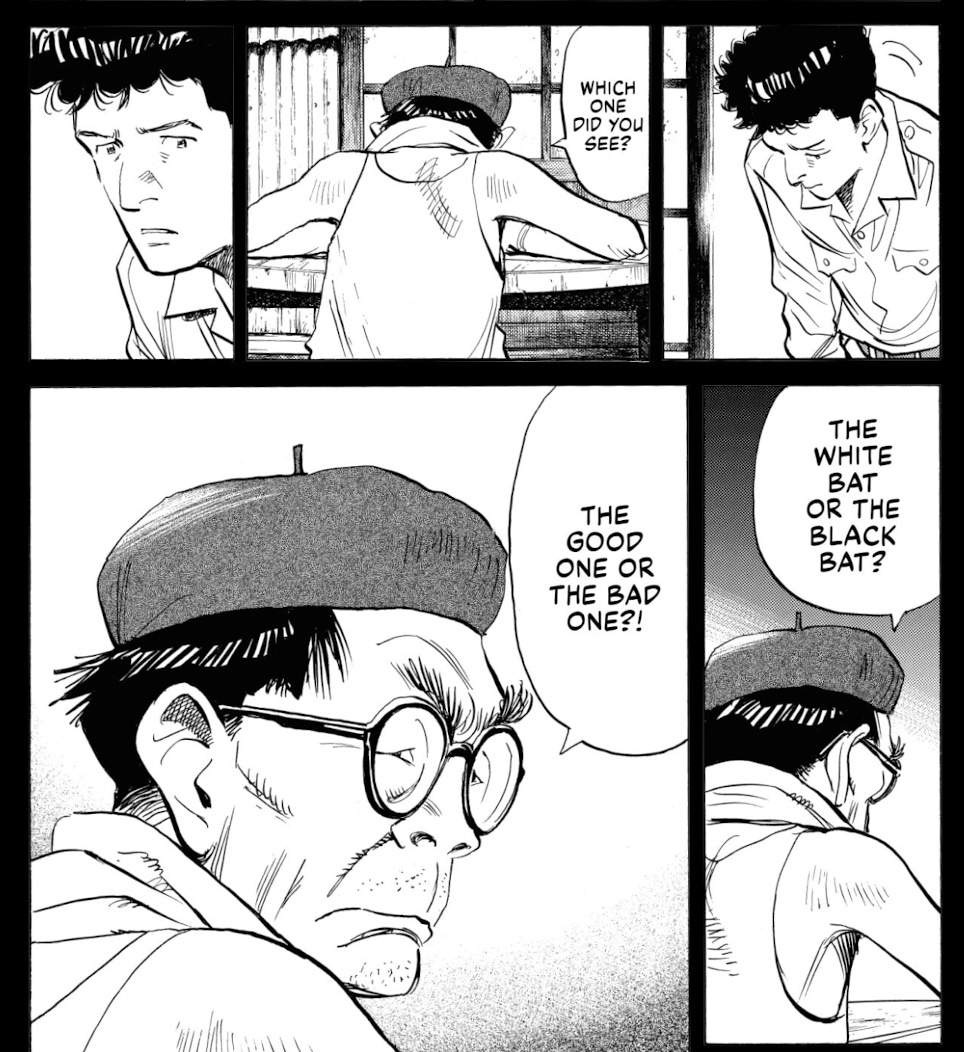
This incoherent absurdity which the manga repeats evinces the moral universe it is trying to repeat. Billy Bat and Batboy are both black and white. There is no “black bat” or “white bat,” and the ostensibly different bats, each, respectively, an angel or devil on Kevin’s shoulder, have no quality by which they could be differentiated.
Whether the bat is black or white is a question of negativity. But which space is empty and which is substantial is not something Billy Bat resolves in its opening volumes.

Both Kevin Yamagata and Billy Bat have their identities mistaken and occupy the symbolic position of ‘the wrong man,’ but one need not be the right person for a conspiracy to continue its machinations. Something just has to fill the space.
Weekly Reading List
Wow?
Wow
Wow!
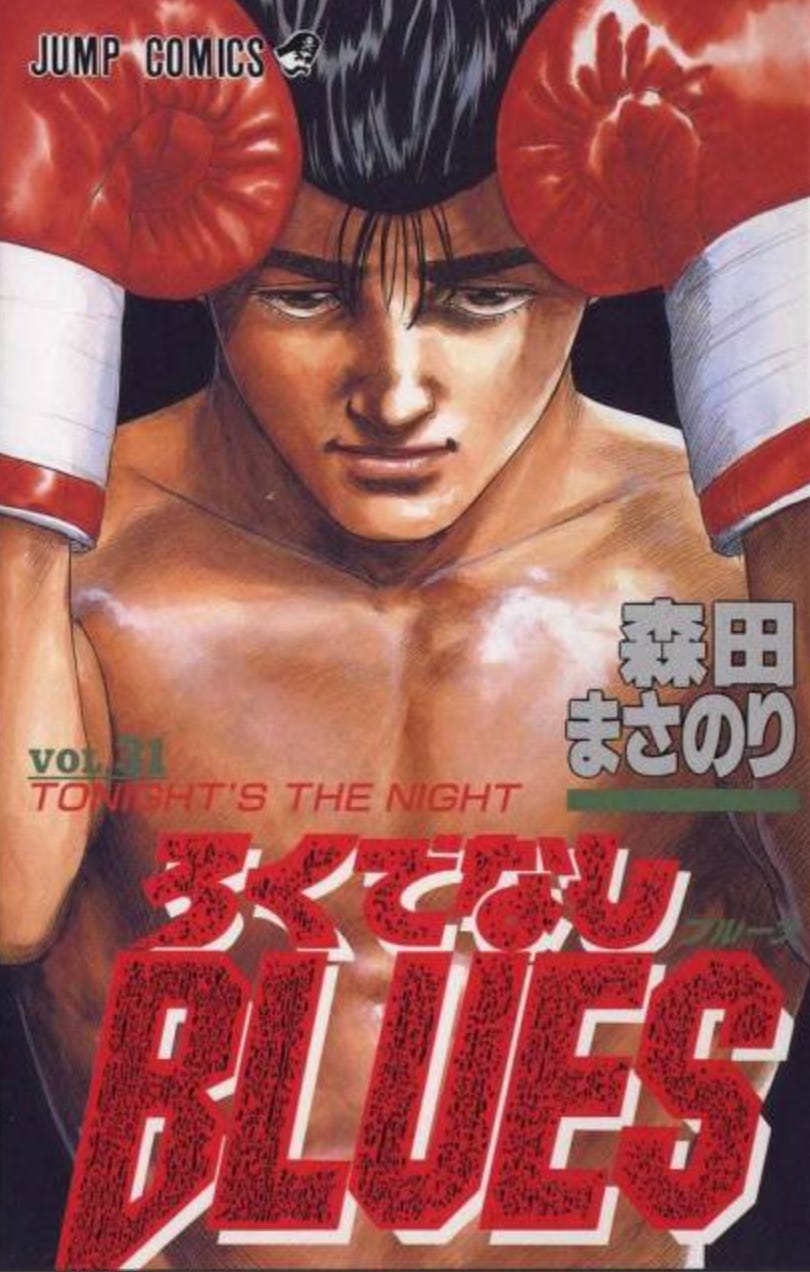
https://mangadex.org/title/c727d921-4294-455b-9bcc-2f0c7d29cd9a/rokudenashi-blues — One of the most popular Shounen Jump manga has finally been completely translated into English by fan translators.
Event Calendar: Film Festivals Galore
I’m making up for the dearth of updates last week. This one is huge. A free outdoor screening at Malcolm X Park. The features of the Roxbury International Film Festival. Most of the lineup of the Boston French Film Festival. That last one is showing Le crime du 3e étage (2026) on Friday July 24th. I’ll be there.
Until next time.