

Issue #441: Christopher Nolan is the Ramones of Filmmaking
Here are some questions that have been plaguing me lately:
Just how much relatively unknown new jack swing is out there?
Why do all the X-Men hate Xavier in Jed Mackay’s 2024 run (mentioned two issues ago)?
What grip does the ‘refresher’ drink branding have on the U.S. beverage purchasing populous?
When will the probiotic soda trend end?
How did The Varukers get so underrated?
Re: question one, there is both the thrill of discovering new music that is seemingly endless within this genre and the anxiety that something truly great will go undiscovered.
Re: question five, I’m willing to bet even if you are a Varukers fan you are not listening to this song on the regular
Kinda sounds like Warzone, interpolates lyrics from old songs. The song was “Nothings Changed” on the titular 1994 EP, then inexplicably “Nothing Changed” when re-released on No Masters No Slaves (2007). This also happens a lot with them. This song is “Protest and Survive” some places, “Protest To Survive” others:
Still one of the best ever.
Authorial Intent, Adaptational Fidelity, and Anachronistic Sentiment in Christopher Nolan’s The Odyssey
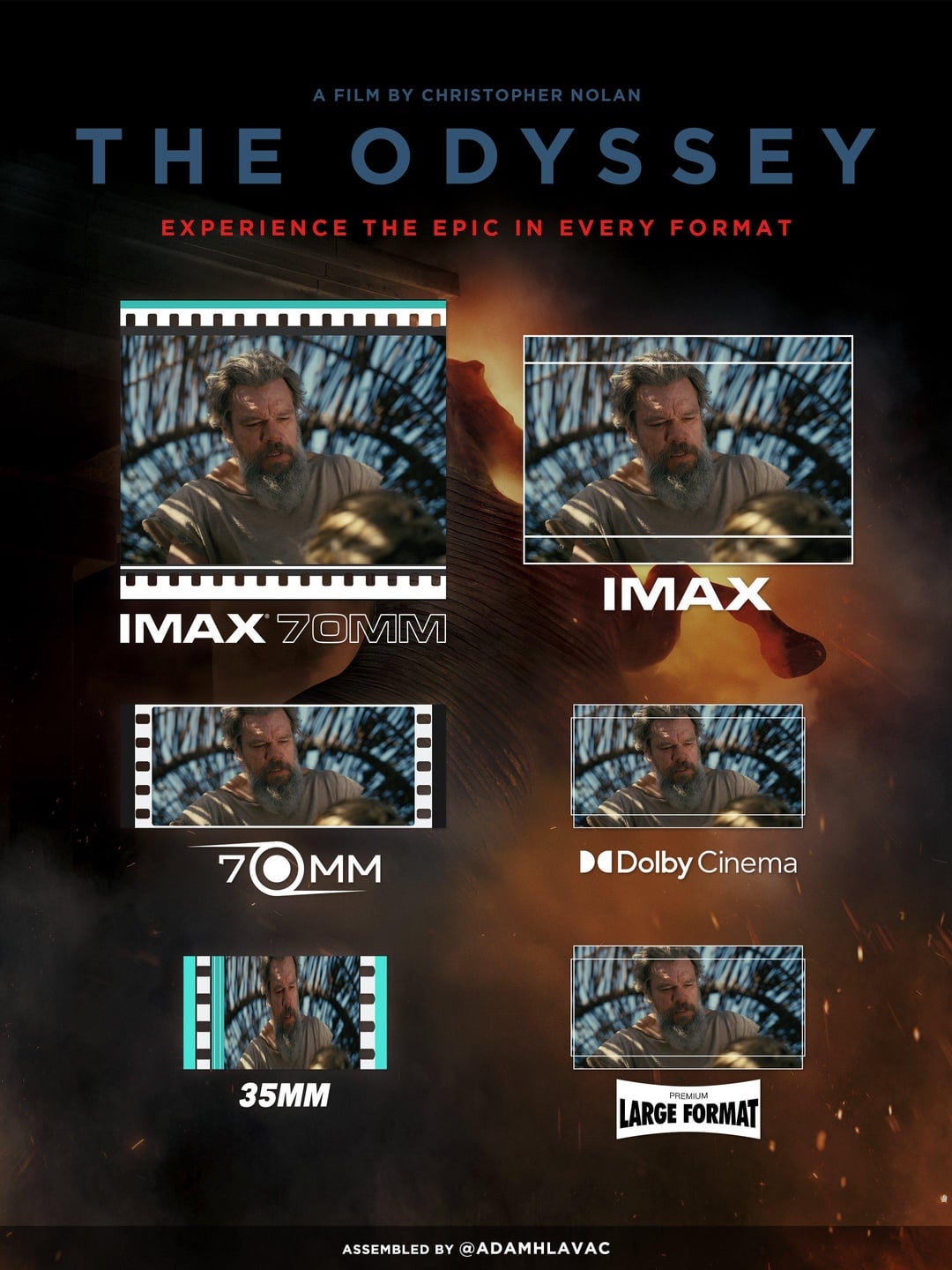
What is the key to appreciating Christopher Nolan’s The Odyssey (2026)? It certainly is not the aspect ratio or projection medium, despite all of the debate about 70mm IMAX screenings. I will remind the Paradox readers that all the reverence to an assumed artistic intent on the part of Nolan, that he believes all viewers should watch the film in 70mm IMAX, is only six years removed from Nolan’s explicit artistic intent reduced to a punch line. Promoting Tenet (2020), Nolan attested to CineEurope:
I think of all the films that I’ve made, this is perhaps the one that is most designed for the audience experience, the big screen experience. This is a film whose image and sound really needs to be enjoyed in your theaters on the big screen and we’re very very excited for you to see what it is we’ve done. We’ve made big films in the past, but this is a film whose global reach and level of action is beyond anything we’ve ever attempted before.
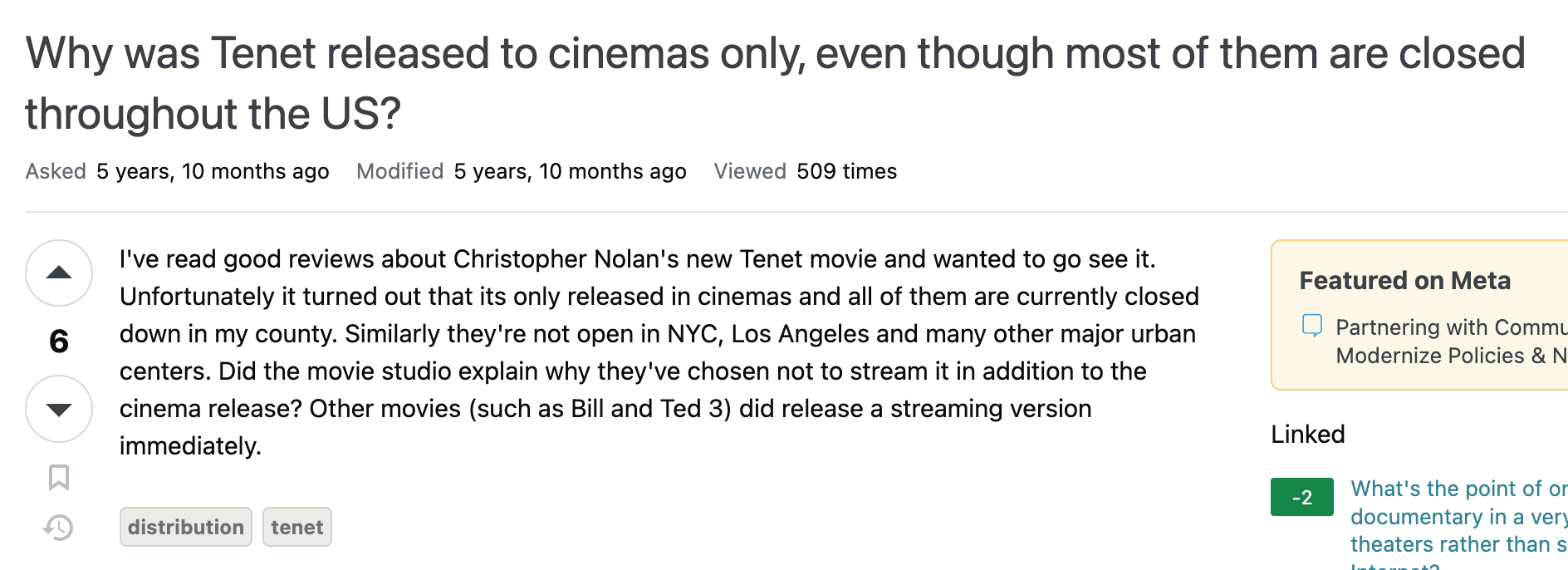
Tenet indeed released in theaters, despite vociferous criticism that Nolan and Warner Bros. insistence on theatrical exclusivity endangered moviegoers, risking exposure to COVID-19.
Rather than adjudicate the morality of Tenet’s release, I point only to widespread audience appetite to watch Tenet via streaming video:
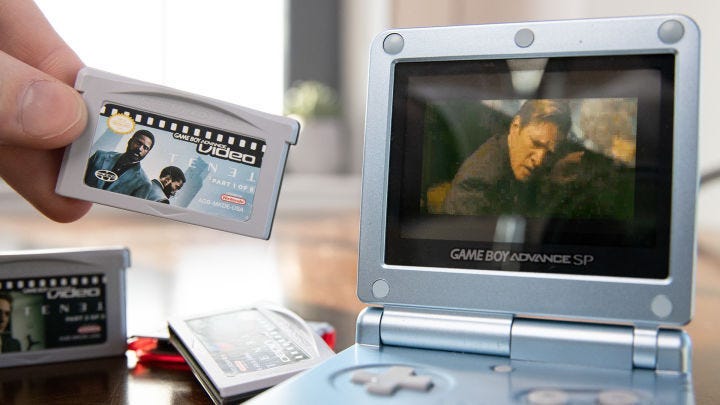
Nolan’s stock as a professional director has never been lower than post-Tenet. Certainly we remember these gags:
And yet, somehow, the simple fact of Nolan having used IMAX cameras and 70mm IMAX film for The Odyssey means it must be seen in this exclusive projection format.


The panic and consternation have given way to satirical comparison posts and engagement bait that supposedly illustrate the gulf between IMAX 70mm projections and other formats.


To any who are worked up into a lather by this overstated and misrepresented difference: get a grip. I like going to the movie theater more than most, but any movie worth watching is worth watching almost anywhere.1
The Translators’ Consensus
Putting aside projection formats, I can turn to interpreting The Odyssey. Before sharing my interpretation, one might appreciate consulting the oracles. Hillel Italie quotes Odyssey (8th Century BC) translator Emily Wilson in her hit piece for Associated Press:
Wilson, a professor of classical studies at the University of Pennsylvania, said she didn’t want to come across as a “snobby,” nitpicking expert at odds with any deviation from the original text. But she questioned a range of omissions and other choices, from the absence on screen of the Gods Zeus and Poseidon (Athena is played by Zendaya ) to the “incoherent” messaging that condemns both war and physical cowardice. She found Penelope’s role so thinned out that it endangered “any possibility of believing in this marriage.” Wilson also that thought parts of the movie, notably the scenes with Odysseus’ dog, Argos, “catered towards modern sentimentality.”
Daniel Mendelsohn, my favorite Odyssey translator, also gives an unfavorable review of Nolan’s interpretation for The New York Review of Books. He writes:
it is in the end a mixed bag: at once a vehicle for the director’s virtues and, as with The Return, a case study of the weaknesses inherent in attempting to modernize a work many of whose values remain, for all its timelessness, stubbornly archaic.
Ever the clever one, a writer in the tradition of the cunning Odysseus, Mendelsohn uses a critique of the Odyssey by Aristotle as a through-line:
the storyline of the Odyssey is not long. A man has been away from his homeland for many years, and Poseidon is always on the watch for him, and he is all alone. Meanwhile, the situation at home is such that his wealth is being consumed by the Suitors, who are plotting against his son. But after a storm-tossed journey he returns, and after revealing himself and attacking them is saved and destroys his enemies. That is the essential; everything else is episodes.
Curiously, though, Mendelsohn does not return to the Aristotelian critique at the end of his piece. It’s through-line rather than framing device. The reason for this is Mendelsohn’s disagreement with Aristotle, for him the episodes are the point of the Odyssey even as the plot boils down to such a simple summary. Mendelsohn appreciates Nolan’s treatment of these episodes, even if he quibbles regarding which episodes are included.
Southern (Greek) Hospitality
Some of the criticisms of Wilson and Mendelsohn are justified and savvy. Wilson points out Penelope’s minor presence in Nolan’s film. Mendelsohn rightly observes that The Odyssey fits into Nolan’s oeuvre as one among many, calling Matt Damon’s Odysseus “tormented” and “guilt ridden,” “a sibling of Memento’s anguished amnesiac, of Batman, of Oppenheimer, men agonized by pasts they wrestle with in different ways.” But most of their critiques are more confusing than condemning. What, exactly, is particularly “incoherent” about Nolan’s Odyssey, as Wilson posits? To what degree has Nolan “imposed on Odysseus’s adventures values utterly foreign to Homer”?
If The Odyssey had been poorly received, like Tenet, I imagine Nolan’s repeated evocations of “Zeus’s law” would be the meme du jour to mock the film. It does the concept no favors that it first hits the audience’s ears awkwardly, courtesy of a truly awful performance from Tom Holland as Telemachus. Nonetheless, Zeus’s law is hardly an invention of Nolan’s or a presentist hijacking of Homer’s original. Mendelsohn himself writes in his introduction to the Odyssey:
Because its hero is a wanderer who often finds himself at the mercy of those he encounters, the Odyssey shows a deep and ongoing interest in hospitality: the treatment of strangers, foreigners, and wanderers, the proper relationship between hosts and guests. Such relations, a matter of urgent importance in the society that produced the Iliad and the Odyssey, were subject to a set of protocols known as xenia … Such protocols mandated, among other things, that households—whether kings or slaves—offer food and shelter to any stranger who appeared on their doorstep
…
The elaborate courtesies of xenia forbid hosts even from asking the names of their guests until a proper welcome had been provided. Guests would, in time, be sent off with a gift and were expected to reciprocate when the opportunity presented itself—a reminder that xenia always assumed an eventual reciprocation. In the real world, such reciprocity was a matter of practicality: in an age when travel was a perilous affair, travelers had to be able to rely on some kind of system that at least temporarily guaranteed their safety. Small wonder, then, that proper adherence to the protocols of xenia was considered a religious obligation and came under the jurisdiction of no less a deity than Zeus himself[.] (17)
The critical importance of hospitality or xenia is neither a controversial nor novel view of Homer’s Odyssey. But the one-hundred-and-eight suitors, with Antinous (Robert Pattinson in a performance apiece with Holland’s; horrendous) leading them, behave like the masses of Mother! (2017) with the malice of the sadistic home invaders of Funny Games (1997). The Odyssey, Homer’s Odyssey, shows incontrovertibility that the obligations of social norms can be exploited. It is Nolan’s invention, evolution, transformation, or perhaps refocusing of the story that illustrates the continuity between the Trojan Horse trick and such violations. This is not the imposition of a foreign value, but rather the reading of a critical theme in light of modern anxieties.

Adaptations: Faithful and Unfaithful
Nolan takes many interpretive liberties with the plot of The Odyssey, but his core thematic focus on community and responsibility is not among them. Where he diverges from Homer is in the extreme character of the act of utilizing the Trojan Horse and the fanciful contemporary-progressive gesture at the film’s conclusion that analogies the fallen society of Greece, by his transgression of norms, with our own collapsing society.
Indeed, Nolan laments that we have not sufficiently learned our lesson from Homer, and this retrospection is the only thing that could reasonably called an “utterly foreign” value by Mendelsohn. For all the focus on the dour, self-reflective Odysseus, Matt Damon embodies the larger-than-life quality of the hero as a hero. Menelaus’s (Jon Bernthal) exhortation of Odysseus, “what prison could hold a man like that,” is devoid of irony. Odysseus’s self-critique only makes him more admirable, as is the case with Cillian Murphy’s Oppenheimer. The valorization of Odysseus is a similarity in the film to the original.
The Odyssey is faithful to the original in most ways that matter. It is not a deconstruction of the myth of Odysseus, revealing a flawed man behind a legend (as I anticipated it would be). Though The Odyssey has a non-chronological plot housed in multiple framing devices, this is another area of fidelity to the original. Even Mendelsohn concedes this: “Nolan’s own ‘song’ effectively replicates the imbricated textures of the original.”
“Back into your disguises”
Where Nolan diverges from Homer, he leaves some cunning substitution or revision in its place. In the original epic, Odysseus returns home under a supernatural glamour supplied by Athena that ultimately gives way to the restoration of Odysseus’s youth. Telemachus rejects Odysseus. In his introduction, Mendelsohn writes:
when the father is presented to the son, the youth simply refuses to believe that this stranger is the parent he has dreamed of for so long. What, precisely, is left when the disguises come off? (31)
Telemachus and Odysseus’s reunion in Nolan’s film has none of this acrimony, the son recognizing the father through his non-supernatural disguise. There is a different order of hidden identity with which Nolan’s film is concerned, dramatized in the encounter with Circe (Samantha Morton) who accuses Odysseus and his soldiers of self-deception. The disjunction between what kind of subjectivity the soldier embodies and what peacetime, or polite Greek society, demands is more the realm of Coriolanus (1605) than Homer’s Odyssey, but this adjustment suits the epic. It is only Odysseus himself, ever the übermensch, who recognizes the destructive, barbarous quality of his soldiers. Whether this is their essential character or traits inculcated by ongoing war and desperate battle, the film leans to the latter, this behavior is the proximate cause of the political unrest and upheaval that leads to the collapse of Greek society.
“What you most can’t have is what you already had and lost”
Another change from the original epic is Odysseus’s relationship to Calypso (Charlize Theron). Rather than remembering his own life marrying Calypso, compelled in part by her magic, he lives as her paramour only under the contrivance of amnesia — more valorization of our cinematic hero. Mendelsohn points to Calypso’s observation of Odysseus in book five:
She found him by the shore, sitting there; nor did his tears
Ever dry, since the sweetness of life was trickling away
As he grieved for his homecoming. For the nymph had ceased to please him.
Night after night he lay down in the hollow caves beside her,
Compelled by the goddess to do so, he unwilling, she all too willing,
While during the day he would sit on the rocks by the edge of the sea
Weeping and moaning and tearing his heart to shreds in despair,
The tears pouring down as he stared at the restless wastes of the sea. (146)
The question of Odysseus’s willingness and the conditions under which he lives with Calypso are more or less captured by the amnesia revision. But what is lost, in part, is Odysseus’s anguish in this moment which returns elsewhere; his encounter with the sirens. Homer’s account of the siren’s is brief:
So they spoke as they poured fourth their lovely voice. My heart
Was eager to listen to them and, motioning with my brows,
I ordered my comrades to free me. But they fell to and kept on rowing. (259)
Nolan, instead, takes the opportunity to recapture the anguish from Homer’s original and engage with the Lacanian notion of the objet a. Odysseus describes the siren’s song to his crew, Damon’s face in close-up:
It was all the things you wanted it to be, then, all the things you wished for. It was the delicious itch you go to scratch, that lies under the skin you can’t reach, so the itch becomes something unbearable. It told you what you want most is what you most can’t have. And what you most can’t have is what you already had and lost. It was the song of all the promises I failed to keep. And it told me I don’t really want to go home.
Here again, there’s a quilting and re-contextualizing of various thematic strains. Nolan’s Odysseus, no less heroic than Homer’s, is a more tragic figure precisely because of his yearning for a lost object. Embodied by his seemingly blissful monarchal life and the love of Penelope (Anne Hathaway), it is one of the film’s thematic ‘twists’ that the real loss, for him, is the evisceration of the social contract and upending of the norms to which the film repeatedly appeals.
The supposedly alien places Odysseus visits are threatening, supposedly, because their inhabitants don’t observe Zeus’s law. They may not even know it. But it is Odysseus himself who is the handmaiden of knowing transgression through the Trojan horse. This is the true intervention of Nolan’s Odyssey, reading Odysseus’s trickery as every bit the distortion of xenia as the suitors themselves. And only exile can balance the scales.
“We lived in a world of palaces, trade, and language, blind to its beauty”
The tragic character of Odysseus in Nolan’s version is only a slight divergence from the epic it adapts. This seems to be Nolan’s reading of Homer, an interpretive jump not without textual precedent. But such precedent is unnecessary when adapting a work. For most, I think Nolan’s fidelity to the original will be surprising.
Speaking to the movie’s faults, some to which I alluded, they are largely in the craft of the film rather than its concept. Some of the performances, like Holland’s and Pattinson’s, are quite bad. They exert no gravity in their roles and hide behind the costuming and script like so much nothing. By contrast, Damon, Hathaway, Leguizamo (as Eumaeus), Page (as Sinon), and even Bernthal are excellent. One would think there is enough room on a 70mm IMAX screen for decent performances for the younger core of the film, but acting against Damon and Hathaway in particular is too tall a task for Holland and Pattinson in this case.


That IMAX 70mm screen and all the fanaticism it has engendered, the round-the-clock screenings, the concert ticket trading, is the perfect structural analogy to the thrust of The Odyssey that would make even Christopher Nolan shudder. This screen is an objet a par excellence, and to view a film on it will not create a uniquely transcendent viewing experience that other projection formats wouldn’t offer. Likewise, the lost object for which Odysseus yearns never existed. The society he believed he destroyed, the norms he believed he upended, are farcical and easy to exploit, regardless of whether the horse crosses the gates of Troy. Odysseus gives himself too much credit. It’s all going down anyway.
Weekly Reading List
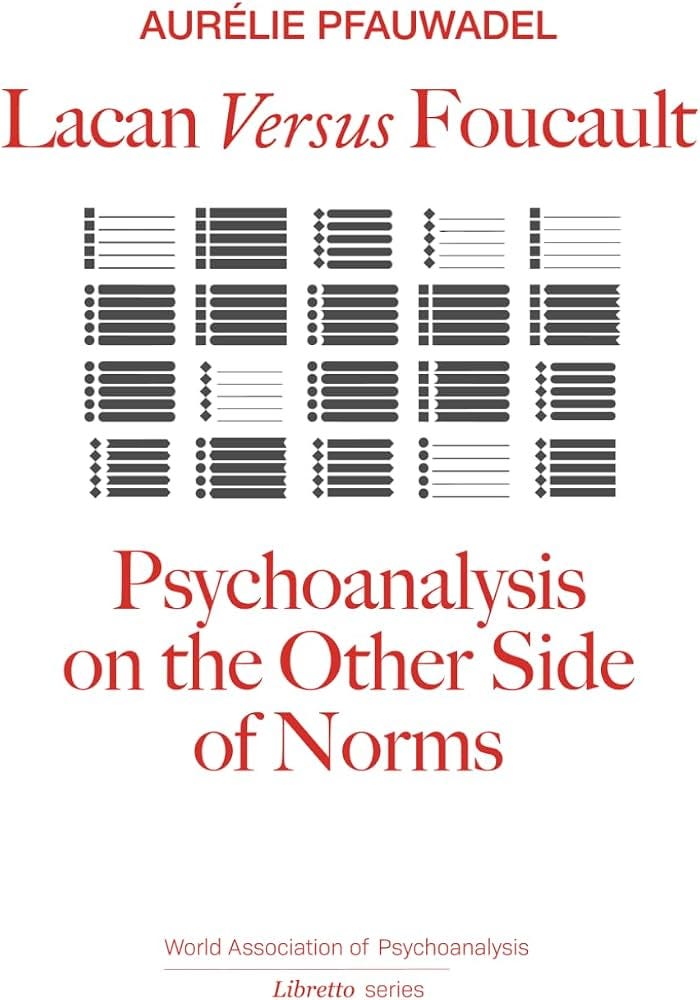
https://www.lacanianpress.com/products/lacan-versus-foucault — Aurélie Pfauwadel is a woman on a mission in Lacan Versus Foucault (2022, appearing in English translation for the first time this year). She writes:
“Lacanism” began with the symbolic norms of the Other: the aim was to grasp how the subject finds itself instituted and noramlised by this symbolic order, and how desire is caused by what escapes this normalisation. Subsequently, the problem became more complex: in the perspective of the Borrmean knots as models of subjectivity emerging from the last teaching of Lacan, how can we grasp what functions as a norm for the speaking being, outside of the paternal norm? As we said earlier, what comes to play the role of a norm for a subject (on the side of the One) is what quilts, borders, or limits meaning and jouissance (xxii)
Pfauwadel’s rigorous reading of Lacan’s teaching cutting across the historical context of the emergence of “this society of normalisation, a society produced by the alliance between modern science and capitalism” (xvii) is certainly urgent. The fragmented, competing norms of contemporary life are precisely suited to Lacanian theoretical analysis. And, according to Pfauwadel, such prismatic, multifacted norms produce subjects suited for Lacanian clinical analysis.
Event Calendar: The Boston French Film Festival Begins
What it says on the tin: MFA will be hosting the Boston French Film Festival beginning this weekend. Screenings are starting to sell out, so get in where you fit.
Until next time.
The official line of Paradox Newsletter: get to the theater, but any theater will do.