

Issue #430: Faith and Its Absence in the Contemporary Superhero Gods
Losing well is not easy. Developing your response to losing, if you are a competitor, is vital. But there are wider applications here for those who lead a blissfully agreeable, non-confrontational life. Losing in a competitive sense has a very discrete meaning defined by whatever game context. But typically a loss entails some affect, disappointment, frustration, perhaps something unanticipated. So thinking about losing and how one deals with it implicitly involves dealing with disappointment, frustration, and the unexpected. Watching Luis Scott-Vargas lose playing Slay the Spire 2 (2026) this weekend, he made an offhand comment, “frustration is also a really important part in games. It can really keep you coming back.” Where frustration meets that impetus to to come back is key to how one loses.
In competition, the stakes of losing well are very high. Typically a single loss is not the end of your competitive journey. You can lose one game in a match. You can lose one match, but still be in contention for the broader win. You must avoid becoming ‘tilted.’ Whatever your emotional response to an unfavorable result in a game, you have to maintain composure and continue to play well to give yourself the best chance of further wins. A loss shouldn’t compound into further losses just because you’re disappointed or frustrated — though this happens all too often.
At the same time, the answer is not being disaffected in response to a loss. Feeling is good. Feeling something about a game or any kind of competition where you are in a position to win or lose means that it matters. It should matter. If it doesn’t, why bother doing it in the first place? Something that matters to you will, probably, mean you expend a greater effort and likely perform better because of your emotional investment. But that investment invites the risk of getting tilted, suddenly playing or performing worse because of an unexpected loss. This is where the challenge lies. There are no prescriptive, one-size-fits-all answers to this quandary either. I am always working to make sure a loss hits me in the right spot. Losing should provide motivation and learnings for improvement or greater understanding of my position without sending me off the deep end.
Things get all the more complex when the losses are not your responsibility, but you are nonetheless emotionally invested. Yes, we’re talking about sports and the Boston Celtics. The Celtics have been bounced, ignominiously, from the first round of the NBA playoffs. It’s a strange situation to be disappointed when the team’s prospects at the beginning of the year were so abysmal. Jayson Tatum was injured. Brad Stevens cleared the roster for the sake of lowing the team’s tax bill. But I was still optimistic.
My optimism does not win basketball games. Nor does the fan’s attitude, knowledge, disposition. However good or bad of a fan you might be, the team performs the same. And I cannot be the most gracious loser when I have no control over the outcome. When the outcome isn’t even my win or loss. The greatest regret I have is that I probably won’t watch any more basketball this season. At least that leaves me more time for movies.
Maybe I can’t quite be the good sport I want to be when it comes to professional sports is because the stakes are so low. But I can be a good sport when it comes to losing in Music League. I am getting crushed. You thought I forgot? Here are the new playlists for our third attempt at a covers round:
With cover songs, they can be hit or missed based on whether or not you know the original, whether or not the original is good, whether or not the cover is good. A good cover usually shouldn’t be too similar or too different from the original, although there’s plenty of room for exceptions on either ends of the spectrum. I almost want to put my favorite song on this playlist behind a paywall because it is so salacious and shocking. I’ve never listened to the band Falling In Reverse before, but their cover of “Gangsta’s Paradise” moved me. It does not sound serious, which is a plus. As a gag, it’s okay. But beyond the joke, where the punchline is only incongruous juxtaposition, this version does expose something about just how good of a song “Gangsta’s Paradise” is. I’ve listened to the Coolio version a million times and stopped paying attention to it line by line a long time ago. I heard the verse:
Fool, death ain’t nothin’ but a heart beat away I’m livin’ life do or die, what can I say? I’m 23 now but will I live to see 24? The way things is going I don’t know
like I was hearing it for the first time.
Next week we are asked to submit a song we like by an artist we hate. I am innocent — category creation is delegated to others this season. I’m finding it pretty difficult to think of anything I can submit that fits the prompt. I don’t really “hate” artists who have songs I like. I see two options for myself: choose in the spirit of the prompt, picking a song by an artist whose songs I generally do not like. Or, I could choose to maximize my probability of winning and choose a great song by an artist who most people think is bad. But I probably think they’re great.
I think I’ll stick to the former. Nothing wrong with losing when you know it’s coming.
Crises of Faith in Daredevil: Born Again and The Boys
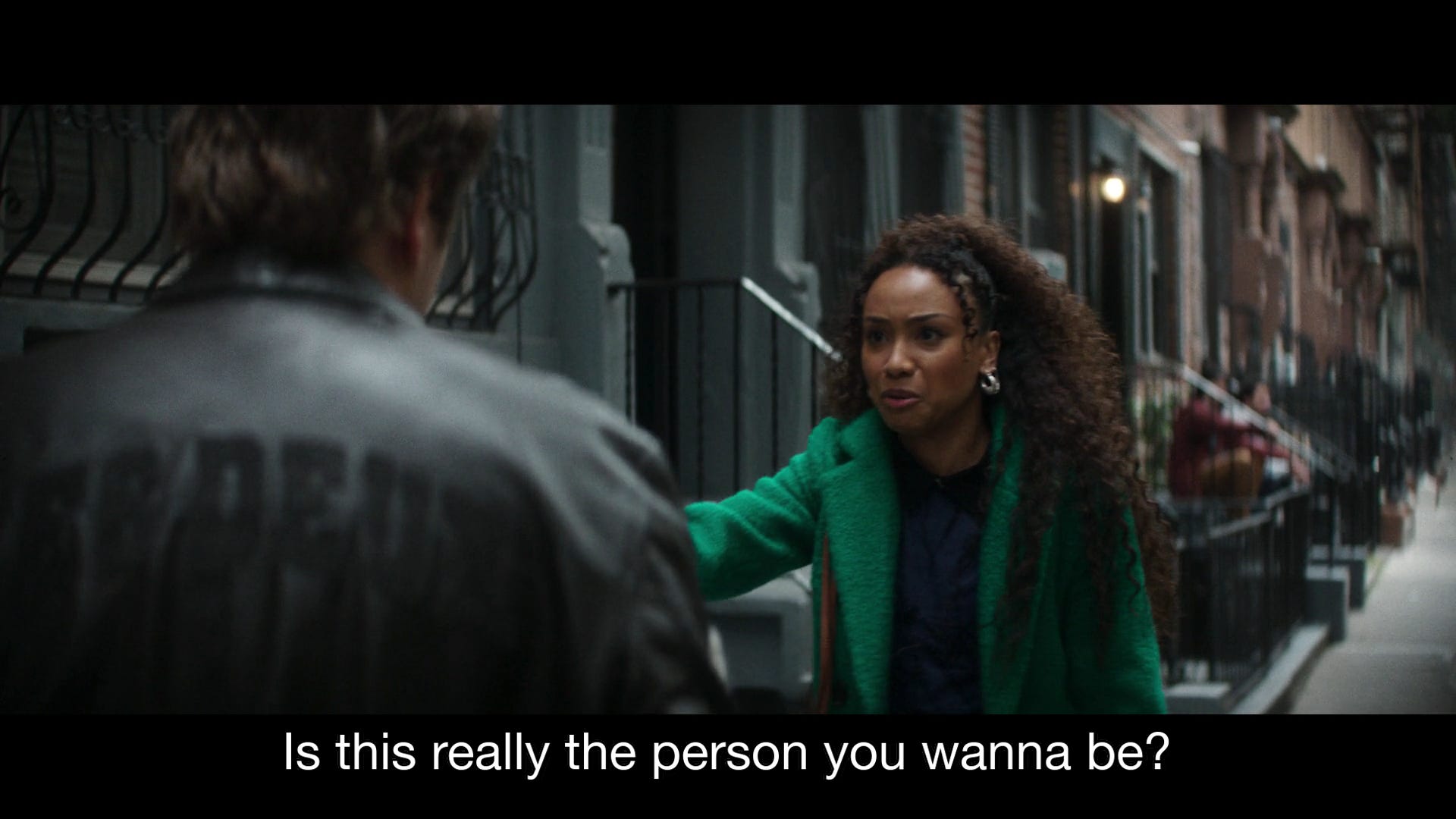
If you have followed this newsletter for a reasonable period of time, you know I like routinely writing about an ongoing television show. The closest I have gotten to this are an essay about Daredevil: Born Again (2025) about a month ago and one about The Boys (2019) two weeks ago.


I noted in my writing about The Boys that there are some big picture thematic similarities between it and Daredevil. Notably, both series deal with a Trump analogue and have necessarily responded to broader positioning as texts within the so-called culture war.
Spoilers for Daredevil and The Boys follow liberally
One of Daredevil’s most intrigue characters is Daniel Blake (Michael Gandolfini) who serves as the unsuspecting Trump voter. Blake is unsuspecting in the sense that he looks at Wilson “Kingpin” Fisk (Vincent D’Onofrio) with a reverence that, in turn, produces a genuine belief. Blake’s belief in Kingpin is, to some degree, based on a deception carried out by Kingpin himself. He misleads those who follow him, claiming the altruistic motives of a dedicated civil servant rather than his more evident motives of self-enrichment. To this extent, Blake is positioned to be an object of the audience’s sympathy. He has been duped through no fault of his own and has bought into lies presented with the precise function of eliciting his support.
Unlike the average political supporter, however, Blake becomes Kingpin’s Deputy Mayor and is exposed to the inner workings of the criminal enterprise. In the second season’s fifth episode, “The Grand Design,” Blake is explicitly read into the essence of Kingpin’s criminality: Buck Cashman (Arty Froushan) brings Blake to dispose of a murdered corpse.
This is the most acute cause of the struggle for Blake that Deborah Ann Woll identified in her conversation with Gandolfini in a discussion about the second episode, “Shoot the Moon”:
If you were to get sucked into a community, a group, a movement that suddenly down the line you’re realizing, oh wait, this isn’t what I thought it was? Or this is now starting to ask me to step beyond my moral boundaries, like what do you do in that situation? How do you either step out or do you dive in deeper?
In “The Hateful Darkness,” last week’s episode, Blake has to face the dissonance of what he believes about Fisk and what he is expected to do as a believer. Blake is coerced to turn over his romantic interest, BB Urich (Genneya Walton), to Cashman. If Urich falls into Cashman’s hands, she will presumably be killed because of her unfavorable coverage of the Kingpin regime. Urich also serves as Blake’s conscience, confronting him with the incongruity he already seems to struggle with at some level.
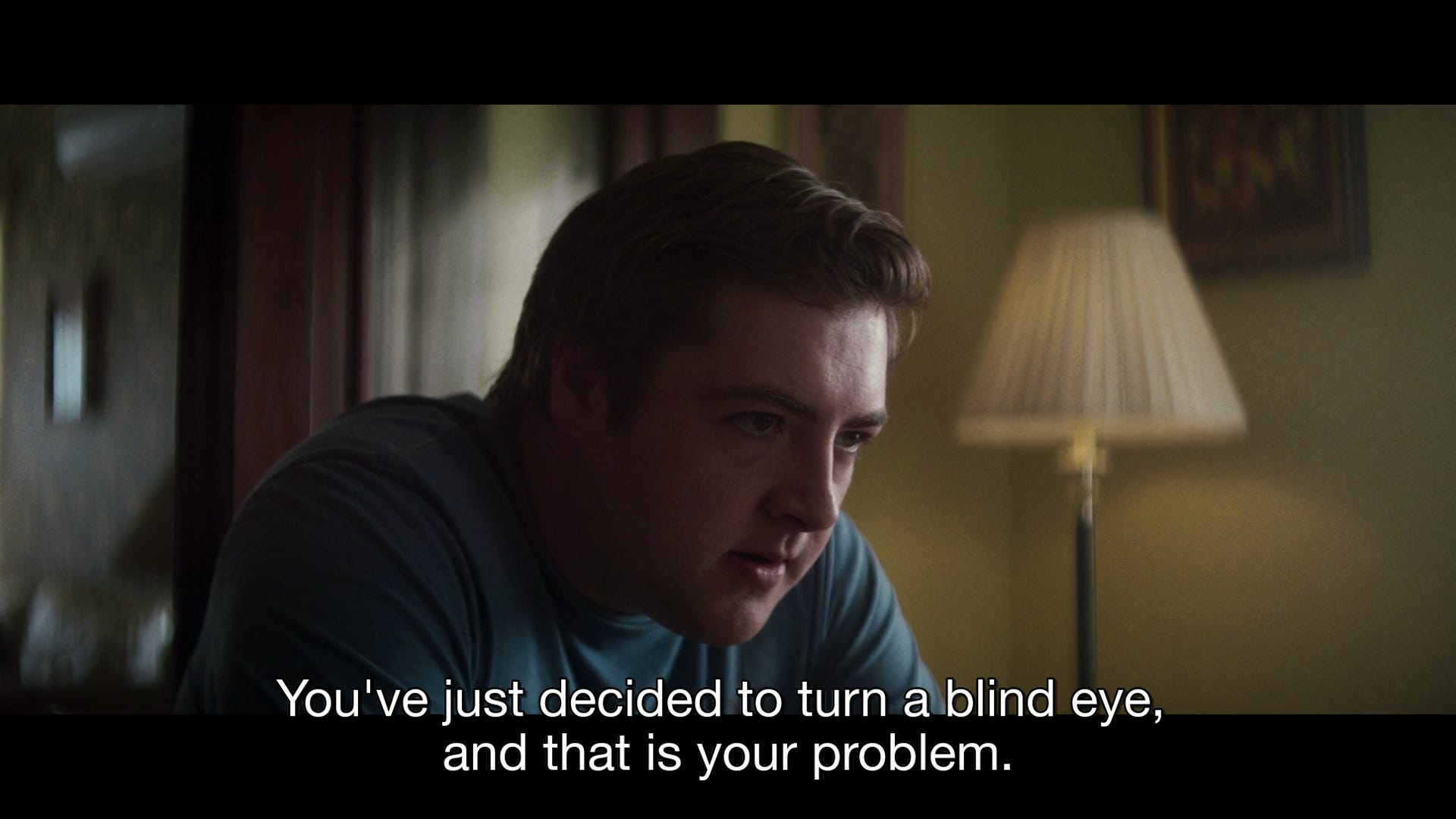
Blake, ever the sympathetic character, ultimately chooses to help Urich escape Cashman.
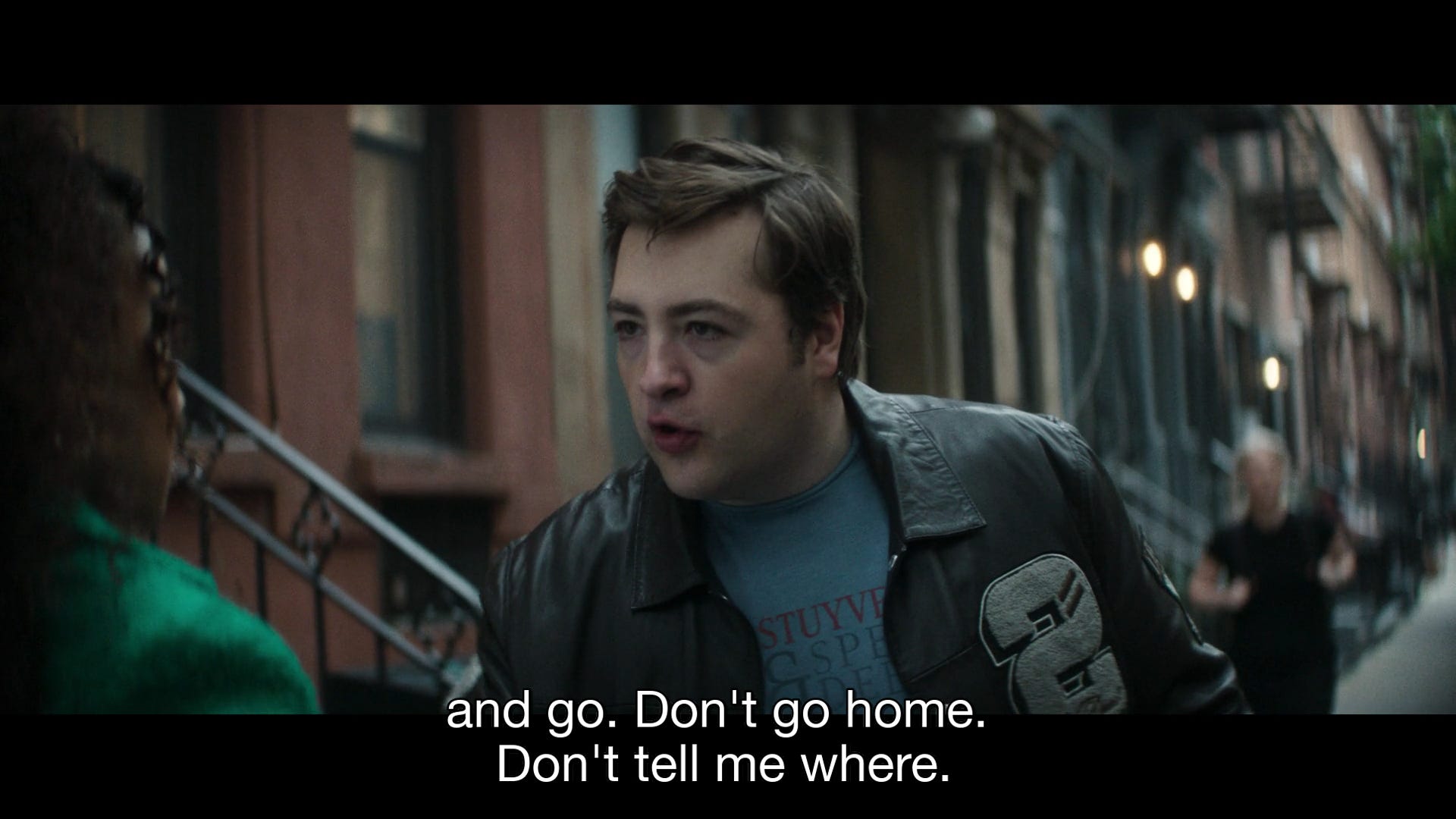
The episode illustrates the contrast between Blake and Cashman in their subsequent encounter. Cashman tortures Blake, but Blake purposefully deprives himself of the information that might save him — Urich’s location. Instead, he tells Buck:
What is followin’ his orders gonna do for you? How long till you’re on the floor with a gun pointed at your head?
Indeed, what Kingpin can do for Cashman has always been at issue between the two of them as distinct from Blake’s earnest belief. In “The Grand Design,” Cashman says to Blake in the course of convincing him to bury the corpse, “we work for a man who can change your life.” Material enrichment has never been Blake’s goal. He is motivated by faith.
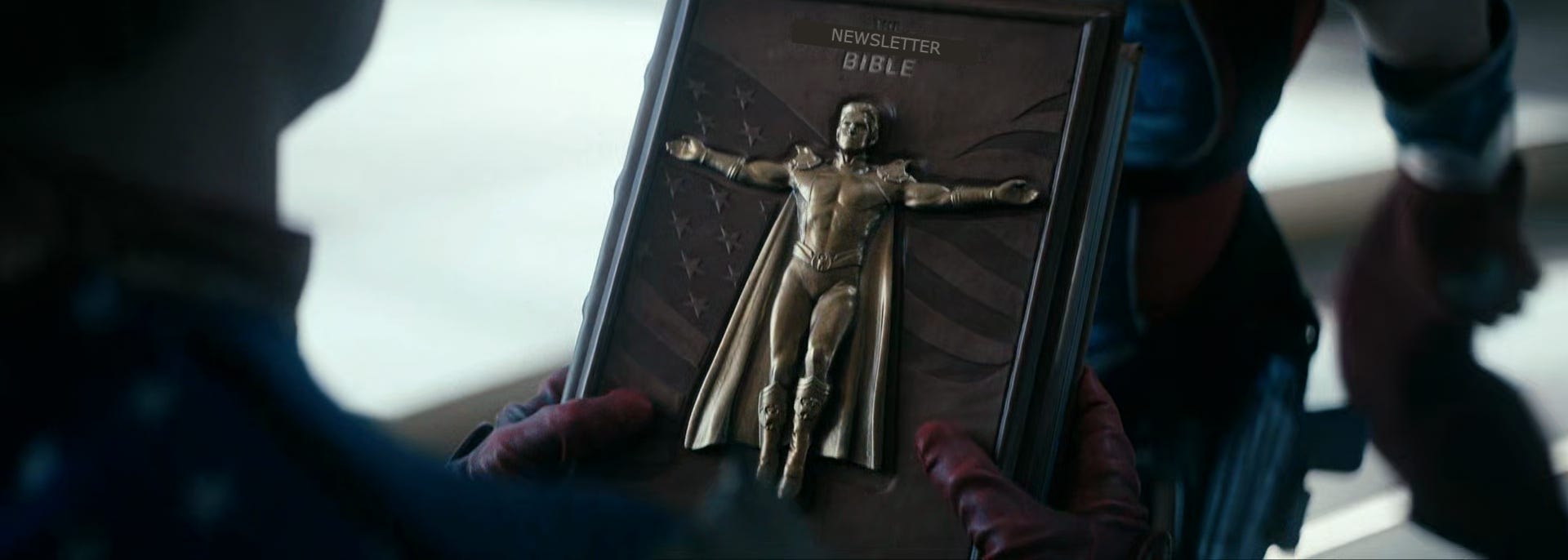
Faith is the watchword in The Boys’ final season’s fifth episode, “One-Shots.” The episode is bookended with the story of Firecracker (Valorie Curry), a right-wing religious superhero supporting the fascist superman Homelander (Antony Starr). The season’s anxiety-inducing twist is Homelander’s claim of Godhood, working to create a religious apparatus around him as a deity that supplants American Christianity.


Firecracker, who previously believed Homelander shared her religious convictions, now faces two incompatible belief systems: Christianity and the Democratic Church of America.
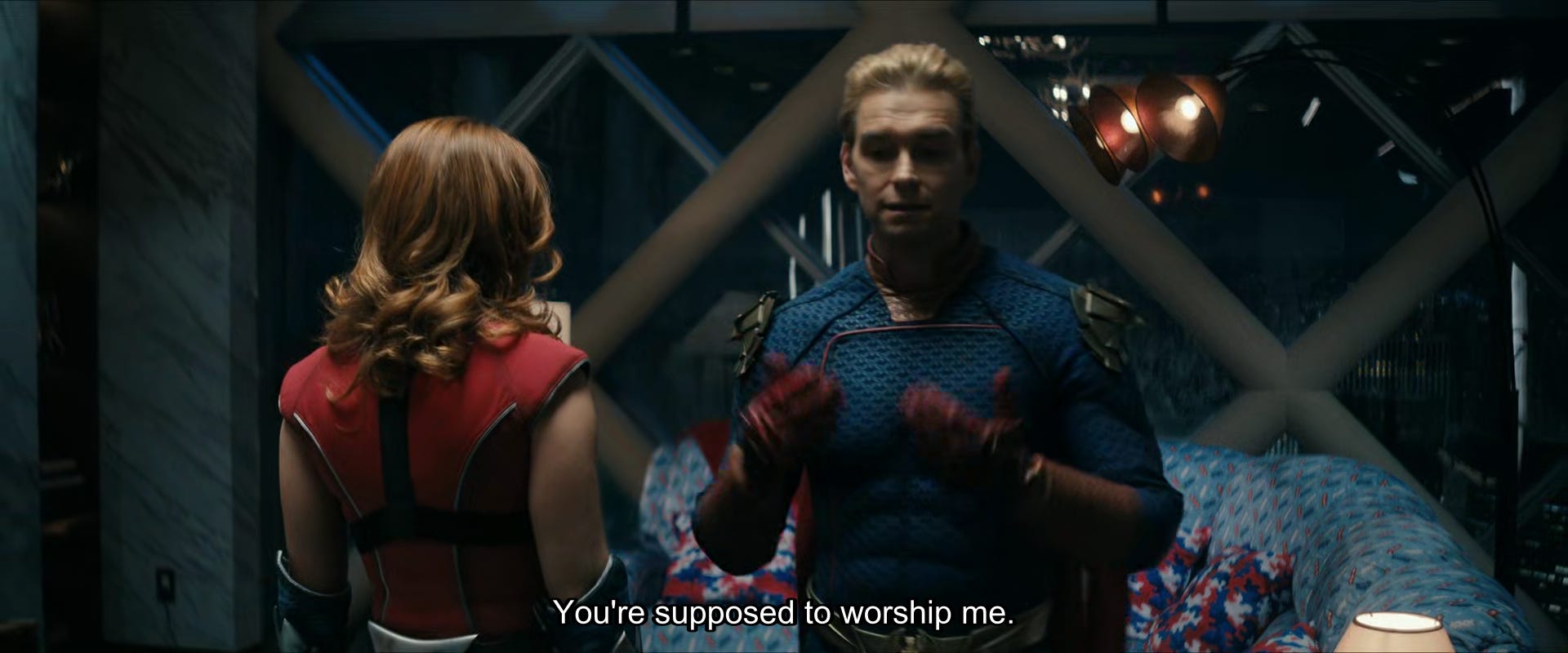
The episode follows Firecracker through her anguish, painfully trying to supplant Jesus with Homelander. She accuses her religious mentor, Reverend Greg Dupree (W. Earl Brown) of pedophilia and disgraces him as reprisal for his disbelief in Homelander.


Firecracker also confides in Soldier Boy (Jensen Ackles), Homelander’s father. Soldier Boy crudely affirms her, “If there is a God, he sure as hell didn’t come out of my balls.” But Soldier Boy is Firecracker’s Judas, revealing her hesitance. Homelander accuses her of being ‘unfaithful’ just as she attempts to truly displace her former faith.
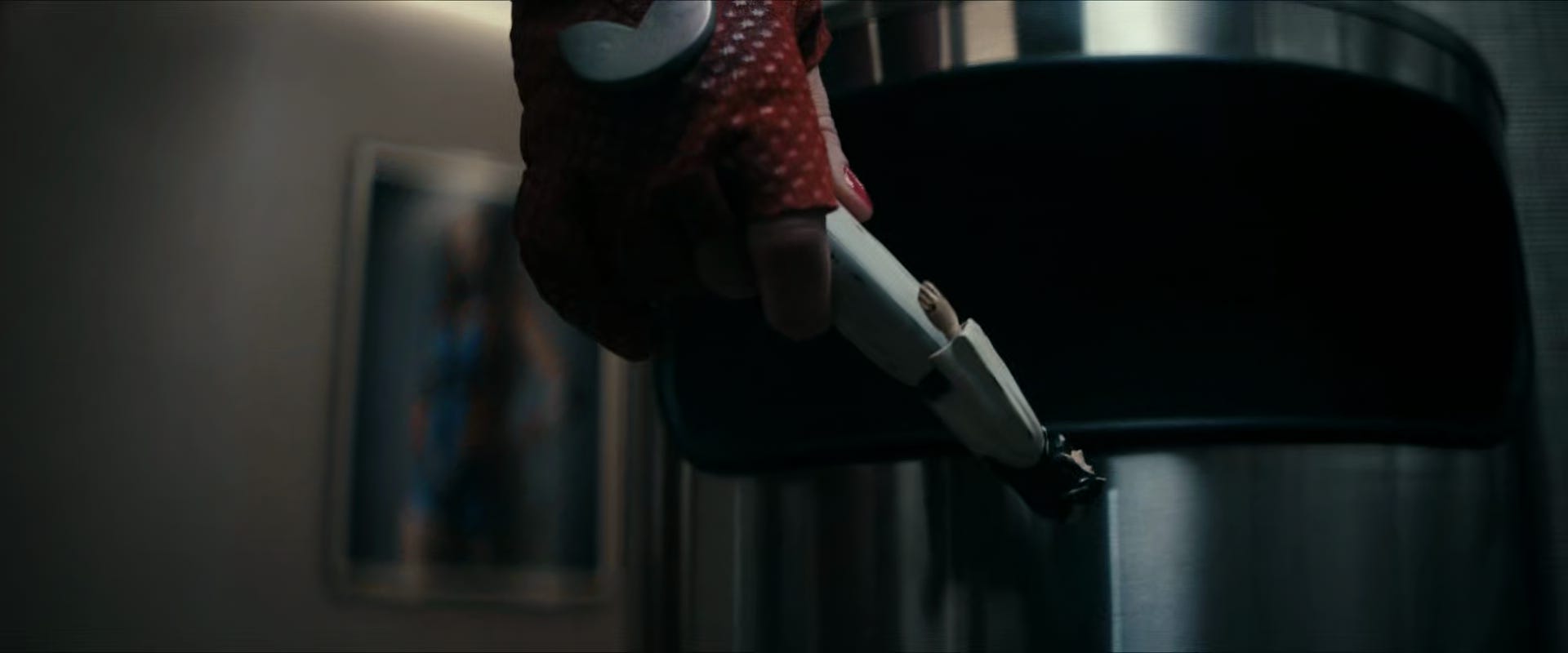
He says:
Are you thinking of Jesus when you’re praising me? … You’re supposed to worship me. Love me. And me alone. … I believed in you. Turns out you don’t believe in me. I need you to collect your things and leave.
Homelander’s rejection only stokes her desire to appear faithful. She sets herself apart from his other followers:
Everybody else here, they’re just scared of you. Or they want something from you, but I have always loved you for you.
What Firecracker doesn’t realize is her conflation of the romantic, human love she has for Homelander and the distinctly religious affection she has for Jesus. Homelander, however, does not allow the two to be conflated. She asks him, “We all need love, don’t we? Even God.” Homelander is astonished, in part because what she appeals to is his human foible of need. God is complete. She exposes precisely that he is not God. And he rejects her because, as she says, he needs love.
Both Daniel Blake and Firecracker meet grisly ends, Blake spared the indignity of being killed by the one in which he believes and Firecracker smote like so many nonbelievers. They both die because of a crisis of faith.
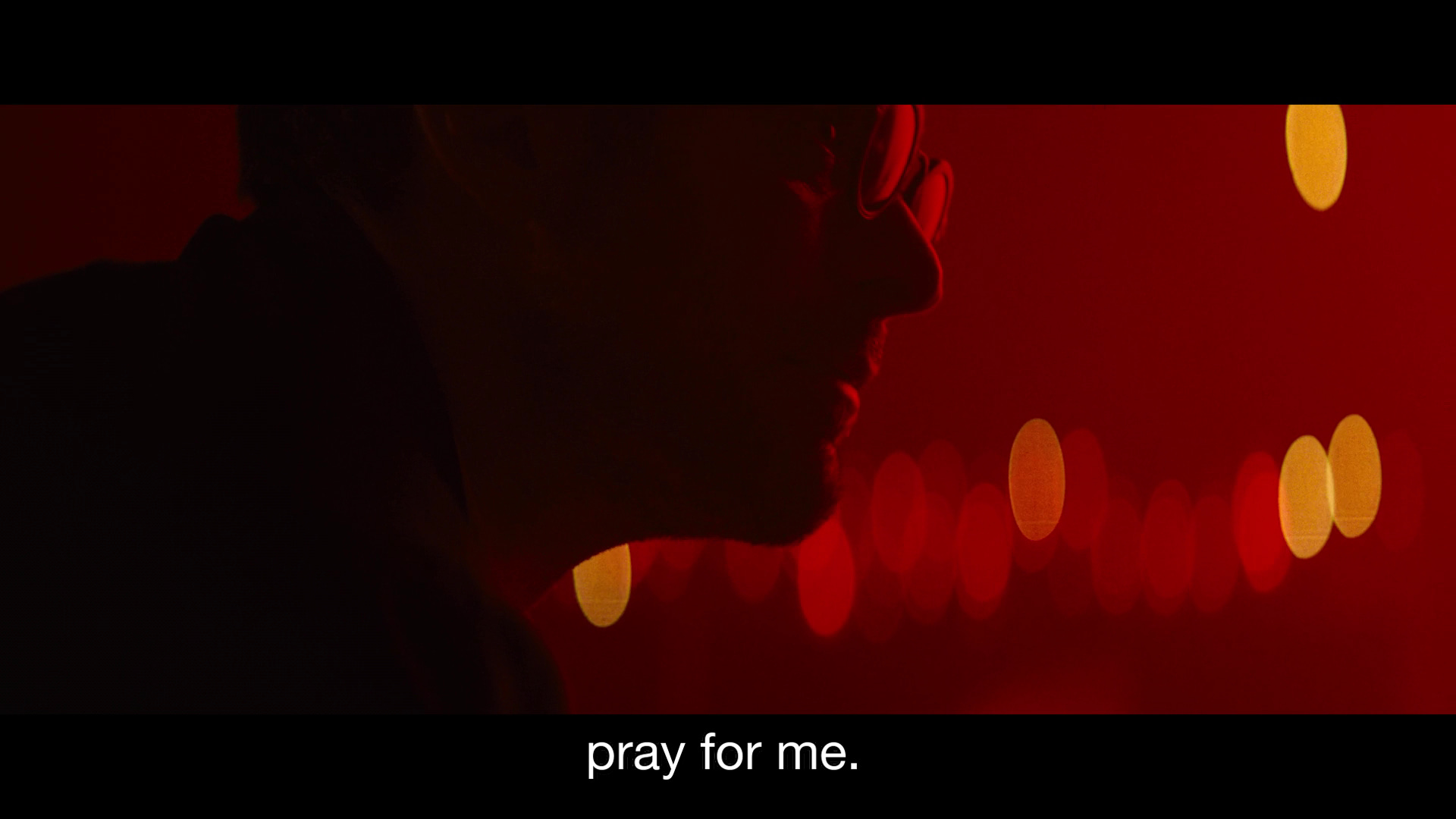
The religious character of Firecracker’s relationship to Homelander is obvious as a feature of the plot itself, but Blake’s attitude toward Kingpin is as overt as subtext could possibly be. During his death scene, he is crosscut with Matt Murdock (Charlie Cox) in prayer to Saint Jude.
Both Daredevil and The Boys treat faith with some amount of suspicion. Blake and Firecracker lie to their God-analogues with different degrees of success. Blake tells Buck, despite being tortured, that he doesn’t know where Urich is. He tells the truth, but only because he has deliberately denied himself the knowing Buck presumes him to have. This echoes his relationship with the knowledge of his own wrongdoing. On the verge of turning Urich over to Buck, Blake tells her:
I went upstate with Buck, to the Catskills, and we buried a body. And I wish I didn’t know I did that. But I can’t have anyone else knowing I did that. [Emphasis added]
This is his apology for killing her, she must die to not know he did that. More interesting, though, is his formulation “I wish I didn’t know I did that.” Blake’s issue is not with the doing, but the knowing. Would that he could forget, he would be spared the moral weight of his action.
Firecracker is a different kind of believer. Her belief is earnest, though perhaps she may wish to forget her faith in Jesus. What she says to Homelander is true, but truer than she intends. Even as she avows her belief in him as a God, it is the unconscious impossibility of her belief in him that is revealed by her question “We all need love, don’t we?” For Lacan, these complexities are part and parcel of discourse. Communicating will never get across what it appears to represent. In “The Function and Field of Speech and Language in Psychoanalysis” (1966) he writes:
Even if it communicates nothing, discourse represents the existence of communication; even if it denies the obvious, it affirms that speech constitutes truth; even if it is destined to deceive, it relies on faith in testimony. (209)
Faith is what guarantees speech, and to lack faith means to lack the capacity to tell the truth — even if the guarantee that faith promises is destined to fall short.
Of course, there are more realpolitik interpretations of the plight of Firecracker and Blake, such as that of Hannah Arendt. Where Lacan takes us as far as their discourse, Arendt’s framework evaluates their ethical positioning. Once again, we see where the two characters diverge: Firecracker attempts to assimilate into the fold despite her nagging disbelief, whereas Blake willingly becomes an apostate, rejecting Fisk and Cashman. Even as Blake’s life is on the line, he behaves morally in Arendt’s formulation. In “Personal Responsibility Under Dictatorship” (1964) she writes:
There was a widespread conviction that it is impossible to withstand temptation of any kind, that none of us could be trusted or even be expected to be trustworthy when the chips are down, that to be tempted and to be forced are almost the same, whereas in the words of Mary McCarthy, who first spotted this fallacy: “If somebody points a gun at you and says, ‘Kill your friend or I will kill you,’ he is tempting you, that is all.” And while a temptation where one’s life is at stake may be a legal excuse for a crime, it is certainly not a moral justification. (18)
Firecracker needs no such temptation to subordinate her own convictions to Homelander’s whims, whereas not even the most extreme temptation could bend Blake’s will once his faith is broken. Blake refuses to be a cog, contrasting the justifications Arendt describes post-WWII war criminals as using, “Here it is indeed true what all the defendants in the postwar trials said to excuse themselves: if I had not done it, somebody else could and would have” (29). Neither Firecracker’s attempt to impose upon herself the idea that Homelander’s will is inextricable with the moral law nor the implicit threat of Homelander’s profound power is enough to excuse her from culpability. Firecracker is the late-stage follower of a dictator:
I must here remind you that the personal or moral issue, as distinct from legal accountability, hardly arises with those who were convicted adherents of the regime: that they could not feel guilty but only defeated was almost a matter of course, unless they changed their minds and repented. And yet, even this simple issue has become confused because when the day of reckoning finally came it turned out that there had been no convicted adherents, at least not of the criminal program for which they stood trial. And the trouble is that, though this was a lie, it is not a simple or total lie. For what had started in the initial stages with politically neutral people who were not Nazis but cooperated with them, happened in the last stages with the party members and even with the elite formations of the SS: there were very few people even in the Third Reich who wholeheartedly agreed with the late crimes of the regime and a great number who were perfectly willing to commit themselves nevertheless. (Arendt 35)
In this sense, we see the opposite in Firecracker. She attests to her commitment in an attempt to believe it, rather than to obscure her doubt. Functionally, though, these processes are identical. An attestation to the leader of belief and commitment will obscure doubt, whether the subject wants to doubt or not.
Regardless of how Firecracker accepts or rejects her uncertainty about Homelander, she is “on the floor with a gun pointed at [her] head” suffering the fate that Blake predicts for Buck. Faith, or the attempt to enact faith, isn’t even enough for Homelander. When that faith is predicated on his human qualities, he must reject it.
Though both Firecracker and Blake suffer the same fate, their relationship to the sovereign they have dedicated themselves to is distinct. Whether one is a doubting servant or an unapologetic apostate, they are equally at risk for murder by a capricious king.
Weekly Reading List
Nothing here made it into the essay, but I enjoyed this interview with Curry about the fate of Firecracker.
You can become unkillable in Slay the Spire 2 (2026).

https://en.wikipedia.org/wiki/Sangokushi_(manga) — Been digging into this manga classic. Seek and you shall find.
Event Calendar: Noir City Boston is Back
I had a ton of fun at last year’s Noir City: Boston festival and am looking forward to attending this year. The incomparable Foster Hirsch will be back introducing the films. They are showing The Yellow Canary (1963) and The Crimson Canary (1945). I haven’t seen anything they’re screening other than Sweet Smell of Success (1957), even some of the heavy hitters. If you live in the area, I strongly encourage you make your way to as many of the Noir City screenings as possible.
Until next time.